Topics / Comedy
Comedy Podcasts
9,478 shows and 1,284,825 episodes sit under Comedy.
Explore Comedy on PlayNext: comedian interviews, conversational chemistry, improv worlds, satire, radio comedy, and stand-up formats all in one place. Find your kind of funny.
Swipe · Comedy only
Swipe through Comedy
Save time discovering your next favourite podcast by listening to just the best minute of an episode.
The comedy slate · every cover a link
All 9,478 comedy shows →












The map
Move around comedy
Every circle is a subtopic, sized by how many shows sit in it; lines join subtopics that share shows.
Preview
9 subtopics
9,821 shows
3 links
Showing the 9 largest subtopics, holding 9,821 of 9,478 shows. Another 0 subtopics hold the rest, and 0 shows are filed under none. Dashed circles have no hub page yet.
The same map, as links
Pick a subtopic
9 subtopics
Our guide
Comedy podcasts, explained
A can of cola is offered water. It politely explains that it is self-contained. In Everything is Alive, Louis, Can of Cola, the interviewer’s ordinary courtesy makes the impossible guest seem perfectly at home. That is one pleasure available in comedy podcasts: hearing someone take a ridiculous situation seriously enough for you to follow them into it. Another is hearing a friend interrupt before the situation has even been explained.
As comedy spreads across audio, video and short highlights, a minute of uproar may sell a show whose real attraction is an hour of company. Listeners argue about whether familiarity enriches a comedian’s work or makes it feel overexposed, and whether loose conversation earns its length. The useful question is what you want happening in your headphones: people finding jokes together, a story taking shape, or someone giving the day’s nonsense a sharper outline.
Company worth keeping
A conversational show earns its detours when each speaker changes what the others can do next. Stop Podcasting Yourself makes this easy to hear. In Episode 940 - Gina Harms, a discussion of True Lies leads into Harms’s account of an old boyfriend taking her shooting, then later into a story about kissing in an elevator. Graham Clark and Dave Shumka volunteer to supply the sound effects. The interview has acquired a tiny theatrical department.
The Conversational Comedy hub is the next stop for this pleasure of an ordinary grievance gathering accomplices.
Interviews with a reason to wander
A good comic interview gives the guest something more inviting than another request to explain their career. Off Menu with Ed Gamble and James Acaster supplies a dream restaurant and a sequence of food choices, providing somewhere to return after an excursion. In John Mulaney, Acaster tells Mulaney about replacing him as a mouse in a film while retaining the character name John. Mulaney joins the examination of why changing the credits should have been so difficult. A leftover name becomes a problem everyone can work on.
Good Hang with Amy Poehler is particularly engaging on the practical indignities of performing. In Ana Gasteyer, Gasteyer recalls a sketch about a loud morning-radio crew that delighted the people at the table and met silence in performance. Poehler and Gasteyer linger over the embarrassment and their enjoyment of committed failure. You hear comedians remembering the laugh they wanted, as well as the one they got.
The Comedy Interviews hub offers a route deeper into these exchanges.
Improvisation that commits to the consequences
Everything is Alive keeps its questions calm while its guests develop complicated inner lives. In Miriam and Peter, Playing Cards, a queen and a lower-ranking card try to discuss their relationship without discussing rank. Equality is harder to maintain when one participant keeps acknowledging that the other outranks him. The cards’ physical properties give the performers constraints, and the constraints make the emotional evasions funny.
Hello From The Magic Tavern works through louder, more crowded invention. In Season 5, Ep 80 - Pandenomicon Now (w/ Charlie McCrackin), a talking book worries that being taken into the bathroom will permanently classify it as a bathroom book. Arnie’s explanation of literary theory becomes another opportunity to bring up his creative-writing degree. The fantasy keeps accommodating familiar anxieties about status and usefulness.
Visit the Improv Comedy hub if hearing performers adjust to each other is your favourite part of the joke.
When the jokes have to survive the dice
Actual-play comedy introduces a useful inconvenience: the performers cannot simply declare that their plan worked. In Not Another D&D Podcast, Gangs of Neo Galaderon - Ep. 3: Crack the Safe, disguising the party with an illusion becomes an argument about who gets to resemble a particular character. The heist must continue, but first the disguise needs a casting meeting.
The episode also puts a satirical target inside the fantasy. A fictional mayor celebrates synthetic soldiers protecting investors from the people who used to live in the neighbourhood. The players react while pursuing their own scheme, so the world supplies jokes without stopping the adventure for a separate routine.
Expect rules discussion and combat alongside character performance. This third instalment recaps earlier complications; listeners seeking the whole adventure should follow the arc in order.
Fiction with something wrong in the house
Scripted comedy can arrange the misunderstanding before anyone speaks. Haunted House Flippers sets paranormal enthusiasm against the practical business of inheriting a property. In 28 - Home Again, Tom attempts a grand account of the mansion while Janet keeps correcting his description of it as “Victoria.” His confidence survives the corrections better than his account does.
In 29 - Nice Hearse, boxes that might contain supernatural discoveries turn out to hold socks and old magazines. Neighbour Lee’s formal explanations give Tom’s excitement another surface to bounce against. The attraction is the collision between domestic work and the possibility of something much worse.
The Dark Comedy hub is a useful next route for that mixture of unease and silliness.
Gossip, recaps and the pleasure of knowing too much
Comic commentary works when knowledge creates opportunities beyond recognition. Who? Weekly makes the machinery of celebrity coverage a subject in its own right. In Dayoung, Shiloh Jolie & Artemis II?, Bobby Finger and Lindsay Weber follow the publication times of articles repeating an anecdote, then object to the solemn language used to package it. Their complaint is about how a passing remark becomes a celebrity disclosure.
Normal Gossip trades famous names for anonymous social disasters. In The Problem Is Certain Death with Allegra Frank, a party’s improvised plan involves lowering a climber from a window, with people on a bed providing the counterweight. Rachelle Hampton pauses to ask Frank what the participants might do next. The guest becomes your fellow spectator, briefly responsible for predicting the catastrophe.
Try the Pop Culture Comedy hub for celebrity and screen discussion; choose Normal Gossip when you want a story whose participants require no prior acquaintance.
News with a clock on it
Topical comedy benefits from a form that prevents every opinion becoming a speech. Wait Wait... Don't Tell Me! uses questions, scores and timed rounds to keep moving. In We admire dimes and Aasif Mandvi gives breakup advice, a reported story about birds incorporating cigarette butts into nests prompts an argument over whether they have figured something out or are merely doing it. A small distinction becomes a panel dispute, and another question is waiting.
Some More News takes a more sustained approach. In Some More News: A.I. Is Messing With Our Mental Health, the programme presents a test in which a chatbot agrees with an absurd claim about someone being the world’s smartest baby. The escalating flattery makes the show’s criticism of chatbot affirmation audible.
The Satire hub is the route for listeners who want a discernible target. Expect the argument to matter alongside the laugh, and choose a subject you are willing to spend time considering.
Radio’s quick changes of direction
Radio-derived feeds offer a different rhythm: a game can give way to an interview, followed by another studio dispute. Tom & Loggy on K rock 95.5 shows how much comedy can fit inside that movement. In No Problama., a defence of patterned socks becomes the suggestion that showing someone your ankles could improve their terrible day. The imaginary demonstration is wonderfully inadequate to the emotional task.
Vintage performance offers more tightly arranged reversals. Comedy - Sleepy Radio’s Red Skelton - Careless Driving has a driver produce a dog licence and explain that he also drives a greyhound bus. The excuse generates the next joke. Follow the Morning Shows hub for the first kind of company, or the Radio Comedy hub for comedy organised around the broadcast exchange.
Where to start
- For a leisurely conversation: Stop Podcasting Yourself, Episode 940 - Gina Harms. Allow 99 minutes for stories, local recollections and the hosts’ willingness to join a scene.
- For an interview with a clear frame: Off Menu with Ed Gamble and James Acaster, John Mulaney. Its 82 minutes let food choices and the mouse-role dispute develop together.
- For gentle absurdity: Everything is Alive, Louis, Can of Cola. A 24-minute encounter makes the premise immediately legible.
- For a complete social disaster: Normal Gossip, The Problem Is Certain Death with Allegra Frank. Spend 50 minutes following a plan that becomes harder to defend with every detail.
- For jokes with built-in momentum: Wait Wait... Don't Tell Me!, We admire dimes and Aasif Mandvi gives breakup advice. The 48-minute quiz includes a timed final round.
Featured shows below are part of the PlayNext catalog. Updated weekly.
Recommended clips
The strongest Comedy clips
The highest-scoring 60-second moments anywhere in comedy, one per show.
Drawn from 30,647 playable clips across 1,817 shows.
New on PlayNext
Just added to Comedy
The newest comedy clips in the library, one per show — ordered by when the clip was made, not when the episode came out.
10 clips, one per show, added between 2026-09-05 and 2026-09-06.
Featured shows
17 shows, described rather than listed
Each has a short write-up and a note on what it does best here.
A public historian pairs with an academic guest and a comedian guest each episode, delivering history through a fast, warm, joke-forward format.
Two British comedian hosts turn a Dream Restaurant premise into a rapid-fire room where guests riff on food, absurdity, and each other.
A long-form Canadian hangout with two comedian hosts and rotating comic guests, built on plainspoken warmth and unhurried digression.
A live-audience panel show mixing stand-up greenroom energy with feminist politics; the host moves easily between punchlines and earnest political stakes.
A fast, gossipy Crooked Media show where hosts and rotating guests trade sharp pop-culture verdicts on music, film, and celebrity.
Two brothers answer listener questions and drift into trivia and small embarrassments, with recurring catchphrases that function as in-group warmth.
A verbose mock-judicial host rules on ordinary listener disputes with theatrical seriousness, dry meandering, and literary asides.
A fast, profane, deeply Black and online conversation between two hosts covering pop culture, politics, and celebrity with AAVE and community shorthand.
A Spanish duo who treat every topic, from fashion to art history, with the same rapid feminist cultural criticism and theatrical ridicule.
A fully improvised fantasy comedy with recurring characters, callbacks reaching back years, and escalation as the structural engine.
A long-running Spanish radio comedy duo built on improvised back-and-forth and listener questions, where the detour is always more important than the answer.
A brash weekly recap with two co-hosts trading rapid banter about pop culture and politics, profanity used structurally and conspiratorially.
An overlapping multi-host morning-radio show that weaponises news items as launchpads for mock outrage, recurring character voices, and irreverent political commentary.
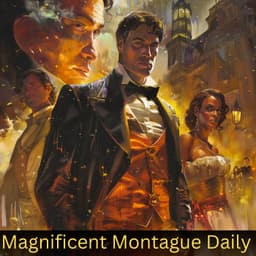
A 1950s old-time radio sitcom rebroadcast daily: a pompous Shakespearean ham perpetually deflated by a wisecracking domestic and a long-suffering wife.
A morning-radio comedy show built on overlapping chatter, very short sentences, and constant tag-team interruptions across local and national topics.
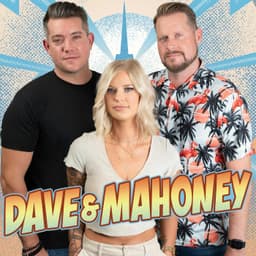
A three-voice morning show built around personal anecdotes, fast banter, and segment titles that signal irreverence before the first word.
A local sports-and-life radio show where the dominant mode is one host telling a small embarrassing story while the other needles him deadpan.
Where to start
5 routes in, one per reader
Starts with a repeatable scaffold — academic guest plus comedian guest — so the jokes always have somewhere to land and the history is real.
Two brothers, listener questions, and unhurried warmth; a low-friction entry for listeners who want comedy as company.
Ordinary disputes ruled on with theatrical seriousness; ideal for listeners who enjoy warm pedantry and rulings on tiny stakes.
The whole show is performed in character; a fantasy wizard, a shapeshifting badger, and a human from Earth whose confusion is the straight man.
Two co-hosts turn the week's headlines into rapid banter and mock outrage; the right entry if satire and current affairs are the draw.
Glossary
Speak the language
Shows built around comedian guests or comic personalities where the guest name or the format's ritual structure is the hook.
Shows where the chemistry between regular hosts is the primary draw, regardless of whether the topic is advice, celebrity, or everyday nonsense.
Shows where the premise — a fantasy world, a listener question, a two-person riff — drives the comedy rather than a scripted structure.
Comedy that treats current events and public figures as raw material, bending headlines into jokes, grievance, and running voices.
Shows with broadcast-room mechanics: fast entrances, recurring voices, abrupt pivots, and the willingness to keep moving before every edge is polished.
Performer-first comedy, often catching touring comics through interview and hangout formats rather than album-style stage recordings.
Archival scripted radio comedy from the mid-20th century, rebroadcast as podcast feeds; theatrical ensemble dialogue and mid-century showbiz texture.