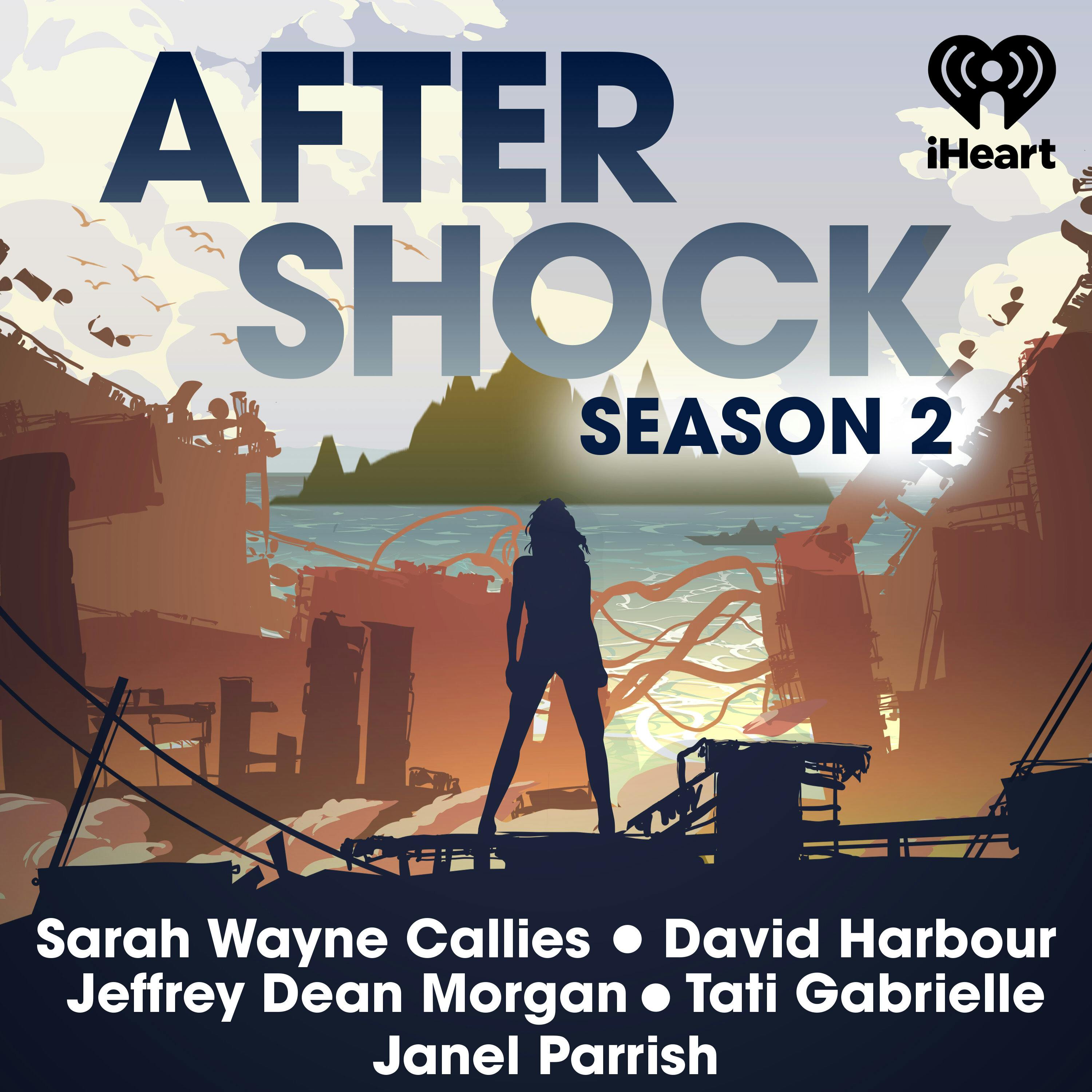
Aftershock is a serialized, full-cast sci-fi audio drama about what remains after the ground breaks open. Its world starts in disaster, then tightens around a newly risen island where survival is never just survival. A strange illness, tied in the story to illegally dumped DDT and fresh water, turns the island into a contested zone. Quarantine becomes policy. Policy becomes force. Force becomes a moral argument in real time. The show is strongest when people under pressure talk past each other, cut each other off, and finally say the thing they were trying not to say. Cassie, Michaela, Julian, Leigh, Auntie, Emmerich, Dover, Fortis, and others move through a story where medicine, land, grief, and command structure keep colliding. One scene may hinge on monoclonal antibodies and PPE. Another may turn on haupia, kanikapila, or a teenager trying to define a relationship while danger sits nearby. The island is not treated as scenery. It is a political and spiritual claim, especially when native land and outside authority come into conflict. Aftershock also understands that catastrophe does not erase ordinary longing. People still flirt. They still joke. They still talk to the dead. They still want their children to leave danger and live. The thriller machinery is clear: armed standoffs, hidden communications, infected blood, official reports, and the threat of wider spread. Yet the emotional engine is more intimate than procedural. The show keeps asking who gets protected, who gets sacrificed, and who is allowed to call a place home. It is tense, grave, and brisk, with moments of warmth that make the harsher turns land harder.