Topics / Audio Drama
Audio Drama Podcasts
978 shows and 109,763 episodes sit under Audio Drama.
Curated guide to audio-drama podcasts in 2026: found-footage horror (The Black Tapes), anthology horror (The Grey Rooms), science fiction (The Big Loop, Desert Skies)
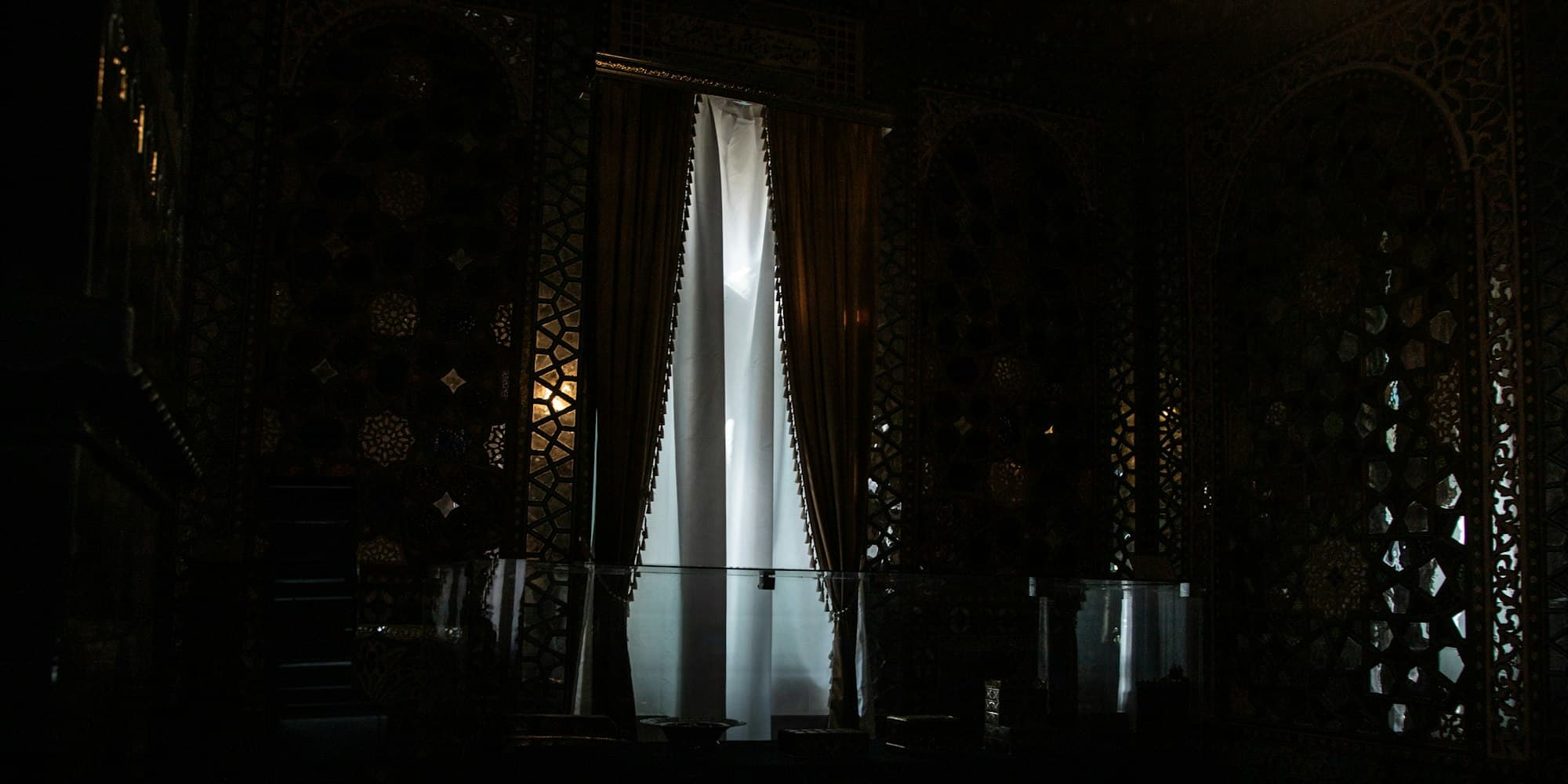
Photo: Bernd Dittrich on Unsplash · Unsplash License
Swipe · Audio Drama only
Swipe through Audio Drama
Save time discovering your next favourite podcast by listening to just the best minute of an episode.
The audio drama slate · every cover a link
All 978 audio drama shows →


The rundown
What you'll hear on Audio Drama podcasts
A floorboard groans, a radio signal breaks apart, or two friends play a tape they already regret finding. Before the plot has properly begun, the sound has told you what kind of story this will be. Some productions borrow the authority of journalism; others lean into theatrical narration, ensemble dialogue, or the cheerful disorder of a roleplaying table. The useful dividing line is how the fiction reaches you: as evidence, confession, performance, or a game becoming a story in real time.
Move up to Fiction when you want the wider field of narrative podcasts. From there, Mystery, Horror Fiction, and Science Fiction are better routes when genre matters more than whether a story is staged for the ear.
Stories disguised as evidence
The Black Tapes adopts the cool cadence of public-radio reporting, then lets the supernatural leak into the frame. Its journalist narrator offers careful scene-setting, taped interviews, and restrained admissions of unease. Opposite her sits a skeptical academic whose clipped replies keep puncturing every strange possibility. The tension comes from that mismatch: curiosity keeps moving forward while certainty refuses to budge.
Tapes From Beyond uses a more intimate version of the same trick. Friends Lina and Jack talk through a mystery as though recording a true-crime podcast, while the man heard on the tapes delivers longer, increasingly troubled monologues. Their conversation includes teasing, apologies, hesitation, and the occasional question about whether they should stop. It feels less polished than The Black Tapes and more vulnerable, as if investigation has become a test of the friendship conducting it.
Observable Radio takes the broadcast illusion somewhere stranger. Survivor testimony, pirate-radio interruptions, news voices, mock commercials, and clinical recordings can all belong to the fiction. Its long, literary passages accumulate detail slowly before closing on blunt declarations. Try Supplemental Frequency 12: "East" for an entry point into that transmission-based structure.
Continue into Detective & Mystery Drama when the pleasure lies in piecing together testimony and competing explanations. For mysteries that cross more decisively into impossible events, Supernatural & Horror Drama is the darker turn.
Close quarters
Haunted House Flippers puts a married couple inside a sprawling Victorian mansion and lets comedy rub against genuine danger. Tom’s rapid tangents, snack jokes, and fake-formal narration meet Janet’s dry impatience, while caretaker Lee attempts to preserve a little old-fashioned correctness. Elaborate descriptions of woodwork or antique furniture can collapse into bickering in a line. 29 - Nice Hearse is a suitably brisk place to meet that rhythm.
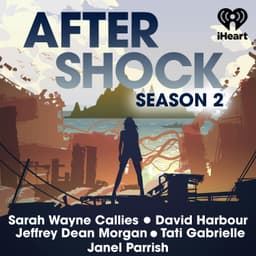
Aftershock has almost no narrator to protect the listener from its post-disaster world. Cassie, Michaela, Julian, Lay, and the rest of its ensemble interrupt one another, finish thoughts under pressure, and postpone emotional reckoning until the immediate problem has been handled. Its language moves between military procedure, Hawaiian terms, teenage slang, and unguarded profanity. When the characters finally speak at length, the accumulated quiet gives those confessions weight.
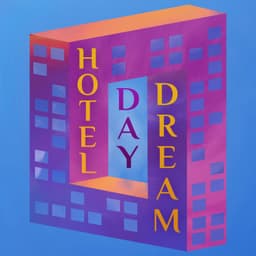
Hotel Daydream slows everything down. A fastidious concierge writes reports to a distant employer, moving through the week with literary digressions, courteous anxiety, and quietly absurd hospitality problems. Gods, dryads, monks, espresso, and luggage receive roughly the same professional attention. The deadpan whimsy is clearest when the narrator treats the impossible as another matter requiring paperwork; 04 - Superposition PTO makes an inviting title to begin with.
One voice, many worlds
The Big Loop builds each story around a different first-person narrator. A lone astronaut speaking with an AI and a neighbor watching a dance studio can share the same confessional grammar: winding recollection, an associative turn, then a short sentence that changes the temperature. The narrators sound as though they are speaking to one patient person rather than performing for a crowd. That intimacy matters more than recurring characters.
The Grey Rooms also rotates narrators, though its default temperature is harsher and more profane. Its horror stories let literary language collide with modern slang and gallows humor, then step outside the fiction for relaxed conversations among the people who made them. Those behind-the-scenes episodes are looser and more digressive. Listeners who want the stories themselves should begin with the dramatized material before wandering into the workshop.
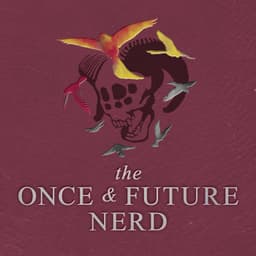
The Once and Future Nerd uses a novelistic narrator alongside a full fantasy ensemble. Long passages establish place and history; character dialogue answers with sharper rhythms, regional voices, and occasional profanity. Between chapters, the producer can emerge in a friendlier register to discuss craft, production trouble, and the choices behind the world. It is a good fit for listeners who enjoy hearing both the spell and the machinery that cast it.
The Adventure Zone reaches fantasy through collaborative play. A dungeon master supplies scene-setting and spatial detail, while the players answer with actions, dice results, sibling banter, and jokes that can derail the scene before unexpectedly improving it. The show assumes you are willing to learn its rhythms from inside the conversation. The Adventure Zone Royale: Episode 30 offers a recent numbered doorway, while The Adventure Zone Versus A Midsummer Night’s Dream: Live in Columbus! signals its appetite for a more openly theatrical detour.
For narrated speculative worlds and ensemble fantasy, continue into Sci-Fi & Fantasy Audio Drama. For dread, grotesque reversals, and confessions spoken from dangerous rooms, head instead toward Supernatural & Horror Drama.
The old broadcast grammar
Pioneer Western Radio preserves the clipped momentum of vintage lawman serials. A marshal or ranger narrates in terse procedural language, dramatized scenes take over, and a brief voice-over then fixes the next time and place. Investigators discuss evidence with measured authority while witnesses and ranch hands answer in plain Western vernacular. The shift between Gunsmoke - Sins Of The Fathers and Texas Rangers - Death By Adoption shows the rotating nature of the anthology.
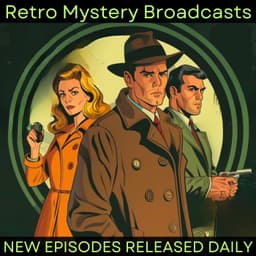
Retro Mystery Broadcasts casts a wider net across period mystery and suspense. The acting is formal, the descriptive passages patient, and the dread often arrives through mundane details allowed to sit for a while. Narrators bridge acts and promise that the real turn is still ahead. Its range runs from Quiet Please - Nothing Behind the Door to Lights Out - Revolt Of The Worms and Barry Craig Investigator - The Motive For Murder.
Head to Classic Radio Theater when that period delivery, announcer-led structure, and scene-to-scene economy are the attraction. Detective & Mystery Drama is the neighboring route when the investigation itself matters more than the vintage broadcast style.
Where to start
Choose The Black Tapes for restrained supernatural investigation and a strong central duo. Pick Haunted House Flippers when you want a haunted setting with marital banter and comic velocity. Observable Radio is the adventurous option for listeners who enjoy assembling a world from fractured transmissions. For collaborative fantasy, begin with The Adventure Zone and accept that the jokes, rules, and story will keep interrupting one another.
Featured shows below are part of the PlayNext catalog. Updated weekly.
Featured shows
8 shows, described rather than listed
A short write-up for each, plus the job it does in this guide.
Foundational found-footage-horror investigation. Pacific Northwest Stories productions; template-setter for skeptic-investigates-paranormal audio drama.
Anthology-horror episodes. Shorter-form than long-arc investigation shows.
Experimental and supernatural-investigation. *Supplemental Frequency* tag suggests interleaved canon-and-side content.
Unusual horror-comedy crossover. Premise blends real-estate-and-renovation with supernatural-encounter framing.
Science-fiction and speculative-fiction anthology storytelling. Episode-per-story format.
Long-arc science-fiction serialized story. Episode-as-chapter framing typical of serialized audio fiction.
Slate's clearest tabletop-RPG actual-play show. McElroy brothers; current *Royale* campaign. Helped popularize tabletop-RPG-as-podcast format.
Western-genre old-time-radio revivals (*Gunsmoke*-archive material). Treats classic radio-drama as living archive.
Where to start
6 routes in, one per reader
The show set the template for skeptic-investigates-paranormal audio drama.
Shorter-form anthology format.
Episode-per-story format is the entry.
Chapter-by-chapter framing is the entry.
Current *Royale* campaign is the entry.
*Gunsmoke* archive is the entry.
Glossary
Audio Drama vocabulary, decoded
Sub-genre where the show frames itself as a documentary investigation of paranormal or unexplained phenomena. *The Black Tapes* is the slate's clearest example and a foundational template for the format.
Sub-genre where a group plays a tabletop role-playing game and records the session as serialized audio drama. *The Adventure Zone* (McElroy brothers) is the slate's example; format helped legitimize the broader actual-play ecosystem.
Format distinction in audio drama: serialized shows tell one long story across many episodes (*Desert Skies*, *The Black Tapes*); anthology shows tell new stories each episode (*The Big Loop*, *The Grey Rooms*). Slate represents both.
Sub-genre that re-airs classic radio-drama episodes (especially Western, mystery, and noir) as podcast episodes. *Pioneer Western Radio* is the slate's example; treats classic-radio as living archive.
Sub-genre blending horror with comedy framing. *Haunted House Flippers* is the slate's example; premise (real-estate-and-renovation crossed with supernatural-encounter) is distinctive.