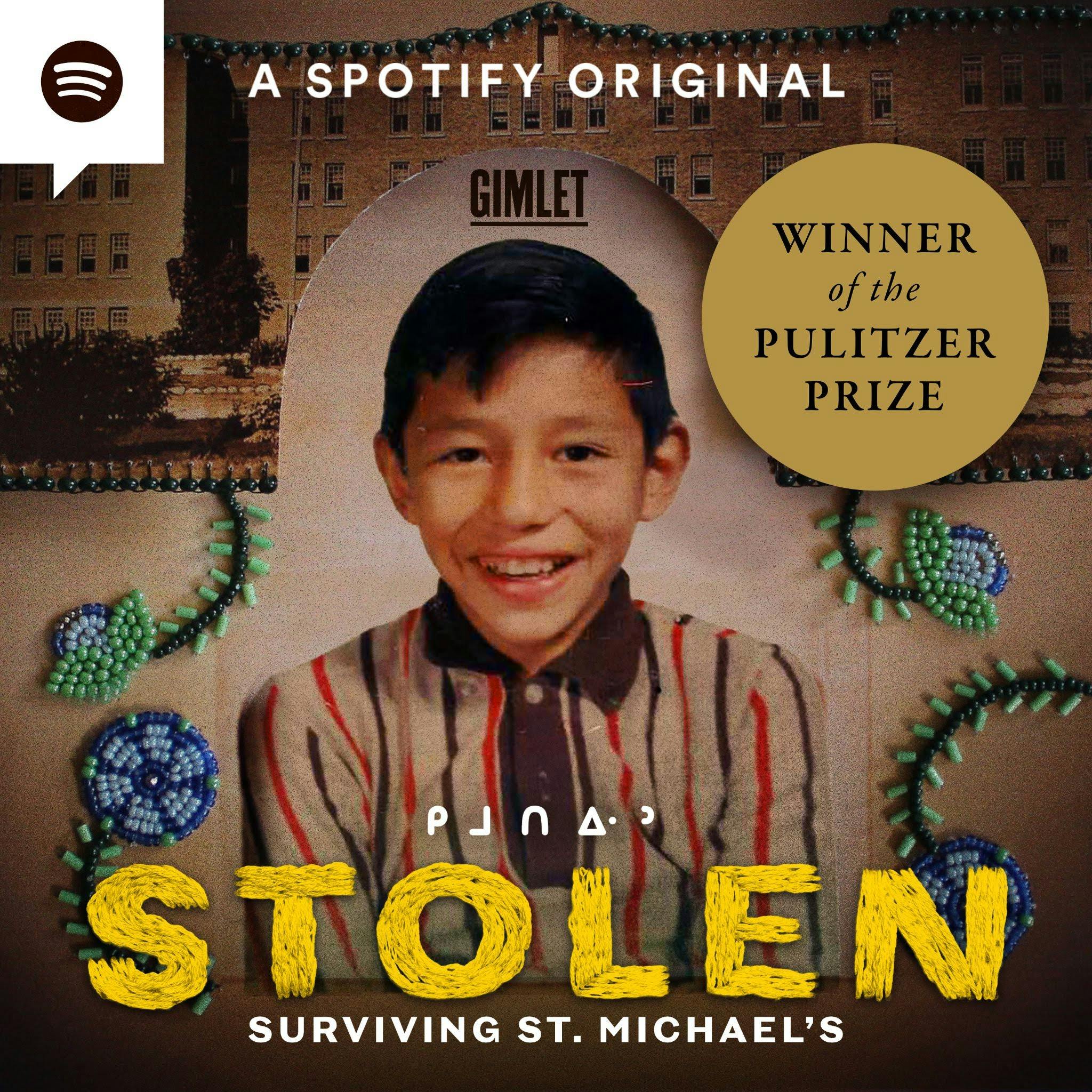
Stolen is an investigative audio series with a rare sense of moral gravity. It does not hurry. The Surviving St. Michael’s season follows Connie Walker as she traces her father’s pain back to St. Michael’s Indian Residential School in Duck Lake, Saskatchewan. A family story about a police officer, a priest, and a late-night roadside encounter becomes the doorway into something much larger. The season looks at residential schools as systems built to separate Indigenous children from their families, languages, and identities. It also asks what happens when those systems leave marks that travel through parents, cousins, aunties, and children. The reporting is personal without becoming self-absorbed. Walker appears as a daughter and journalist, moving between family memory, survivor testimony, research, and direct questions about men who held power over children. The sound of the show is often intimate: coffee being poured, relatives arriving at the door, people remembering what they were once too young to understand. Then the facts arrive plainly. Children were hungry. Children were beaten. Children were sexually abused. Families were told lies. Survivors carried rage, silence, shame, and grief for decades afterward. Stolen gives those accounts space, often letting testimony run longer than a conventional news piece would allow. That patience is central to its force. The series is also careful with uncertainty, especially when family stories and institutional evasions leave gaps. It follows leads through old articles, school history, names of priests, and the question of whether anyone was ever held responsible. The show belongs near true crime, but it resists the genre’s appetite for twists and spectacle. Its real subject is accountability, and the cost of being denied it. For listeners willing to sit with difficult material, Stolen offers a deeply reported portrait of memory, harm, survival, and the long work of telling the truth.