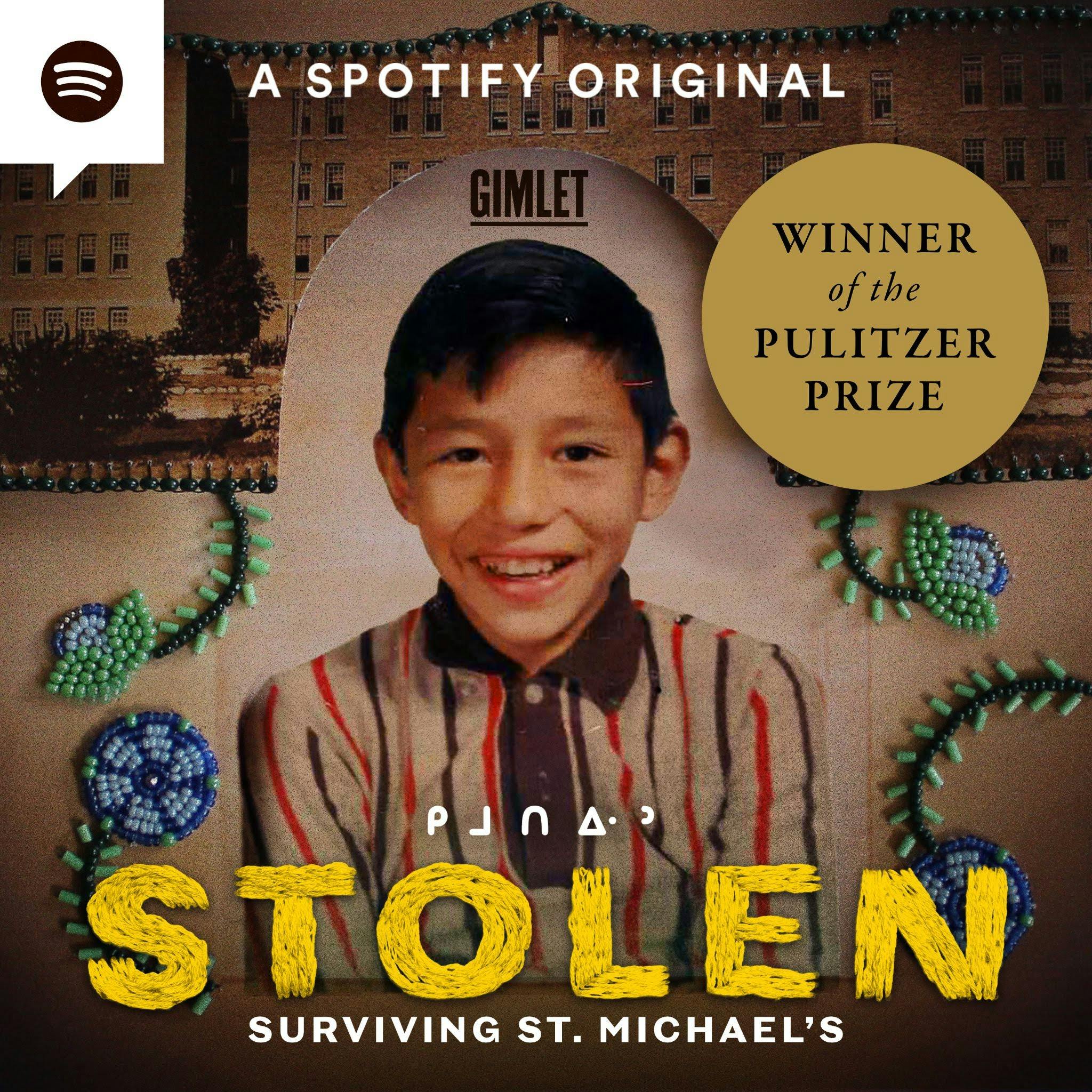
Stolen · Spotify Studios

Not a Place to Be

May 31, 2022·47 min·4 clips
Children as young as five were loaded into cattle trucks and taken from weeping parents by an RCMP officer, a priest, and an Indian agent who threatened jail for non-compliance.
The warning comes first. The episode asks survivors and intergenerational survivors to take care before hearing memories of violence and sexual abuse against children. Then Duck Lake comes into view. St. Michael's Indian Residential School stood there for more than a hundred years before it burned down on April 28, 2001. The testimony stays close to the body. One survivor says fish still cannot be eaten, because the memory of meals at the school never really left. Hunger is described without decoration. Children watched priests and nuns eat pork chops, steak, roast beef, and rich dishes while their own food was different. The smell mattered. It made the gap between authority and children feel physical, immediate, and hard to shake. Kelvin becomes a small mercy. He slipped downstairs late at night to take leftovers from the pantry, then woke his younger sibling with food. That was good food. The memory does not land as mischief. It lands as survival inside a place where children were hungry and alone. The lies were part of the harm. Nuns and priests told children their parents did not want them home, even during holidays. Then grief arrives bluntly. Frank remembers being told his mushum had died as casually as if someone were talking about the weather. He cried at bedtime. When a nun came toward his bed in the night, he thought she might comfort him because she knew what had happened. The excerpt cuts off there, but the scene is already heavy with his expectation, his loss, and the institution's coldness. The credits return listeners to the frame, with ways to contact the show, a residential school survivor support line, and resources for people dealing with violence.

As heard by us

A quiet, hard episode that keeps survivors at the center.

Stolen returns to St. Michael's with a chapter that is more interested in what survivors remember than in recapping the case. It opens with a warning about violence and sexual abuse against children, then moves into hunger, fear, punishment, and the smaller humiliations that…

Read the full review in PlayNext →

Why you'd press play

For when you want testimony that stays raw and unhurried.

Read the full recommendation in PlayNext →
Listen to the show on