Topics / Stock Market Analysis
Stock Market Analysis Podcasts
1,337 shows and 285,240 episodes sit under Stock Market Analysis.
Curated guide to stock market analysis podcasts in 2026: daily earnings briefings (Wall Street Breakfast, The Rundown), macro and sector analysis
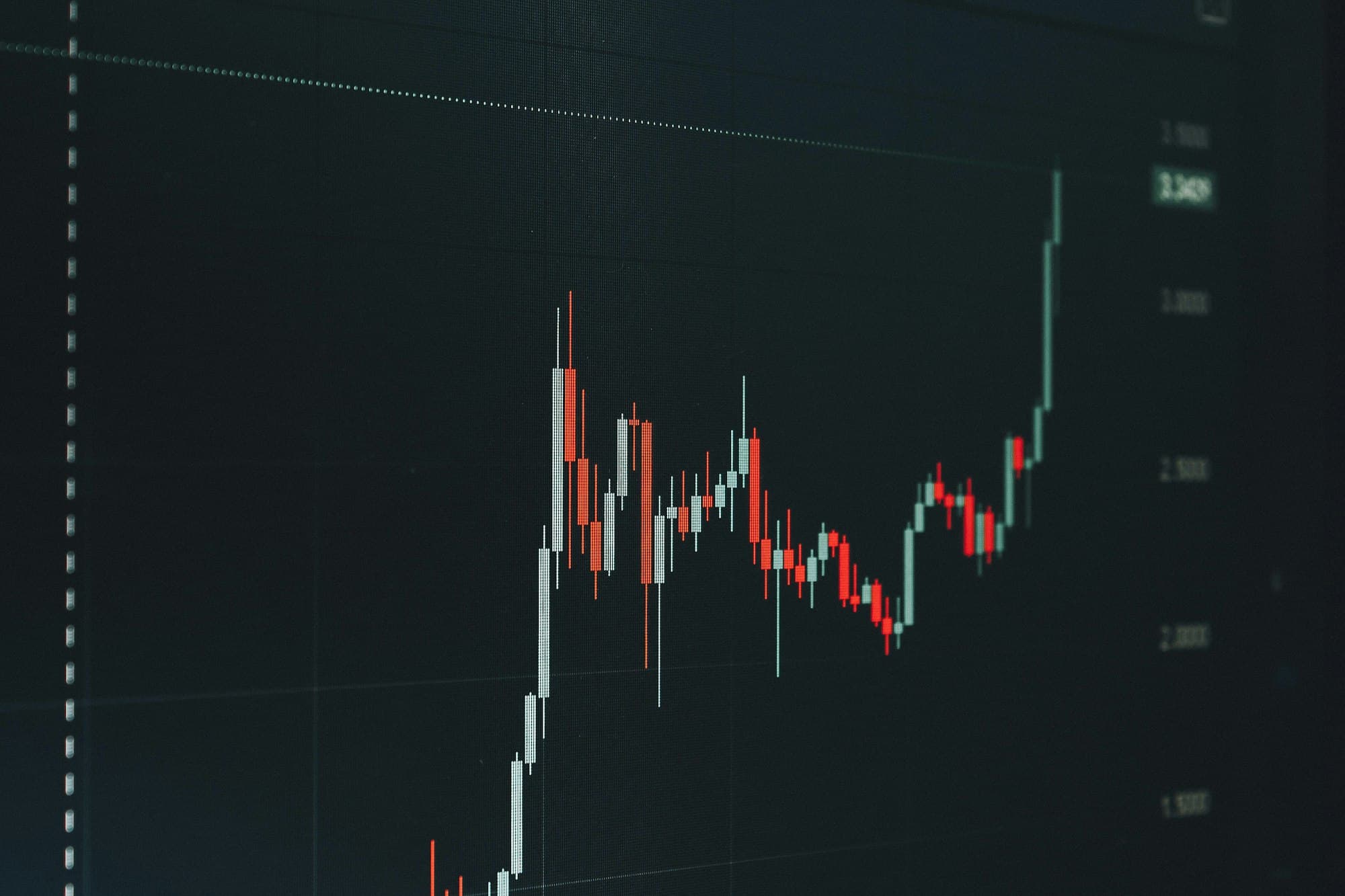
Photo: Arturo Añez on Unsplash · Unsplash License
Swipe · Stock Market Analysis only
Swipe through Stock Market Analysis
Save time discovering your next favourite podcast by listening to just the best minute of an episode.
The stock market analysis slate · every cover a link
All 1,337 stock market analysis shows →






















Next to this on the shelf
Browse by subtopic
Your guide
Inside the world of Stock Market Analysis podcasts
A share price is one number pretending to be an answer. The stock market analysis podcasts worth your time treat it as a question: what would the business have to earn, where is money actually moving, and what happens if the bet goes wrong? Listeners disagree about which question matters. In an August 2026 r/investing thread, one person asked how investors analyse businesses, and a reply told them to buy an index instead.
Research from June 2026 sharpens the argument without settling it. A Review of Accounting Studies paper associated fundamentally focused podcast discussion with greater reductions in information asymmetry. Its authors were careful to call that link an association. That same month, a university account of a separate working paper said podcast-based trading strategies did not reliably beat passive benchmarks. Understanding a market and beating it are different rewards, and the shows below can mostly promise only the first. The Investing guide and the Business & Finance category guide map the wider field.
Reading the tape
Chart-led shows study what other investors are doing with their money. In Ep. 368 How To Find Outperformance In A Volatile Market, Investing with IBD brings on Jack Kosar of Asbury Research. He explains how his firm tracks assets flowing into and out of funds, and why a single signal settles nothing: "we never use one particular indicator."
The Real Investment Show Podcast applies similar discipline to a frightening headline. In 3-23-26 200-DMA Broken – Bear Market or Buy Signal?, the hosts look back at past breaks below the 200-day moving average. They check which breaks came with weak breadth, bearish sentiment and converging averages, the combination they link to longer slides. The host's stance is blunt: "technicals in the short term override fundamentals every time." The host still grants that fundamentals matter over the long run.
Talking Wealth Podcast: Stock Market Trading and Investing Education | Wealth Creation | Expert Share Market Analysis reads Australian stocks the same way. Its best moment in Trump Attacks Iran: Buy these ASX Stocks ASAP is a refusal. A host who has watched CSL for months without buying still wants more confirmation, because "that's the difference between a good trader and a speculator." Weigh that caution against the urgency of the episode's title. Listeners drawn to this style can continue to the Stock Trading & Options page.
Reading the business

The other camp opens the accounts. The Investing for Beginners Podcast - Your Path to Financial Freedom spends Financials Demystified: Long Term Liabilities Explained on one corner of the balance sheet. It uses Microsoft to separate deferred taxes, which the hosts describe as a matter of timing, from long-term tax obligations. It also turns to how Danaher uses debt.

Stansberry Investor Hour goes one document further. In This One Filing Can Tell You When to Buy or Sell Stocks, guest Michelle argues that shareholders should read the proxy statement. She ranks what to check: the summary compensation table first, director pay second. The guest's working rule on the show is that "there are no accidents in SEC filing."
Barron's Streetwise turns that scepticism on the whole index. In Why Stocks are Pricier than they Look, host Jack Hough notes that earnings mostly leave out capital spending. He says they do count the windfall at the companies receiving that spending, such as an estimated $200 billion profit for NVIDIA in its current fiscal year. His suggestion is to look at free cash flow as well. The Canadian Investor makes a smaller version of the point in What's Driving the Drop in Tech Stocks and Bitcoin?, calling flattering EBITDA margins "very, very, very misleading." The Value Investing page continues in this direction.
Conviction, and how to hear it

Some hosts state a thesis and defend it hard. On VRA Investing Podcast, the host in VRA Podcast: Semiconductors and Transports Lead Market Rally Amid War Ceasefire declares the lows are in if events continue on track with the war over, "Unless something god-awful happens." The host predicts something bigger than the 1995 to 2000 run, yet concedes that his IPO figures need checking. Hold on to both halves of that.
The AI Investor Podcast offers a different kind of accountability. In The AI Memory Explosion Is Underway, Intel Is Ready To Skyrocket And 12 Trends Investors Will Want To Know For 2026, the hosts say they run a $500,000 portfolio in public view. They read out losers alongside the winners, including GitLab at minus 46%.

Wall Street Unplugged - What's Really Moving These Markets is looser. Oil is plunging—are stocks in the clear? spends long stretches on college basketball and the Masters around its notes on falling earnings estimates for food and drink companies. Every call on these shows is a host's or guest's opinion. The useful habit is to ask what would prove it wrong.
Markets with a home address


Practical detail depends on where you invest. Investors' Chronicle covers UK private investing. In Industrials, smart investing & real estate: The Companies and Markets Show, the hosts ask why platforms charge dealing fees when market makers do not charge them per trade, and they advise reading your platform's execution policy. Investment Accounts Simplified and 5 Stocks on Our Radar, from The Canadian Investor, walks through TFSA and RRSP rules. The Vox Markets Podcast covers UK small caps at length: The Exchange with Scott McKenzie runs 89 minutes.
Where to start
- New to company accounts: The Investing for Beginners Podcast - Your Path to Financial Freedom, Financials Demystified: Long Term Liabilities Explained. It goes patiently through one corner of the balance sheet.
- Curious about charts: Investing with IBD, Ep. 368 How To Find Outperformance In A Volatile Market. A market model is explained part by part.
- Wary of headline valuations: Barron's Streetwise, Why Stocks are Pricier than they Look. It is sceptical arithmetic about the index.
- Holding individual shares: Stansberry Investor Hour, This One Filing Can Tell You When to Buy or Sell Stocks. It is a reading list for proxy season.
Featured shows below are part of the PlayNext catalog. Updated weekly.
Recommended clips
Start with these Stock Market Analysis clips
The highest-scoring 60-second moments anywhere in stock market analysis, one per show.
Drawn from 8,198 playable clips across 469 shows.
New on PlayNext
Just added to Stock Market Analysis
The newest stock market analysis clips in the library, one per show — ordered by when the clip was made, not when the episode came out.
10 clips, one per show, added between 2026-08-19 and 2026-09-06.
Featured shows
10 shows, described rather than listed
Each one comes with a short write-up and the role it plays in this guide.
Pre-market earnings and macro briefing — short, dense, calendar-driven. Best listened to before the open.
Daily market news with more narrative room per story than a straight briefing. Covers corporate M&A, earnings, and macro events.
Weekly earnings roundups and stock commentary with editorial opinion built in. Accessible without being neutral.
Morgan Stanley Research analysts on macro conditions, sector rotation, and equity market signals. Short, house-view-forward.
Caller questions mixed with host macro commentary — rotation themes, buyback signals, and sector-level conditions.
IBD methodology: chart patterns, relative strength, moving averages, and market cycle analogies for disciplined investors.
ASX-focused sector rotation and market analysis. Covers Australian dividend stocks, materials, healthcare, and tech.
Canadian market coverage with macro guests. TSX-specific events, ETF landscape, and oil-sector implications.
Broad Australian equities coverage — stocks, super, ETFs, and guest portfolio critiques. More conversational register than Talking Wealth.
Long-form conversations on individual companies keyed to earnings seasons and emerging market themes.
Where to start
5 routes in, one per reader
"Banks mixed as earnings season starts" (April 2026) is the format in two minutes — what's printing, what moved, where macro is pressing.
The oil-shock sequence ("How the Oil Shock Is Reshaping Markets", "Oil Markets Are Even Tighter Than They Appear", April 2026) shows the show working one theme across consecutive episodes.
"How To Find Trade Ideas In Value-Oriented And Defensive Sectors" (March 2026) for sector rotation; "Looking Beyond Short-Term Volatility" (January 2026) for psychology-of-markets.
"Buy These ASX Materials Stocks: Last Chance Before the Rally" and "Are Healthcare Stocks Set for a Huge Comeback?" (early 2026) show the sector-by-sector format.
"What the Oil Shock Means for Stocks, Gold & Rates with Bipan Rai" (April 2026) is a good test of the show's guest-plus-market-conditions format.
Glossary
Words hosts use without explaining
The roughly four-week window after each quarter ends when S&P 500 companies report financial results. The most concentrated period of company-level market-moving news, covered in real time by Wall Street Breakfast, Motley Fool Money, and The Rundown.
A measure of a stock's price performance compared to the overall market or a benchmark index over a given period. A core metric in IBD's analytical framework, used to identify stocks outperforming the market during both advances and corrections.
The movement of investment money from one industry sector to another, typically as economic conditions or interest rate expectations shift. A recurring analytical frame in InvestTalk, Investing with IBD, and Talking Wealth Podcast.
A chart pattern in technical analysis where a stock forms a rounded bottom (the cup) followed by a smaller consolidation (the handle) before a potential breakout. A frequently discussed setup in Investing with IBD episodes.
Australia's primary securities exchange, covering Australian-listed equities including resources, financials, healthcare, and technology companies. The primary focus of Talking Wealth Podcast and part of Equity Mates Investing Podcast's coverage.
A decline of 10% or more from a recent peak in a broad market index, typically the S&P 500. Distinct from a bear market (20%+ decline). Thoughts on the Market used the correction framing in a sequence of April 2026 episodes tracking whether the market had bottomed.