Topics / Serial Killers
Serial Killers Podcasts
96 shows and 12,178 episodes sit under Serial Killers.
The best serial killer podcasts on PlayNext: case-by-case deep-dives across decades and borders
Swipe · Serial Killers only
Swipe through Serial Killers
Save time discovering your next favourite podcast by listening to just the best minute of an episode.
The serial killers slate · every cover a link
All 96 serial killers shows →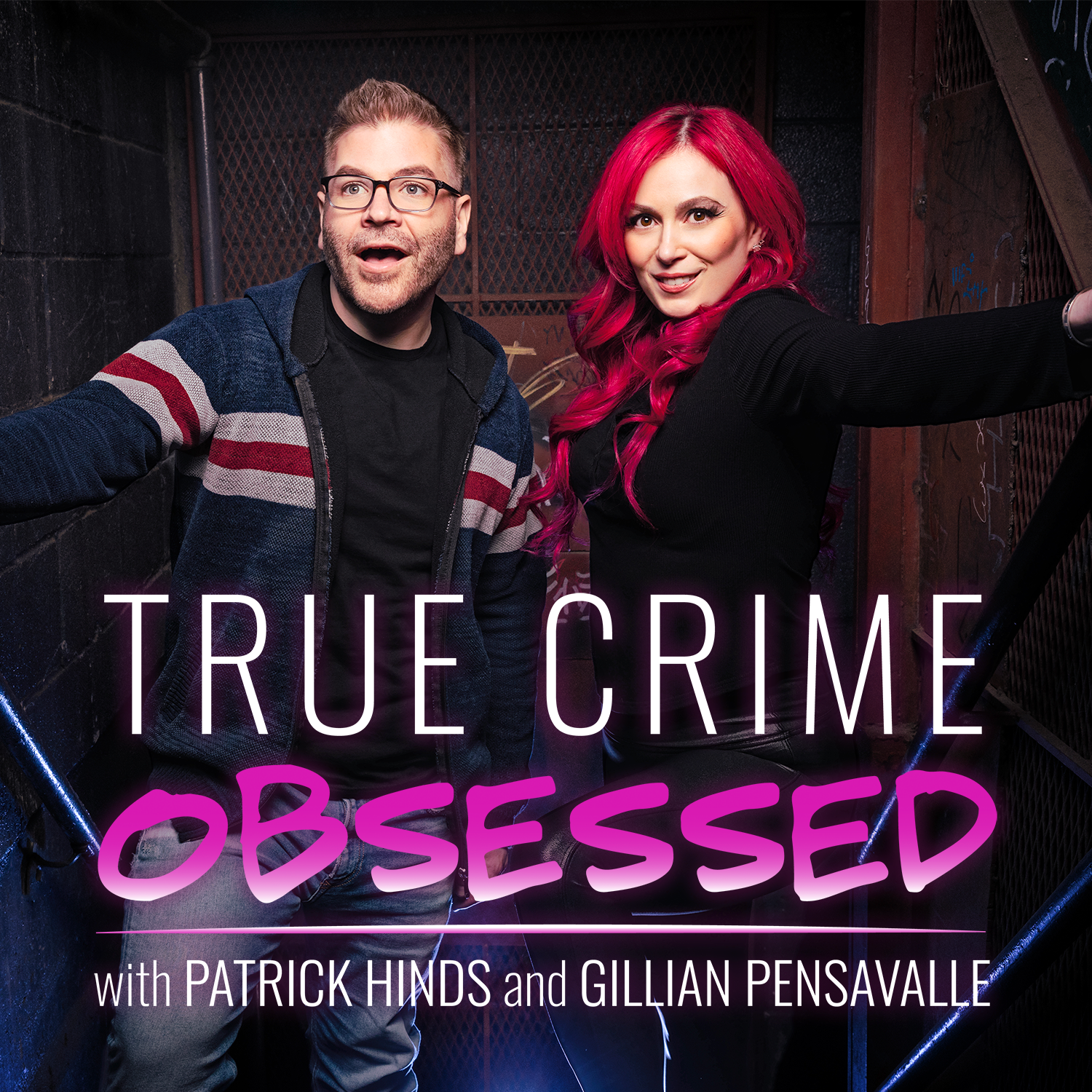








Next to this on the shelf
Subtopics to explore
Before you press play
Finding the right Serial Killers show for you
The most absorbing listening begins after the name is familiar. A strong episode has to rebuild the sequence: how a killer moved through ordinary spaces, why warning signs failed to connect, and what finally broke the pattern. Audio makes that reconstruction unusually intimate. A patient narrator can hold a timeline together; a skeptical co-host can stop it cold with the question the listener was already forming.
For cases beyond repeat offenders, head back up to the wider True Crime section. Missing Persons follows disappearances where the central facts may still be unsettled, Wrongful Conviction examines failures of guilt and proof, and Romance & Confidence Scams traces manipulation without assuming that murder is the endpoint. Here, the focus stays on repeated killing and the very different ways podcasts make those histories listenable.
The case as an argument
When Killers Get Caught: A True Crime Podcast approaches crime through context and consequence. Its measured solo narration tends to move backward before moving forward, laying out the structures around a case and then arguing through the gap between law, justice, and moral responsibility. BTK: The Killer Who Lived a Perfect Life Next Door offers a recognizable entry point, while Samuel Little: The Most Prolific Serial Killer in U.S. History and the 68 Women Still Nameless makes plain that the show keeps victims, identification, and institutional failure in the frame. Listeners who want interpretation alongside chronology will be at home here.

Foul Play: A Historical True Crime Podcast works at a different distance. The narration is grave and scripted, with concrete scene-setting and a strong interest in restoring victims to the story before method or motive takes over. Its geography is unusually broad: Marrakesh: The Shoemaker's 36 Graves, Netherlands: Angel of Death's Many Victims, and Finland: Matti Haapoja's Famine Murders move well beyond the most recycled American cases. The historical setting matters because investigation, medicine, policing, and public fear all sound different when modern assumptions no longer apply.

Crimehub: A True Crime Podcast also prefers shaped narration, though its voice has a more cinematic edge and the occasional dry aside. It builds people and places before narrowing toward the crime, then uses short moral corrections to keep vivid description from becoming spectacle. "The Slavemaster" | The Internet's First Serial Killer and Joseph Kallinger | Like Father, Like Son are useful tests of that style: ominous framing, biography, and an insistence on telling the listener what deserves attention.
When another voice enters the room
Coffee, Murder, & Mystery sounds like research being unpacked across a kitchen table. One host carries the timeline while the other interrupts with clarifying questions, disbelief, or an ordinary-person check on behavior that makes no sense. Its two-part treatment begins with Murder; Billy Chemirmir - Part 1 and continues in Billy chemirmir Part 2; The Butcher Baker AKA Robert Hansen provides a single-episode alternative. The pace is patient, and uncertainty is allowed to remain uncertainty.

Dawn of Mantis: True Crime, Mysteries and More is looser and more openly digressive. Prepared case narration shares space with a panel that jokes, corrects, questions, and occasionally wanders well off the timeline before finding its way back. DOM Ep364 - Arkansas Serial Killer James B Grinder is the direct on-ramp for this subject. Choose it when a polished documentary voice feels too sealed off and you would rather hear people work through the account together.
Mountain Murders brings an even warmer social texture. The hosts have an easy, long-established rhythm, complete with regional vernacular, unfinished sentences, and pre-case banter that can feel like an evening conversation before the narration settles in. The flood and the serial killer is the clearest starting point here. If you want some human air around grim material, that meandering delivery is a strength rather than a flaw.
Fast, unruly, and emotionally present
Murder, Mystery & Makeup moves briskly, reacting to the story almost as quickly as it tells it. The solo delivery leaves in conversational pivots, pronunciation worries, guesses, side-eye, and abrupt returns to the timeline. Grandma is secretly a serial killer and CANNIBAL?? The shocking crimes of the Granny Ripper shows the heightened headline style, while "People die, they should just get over it." - The Monster Who Haunted Australia: Ivan Milat points toward a more familiar case. It suits listeners who prefer visible reaction over clinical distance.
Crimes, Killers, Cults and Beer: A True Crime Podcast turns prepared notes into a long, profane conversation. Cohost interruptions and gallows humor are structural features, and the show can admit uncertainty without becoming solemn or tidy. 175 The Ken and Barbie Killers, Paul Bernardo and Karla Homolka Part 1 tackles an infamous pair; 143 Scott Lee Kimball, FBI Informant Serial Killer offers a less ubiquitous name. Expect rough edges, source callouts, and emotional honesty amid the jokes.
True Crime Obsessed is faster still. The duo recaps documentary beats, then immediately questions, mocks, judges, or spins them into a bit, using fragments and emphatic resets to keep the pace high. Manhunt: Joanne Dennehy is the most direct fit for a serial-killer listening session. Beneath the camp and outrage, the timeline stays legible; this is energetic companion listening rather than quiet immersion.
After the narrative reaches court
Some listeners are less interested in a killer’s mythology than in what happens once evidence, pleas, and liability take over. Hidden Killers Live! Daily True Crime News & Breakdowns works in that argumentative present tense, moving among documented facts, behavioral inference, viewer questions, and frustration with official explanations. Its Rex Heuermann sequence includes Heuermann Pleads Guilty — What the Evidence and the Plea Deal Reveal and Heuermann's Plea, the Family Lawsuit, and the Psychology of Not Knowing. The tone is conversational and insistent, closer to a live case discussion than a finished documentary.
True Crime Today | Daily True Crime News & Interviews covers similar ground through a talk-radio legal register. Court procedure and evidentiary questions sit beside blunt moral reaction, with rotating voices and transcript-heavy stretches giving individual episodes different textures. Start with Heuermann Plea Mechanics, Family Liability, and the Psychology of Proximity, then move to Heuermann's Plea Deal: Eight Victims, FBI Cooperation, and What Comes Next. These episodes are for the listener who wants the machinery after the arrest: what a plea changes, what remains contested, and where responsibility may extend.
Where to start
For a sober, contextual introduction, begin with When Killers Get Caught: A True Crime Podcast and BTK: The Killer Who Lived a Perfect Life Next Door. Choose Foul Play: A Historical True Crime Podcast and Marrakesh: The Shoemaker's 36 Graves when place and historical distance matter most. Coffee, Murder, & Mystery is the conversational option; start with Murder; Billy Chemirmir - Part 1. If you want speed, jokes, and immediate reaction, try True Crime Obsessed with Manhunt: Joanne Dennehy.
Featured shows below are part of the PlayNext catalog. Updated weekly.
Recommended clips
Top Serial Killers moments
The highest-scoring 60-second moments anywhere in serial killers, one per show.
Drawn from 3,009 playable clips across 82 shows.
New on PlayNext
Just added to Serial Killers
The newest serial killers clips in the library, one per show — ordered by when the clip was made, not when the episode came out.
1 clips, one per show, added 2026-08-04.
Featured shows
8 shows, described rather than listed
A short write-up for each, plus the job it does in this guide.
The corpus's deepest serial-killer case slate — Bruce McArthur, Joel Rifkin, Dennis Nilsen, and the Long Island investigation.
Three-part Dennis Nilsen arc and 19th-century cases that trace serial killing beyond the modern era.
Wide case roster including Belle Gunness, Dana Sue Gray, Andrew Cunanan, and Daniel Printz.
Cases where gender shapes both the crime and the cultural response — Aileen Wuornos, Myra Hindley.
Multi-year Long Island Serial Killer coverage, updated through the Rex Heuermann developments in 2024.
CBS newsmagazine serial-killer episodes: Son of Sam interview and Mind of a Serial Killer, from August 2025.
Joseph Paul Franklin, New Bedford Highway, and a plain-spoken Southern conversational register.
Cases from South Africa rarely covered in English-language podcasting, including a firsthand pen-pal account.
Where to start
5 routes in, one per reader
Start with Catching A Serial Killer: Bruce McArthur — a long-delayed investigation with institutional failures at every level.
The Life and Crimes of Serial Killer Edward H. Rulloff reaches back to the 19th century; the Nilsen three-parter is the most sustained single-case arc in the corpus.
Aileen Wuornos and Myra Hindley episodes treat gender as a substantive lens, not just a hook.
Multi-episode thread from 2020 through the Rex Heuermann arrest and 2024 updates.
Consistent coverage of South African cases from the 1940s to the present, including an unusual pen-pal account.
Glossary
Jargon you'll hear on Serial Killers podcasts
The failure of law enforcement agencies to connect related crimes across jurisdictions — a documented factor in the delayed identification of several serial killers covered on this slate.
The study of who a killer's victims are, how they were selected, and what the victim profile reveals about motive and method.
The interval between killings that distinguishes serial murder from mass or spree murder — a legal and investigative distinction, not a psychological diagnosis.
Law-enforcement shorthand for 'unidentified subject' — used in active serial-killer investigations before an arrest.
An FBI Behavioral Science Unit classification framework for crime scenes, widely taught but also widely criticised by later researchers for oversimplifying offender behaviour.
An investigation in which active leads have been exhausted without a conviction — several cases covered on this slate, including the Long Island and New Bedford Highway killers, remain legally open as of 2026.