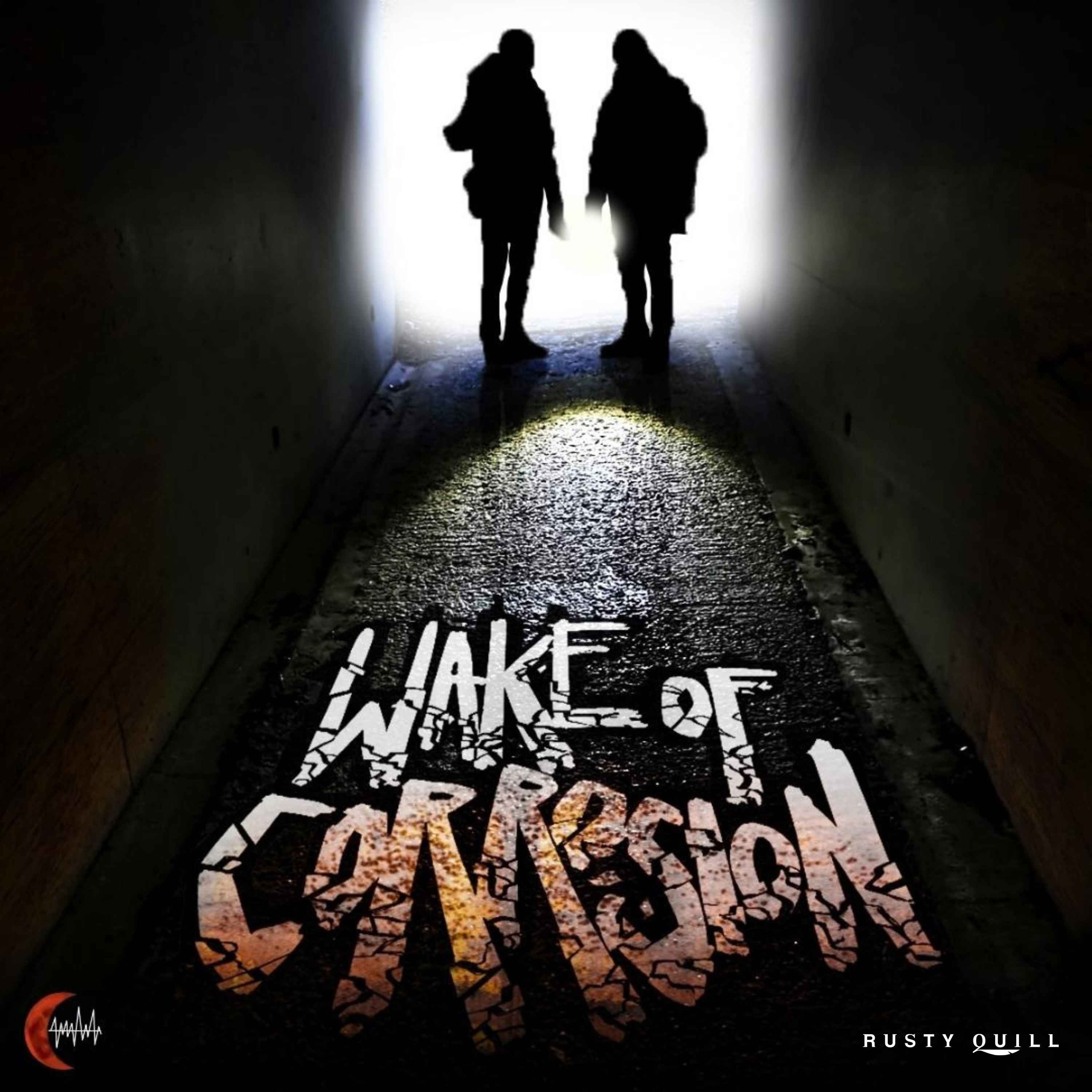
Wake of Corrosion is a scripted horror drama about life after the world has gone fundamentally wrong. It is not interested in clean explanations first. The show begins from voices under pressure: people in bunkers, people in cells, people walking through streets that should feel familiar and do not. Its apocalypse has texture. There are radios, notes, narrow walkways, cold rooms, damaged public spaces, strange vessels, and ordinary conversations that keep fraying under the weight of what has happened. The fear often arrives as a slight break in reality before it becomes undeniable. A body moves in a way it should not. A corridor seems to hold more than it can. A comforting broadcast sounds less like safety than surrender. Wake of Corrosion uses those moments to make its horror feel intimate before it becomes cosmic. The series is bleak, but it has a human pulse. Characters argue, comfort, accuse, and bargain with each other while the larger world presses in around them. That emotional friction matters. The show understands that survival is not just a matter of food, shelter, and escape; it is also a question of guilt, loyalty, rage, memory, and what a person can still refuse to become. Its survivor fragments and related stories broaden the setting without making it feel neat. Some accounts play like journals from the edge of collapse. Others feel like testimony from people who have seen too much and are still trying to name it. The writing has a literary patience, lingering over sensation, dread, and moral exhaustion. When violence or body horror appears, it lands because the show has already made the listener feel the room closing in. Wake of Corrosion suits horror listeners who prefer atmosphere, character strain, and apocalyptic mystery over quick shocks. It leaves the sense of a world still echoing after impact, with voices calling from the dark to prove they were there.