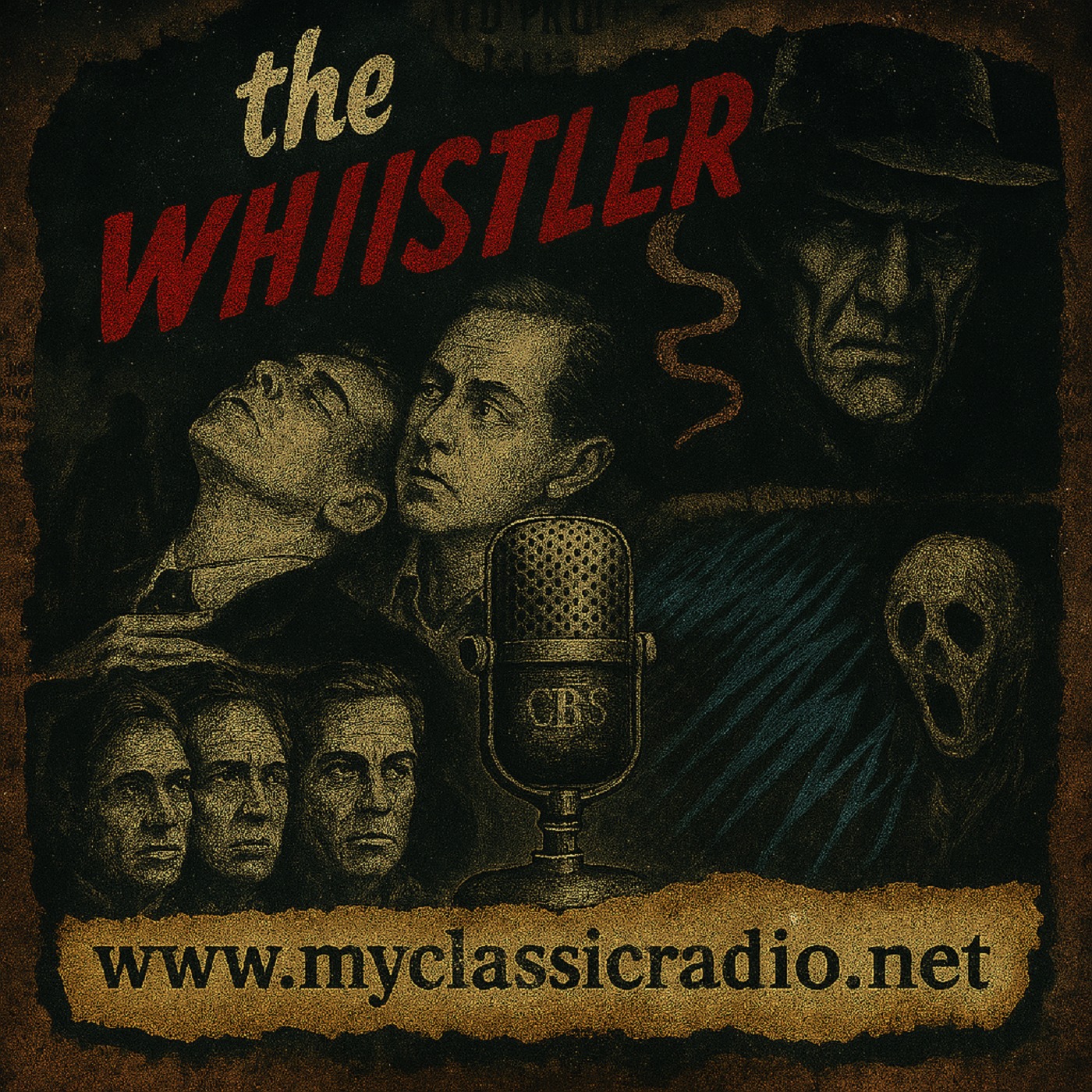
The Whistler is a classic radio noir anthology built around crime, concealment, and the moment when a hidden motive begins to show. Its stories rarely need a detective at the center, because the narrator is already watching from above. He knows who is frightened. He knows who is lying. More importantly, he knows which ordinary detail will later become the trap. The episodes move with brisk assurance through hotel lounges, foggy streets, bank vaults, estates, theaters, bedrooms, and mountain ledges. A scene opens fast, then the narration pulls back and tells the listener what the characters cannot admit. In High Death, Jim Mason saves Laura from a fall and immediately confronts the darker fact of what her death would have given him. In Deadly Rumor, Lillian waits while gossip around Frances Holbrook and Ralph Holbrook gathers force. The show likes that kind of moral pressure. A rumor becomes a weapon. A briefcase, a black bag, or a safe deposit box becomes more than an object. It becomes proof, temptation, or threat. Kirk Gordon's staged robbery in A Helping Hand and Ted Lucas's diamond anxiety in Triple Cross both show the series at its most efficient: crime has already happened or is about to happen, and every conversation sounds like it may expose the guilty. The tone is grave but not ponderous. Dialogue is clean, functional, and edged with suspicion, while the narration supplies the fatal commentary. The old sponsor interludes and CBS closings give the episodes a preserved broadcast texture. They do not soften the stories. They make the darkness feel neatly packaged, which is part of the appeal. The Whistler suits listeners who want noir with structure, theatricality, and a final turn of the knife. It is less about mystery-solving than about watching bad intent move toward its own reckoning.