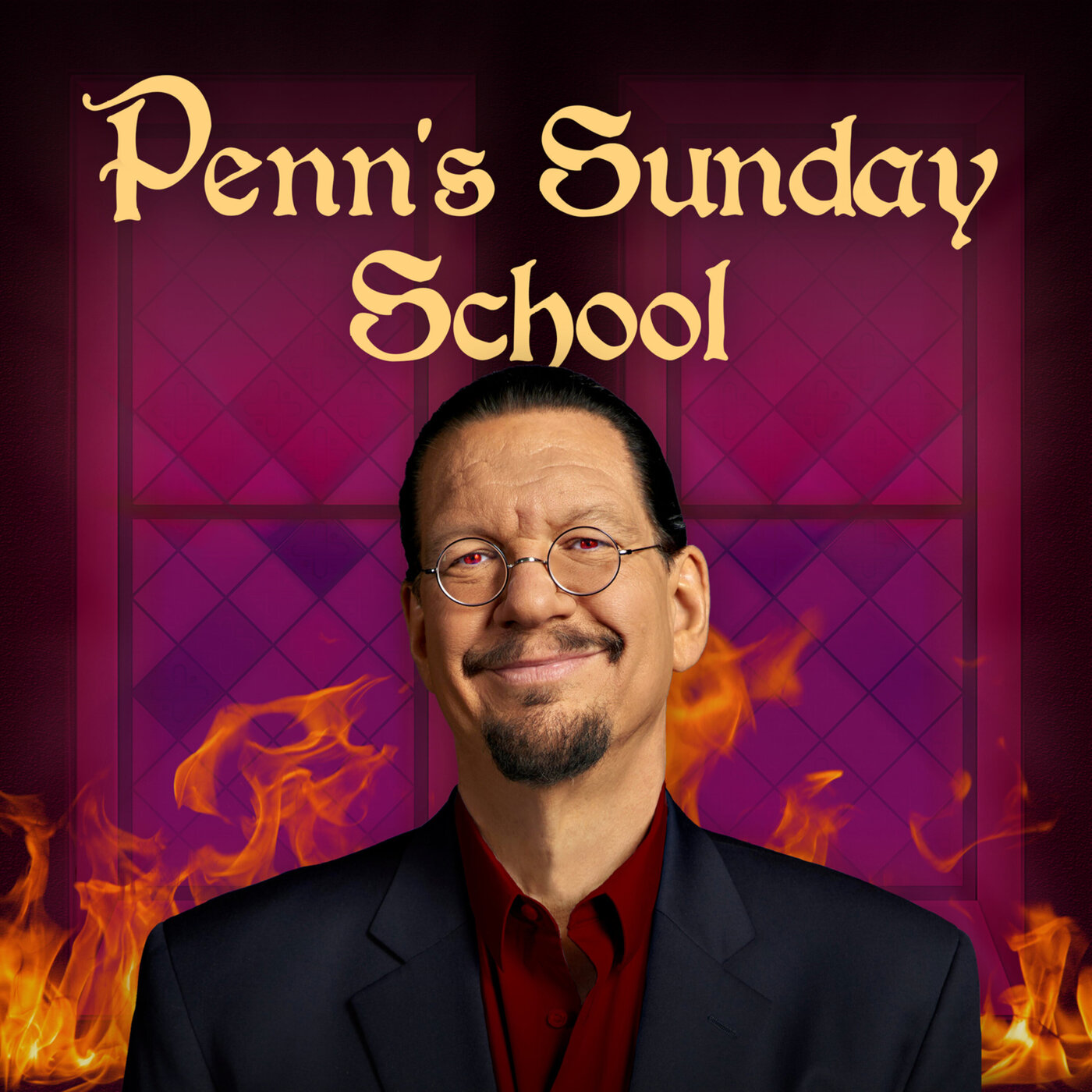
Penn's Sunday School is a long-running comedy conversation with the manners of a live backstage hang and the attention span of a magician with too many stories queued up. Penn is the dominant storyteller, and Matt Donnelly is the counterweight who opens the room, nudges the pace, catches details, and sometimes gets roasted for existing near a punchline. The show rarely walks a straight line. It sprints, doubles back, misremembers, corrects itself, and treats the correction as useful fuel. Recent episodes move through The Big Whoop, Clown Town, Duck's Breast Mystery Theater, Higgins Boys and Gruber, Two-Headed Dog, Jokers of Magic, the Oscars, shows, small-room Las Vegas magic, and the indignities of healing in public. That range is not decorative. It is the actual subject: how performance, memory, inconvenience, and ego get braided together when funny people keep talking past the clean ending. The show has a sharp feel for comedy history. Penn's admiration for Jim Turner, Gruber, and Mark Fite comes through as storytelling rather than résumé polishing. A guest or cast can enter, but the house rhythm remains the same: fond, cranky, fast, and allergic to solemnity. The recent health material gives the comedy a physical anchor. Broken ankles, wheelchairs, boots, uneven ground, restrooms, walking to a dressing room, and standing up again become running evidence that the body is both miracle and nuisance. Matt's own performance life adds a second track, from ship shows to the Magician's Room and the grim comedy of entertaining four people with full commitment. Las Vegas is everywhere, but not as postcard glamour. It appears as rooms, show counts, tech load-ins, contracts, schedules, backstage corridors, and jokes about what makes a Tuesday-Wednesday show worth building a trip around. The show also keeps brushing against religion, not reverently and not lazily. Easter, joke provenance, religious skepticism, and old comic instincts all sit in the same pile. Sponsor reads are not sealed off from the room; they are folded into the performance until lifelong learning, Bob Dylan, abstract art, and time management become part of the comic weather. The result is messy by design. It rewards listeners who can enjoy a digression before knowing why it matters. It is not polished panel comedy. It is sharper, stranger, and more personal than that. The pleasure is hearing seasoned performers turn practical irritation into timing, then undercut the timing before anyone can admire it too cleanly.