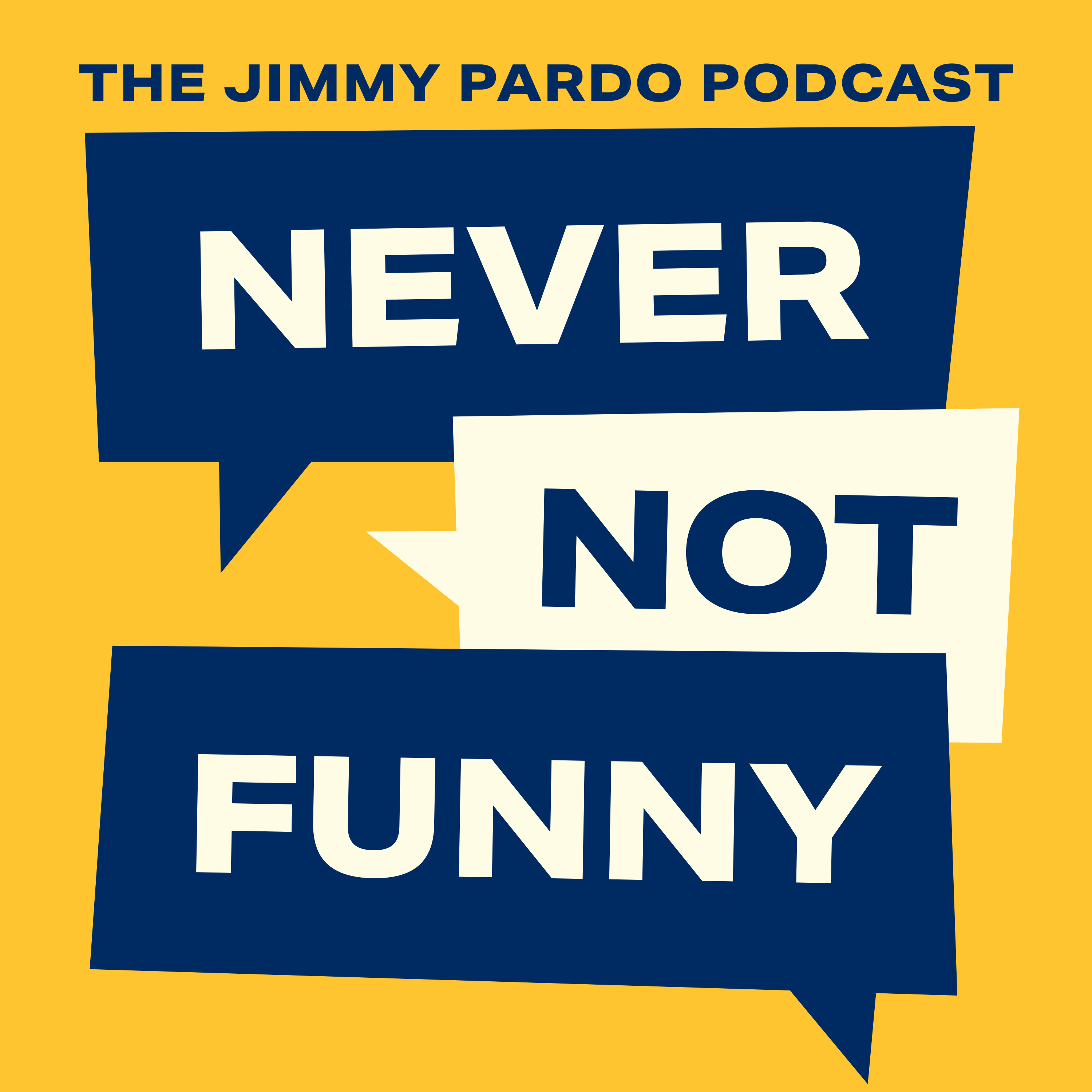
Never Not Funny has been running since 2006, and it sounds like it. Jimmy Pardo anchors a comedy panel where the regulars finish each other's sentences and guests are expected to keep up rather than be interviewed. The subject matter is deliberately small: groceries, vegetables, weather complaints, parking tickets, old television, cars. What matters is what the room does with it. In one stretch, a guest admits to ordering everything through Amazon Fresh and is immediately cross-examined about cabbage — coleslaw counts, apparently — until the table lands on corn as the correct favorite vegetable, on the cob, creamed or niblet style. Another episode turns a personal history of unpaid tickets into an argument about whether police computers are tracking the plate, what happens at ticket number 140, and whether a UCLA campus officer has any authority at all. There is a genuine note underneath it, too, when someone points out that plenty of people simply cannot afford to pay. That tonal drop happens often. The show is dry, then briefly grave, then back to nonsense without announcing the change. A conversation about Jay Leno's roughly two hundred cars moves from mock-envy to a one-of-one Walker-bodied Duesenberg worth twenty million dollars to a sincere question about whether that money could help the homeless — and then straight back to a joke. Rain gets defended as a legitimate civic emergency in a bit aimed squarely at listeners in blizzard country. Guests including Josh Day, Matt Weinhold, Chloe Radcliffe, Ben Cumings, Todd Levin and Todd Glass rotate through, and the regulars around the table are named and needled as much as anyone. Pardo also runs the business from the microphone: stand-up dates in Cambridge, Pittsburgh and Brooklyn, anniversary specials, archive bundles, and poster auctions raising money for the American Foundation for Suicide Prevention in honor of Andrew J. Koenig. The free feed offers samples of the lettered Platinum episodes; full versions and the back catalog live behind subscription tiers at the show's site. Sponsor reads are heavy and openly acknowledged as separate from the real thing — at one point a returned order becomes its own bit. Language is unfiltered and the teasing can be blunt, though it never reads as mean. The appeal is the texture: a group of comedians who have logged hundreds of hours together, arguing about nothing in particular, with the confidence that the tangent will pay off. For listeners who want a hangout show rather than a topic show, this is the long-running version of the form.