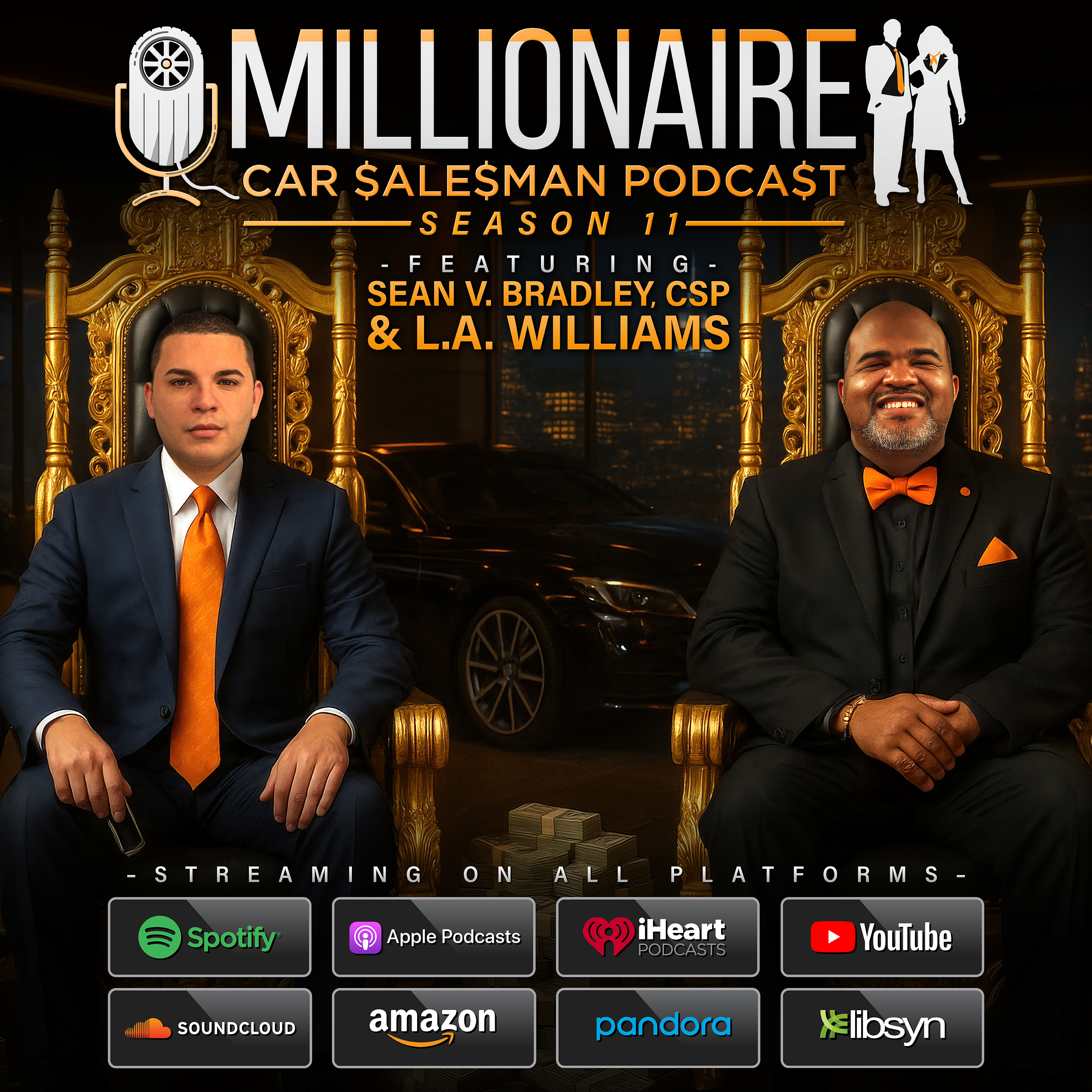
Millionaire Car Salesman Podcast is a dealership coaching show with the volume turned up. It lives inside automotive sales. The conversations treat selling cars as a daily discipline built from training, process, language, follow-up, relationships, and a relentless awareness of money. Sean V. Bradley and L.A. Williams often work from frustration: managers who do not train, salespeople who call themselves professionals without studying elite performers, stores that let customers leave angry, or dealers who miss obvious profit leaks. The result is more locker-room whiteboard than polished business seminar. It moves fast. Episodes swing from blunt motivational pressure to detailed dealership mechanics, including CSI scoreboards, owner retention, service advisor performance, referral strategy, BDC ownership, finance department income, data mining, equity mining, and credit card processing costs. The show likes a number. A customer recovery conversation becomes a retention argument; a fee example becomes a lesson in how many extra cars a store must sell just to cover wasted expense. Its interviews are often built around practical reversal: stop asking for referrals, ask for introductions; stop half-training staff on a busy floor, protect the time; stop treating positivity as softness, recognize the toughness it takes. That makes the show useful for people who want pressure with their instruction. It is not quiet. Sponsor reads and Bradley on Demand pitches are part of the texture, and the hosts regularly fold self-promotion into the same breath as coaching. Still, the core is specific. The show returns again and again to what happens inside real dealerships when managers, salespeople, service teams, finance managers, vendors, and owners either follow a system or drift. Recent episodes also broaden the frame beyond pure sales, bringing in NADA recaps, women in automotive, emotional intelligence, customer experience, and conversations with named guests such as Tim Sylvia and Jake Rask. The editorial center is clear: success leaves clues, but only if a dealership is willing to study, practice, measure, and take ownership. For listeners in the automotive business, it offers a hard-charging mix of sales technique, management accountability, vendor skepticism, and practical money talk. For everyone else, it is a window into a very specific sales culture where confidence, repetition, and process are treated as survival tools.