Topics / Political History
Political History Podcasts
168 shows and 17,115 episodes sit under Political History.
Revolutions, Explaining History and Election College offer serialized revolutions, modern political analysis and conversational election history.
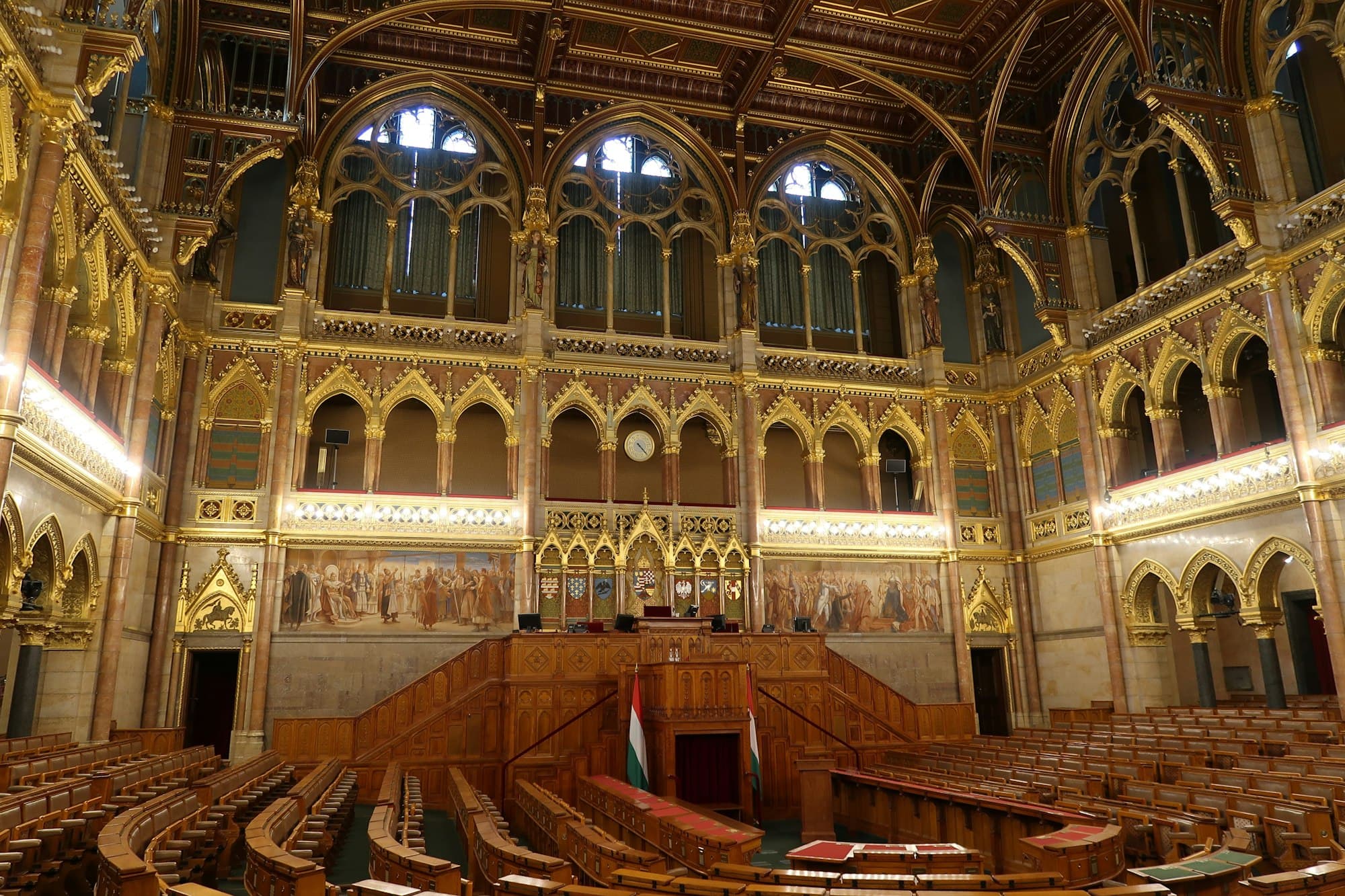
Photo: Aurora Song on Unsplash · Unsplash License
Swipe · Political History only
Swipe through Political History
Save time discovering your next favourite podcast by listening to just the best minute of an episode.
The political history slate · every cover a link
All 168 political history shows →






The guide
Some great Political History podcasts to get to know

In one conversation on Historically Thinking, a single line from a Virginia planter's records is read as noting money spent on brandy for enslaved harvesters who had been caught wet in a storm. Nothing more is written. The meaning has to be built around the entry: who was cold, who paid, and what a small allowance meant inside a system of ownership. Political history in audio is at its best when it works this way. It takes a scrap of record, or a speech read in full, and asks how power bore down on the people inside it.
The form is wide. It includes scripted serials about revolutions and volunteer readings of parliamentary oratory. It includes two non-Americans turning the presidency into a knockout tournament, and activists recalling the year they joined a party. Listeners argue about several things: who gets to narrate a contested national past, whether a comic register suits painful history, which sponsors are acceptable, and whether presenters need real expertise. The economics are part of the argument. In September 2026, Bunk's Tony Field argued that conditions favour inexpensive, personality-led conversation.
The audience is changing shape as well. In June 2026, Edison Research reported that in the third quarter of 2025, 82% of weekly US podcast consumers watched video podcasts and 78% consumed audio-only podcasts. These are overlapping habits, not rival camps. Podnews reported Edison's estimate that the same month of 812 million hours of weekly US podcast consumption, up 5% over twelve months. None of that tells you which hour to spend, so this guide sorts the field by the kind of listening each show offers.
Revolutions as narrative

Dictators tells the French Revolution as a two-part life of Maximilien Robespierre, and Famous Revolutionaries: Maximilien Robespierre Pt. 2 carries an early warning about its graphic content. The narration moves quickly, but it explains the machinery before the crisis. The episode notes that Robespierre did not sit on the Revolutionary Tribunal, though his friends and even his landlord did. It also cites historian William Doyle's judgment that the definition of political crimes became absurdly vague. The pleasure here is momentum. The cost is that interpretation and storytelling arrive at the same speed, so it pays to notice when a named historian is doing the talking.
ISM | Ideas Meet Power takes the same decade and asks what its ideas became. In S1E3 What is Jacobinism? The Birth of the Radical Left, the Conspiracy of Equals, an attempted insurrection against the Directory in 1796, becomes a bridge to the socialist, anarchist and communist movements that followed.

The Movements: A Podcast History of the Masses, which its publisher frames as history from a Marxist perspective, moves east. The Russian Revolution #7 - To End All Wars builds its case from quoted scholarship, including S.A. Smith's description of a command system that worked like "a loose set of rival and overlapping jurisdictions." The show declares its perspective, which makes it easier to weigh. For single turning points, the Historical Events page is the next stop. Listeners drawn to campaigns rather than committees can try the Military History page.
The presidency as an institution

Some shows treat the American presidency as a machine with paperwork. Presidencies of the United States reads its way through dated letters in its Monroe episode. The Monster of Party Spirit: James Monroe and the Fragile Era of Good Feelings sets Monroe's call for militia reform beside historian Leonard White's argument that the militia's disorder was intentional and that no political will for reform existed.
10 American Presidents Podcast works at a wider angle. 10 American Presidents The Election of 1800 names all sixteen states and counts around 900,000 enslaved Africans in the population. It describes a new capital still largely incomplete. The show's Reagan run mixes archive tape from the Iceland summit with long expert answers. In Ronald Reagan Q&A with professor Iwan Morgan, the dementia question gets a careful reply from a guest who has read Reagan's diary and does not see a man then seriously in its grip.

BOB DOLE : The Life that Brought Him There is the slow road, a serial biography presented by Randal Wallace. By Episode 440 BOB DOLE The Life That Brought Him There (Part 21) The Senate (D) How the Senate has changed, it is gathering witnesses on how the airplane and television reshaped the Senate, including the view that cameras made members more cautious. Election College | Presidential Election History, with Jason Goff and Ben Smith, is chattier. Richard Milhous Nixon - Part 2 treats the Checkers speech as a defence of a political fund that was not illegal but invited accusations of conflicts of interest. Fiasco, hosted by Leon Neyfakh, covers the 2012 Benghazi attack and the political storm that followed. The American History page widens the view.
Scoreboards, rankings and near misses
American Presidents: Totalus Rankium ranks every president, and its hosts say plainly that they are not American. Knockouts: The Final brings in two American podcasters to argue Lincoln against Franklin Roosevelt. The wartime internment camps come up as a black mark, and one host gives Lincoln the round partly on those grounds. Then the episode dissolves into a mock sportscast called America Ball.
Fail to the Chief, from comic "historian" Thom Woodley, studies the people who almost won. BONUS! Reviewing the 6th Period of American Politics (1968-2004) lays out Woodley's own theory that political realignments seem almost always to come in 36-year cycles. Near the end of FINAL EPISODE: Ranking ALL of the Presidential Losers, he offers a line worth keeping: "Every one of us can win as long as one of us loses, and loses bravely." Both shows treat counterfactuals as play. That is their charm and their limit, because the scoring admits it is subjective.
The speech itself
Worlds Best Orations, Volume 2 reads the speech, in LibriVox recordings. In 062 - Opening the Charge of Bribery Against Hastings Part 3 - Edmund Burke, Burke's case against Hastings over revenue and corruption in India rises to a cold question: "is Mr. Hastings a man against whom a charge of bribery is improbable? Why, he owns it." 046 - Against Pitt and War with America - Lord Brougham sets an 1812 Liverpool election address against war. Hearing a sentence built for a chamber is a different education from hearing it summarised. The trade-off is that the context is thin, and commercial breaks cut across the oratory. The British History page offers more on that side of the Atlantic. The Movements: A Podcast History of the Masses also carries a reading of Amilcar Cabral's The Weapon of Theory by Amilcar Cabral (Audiobook with Intro).
Courtrooms, archives and witnesses
Historically Thinking, hosted by Al Zambone, is where to hear method. In Terrible Intimacy: Melvin Patrick Ely on Interracial Life in the Slaveholding South, court records from Prince Edward County, Virginia, reconstruct the trial of an enslaved man named Tom, accused of killing Richard Foster. The conversation also corrects a common assumption: "Everybody knows, or everybody thinks they know that black defendants couldn't testify in court." In fact, no defendant could. Black witnesses could testify and contradict white ones, though not against a white defendant. The episode suspects, while admitting it cannot prove it, that many enslaved people had surnames white record-keepers ignored. Cold War Analogies: Francis J. Gavin on how (and how not) to use the Cold War as a guide applies the same care to strategy and refuses to treat the Cold War as one monolithic period.

Irish Left Archive Podcast gathers testimony from inside movements. In Eugene McCartan: Communist Party of Ireland, McCartan recalls civil rights marches, Bloody Sunday and joining the party in the mid-1970s. INLA: Deadly Divisions, with Charles Tuba works through a book on the INLA's splits and the strain of running a party alongside an armed wing. Memory of this kind is testimony, not a verdict, and the show is most useful heard that way.
History argued in the present

Some shows use the past to argue about now. In Technologies of Genocide: Suchitra Vijayan in Conversation with Abduweli Ayup, from the Polis Project Conversation Series, Ayup, a Uyghur linguist once imprisoned by Chinese authorities, describes phone, ID, bank and electricity records linked into one surveillance platform. His account of where that system came from is his own. On African Renaissance Podcast, hosted by Dr Mbuyiseni Ndlozi, Episode 05 - Dr. Frans Cronje On Mbekinomics cites a colleague's estimate that uninterrupted growth at the rate discussed might have left South African unemployment closer to 10% than over 30%. Hear both as advocacy grounded in history.
Where to start
For the patient reader of documents: Historically Thinking, Terrible Intimacy: Melvin Patrick Ely on Interracial Life in the Slaveholding South. One trial opens out into a whole society.
For a story with momentum: Dictators, beginning at Famous Revolutionaries: Maximilien Robespierre Pt. 1.
For political language at full force: Worlds Best Orations, Volume 2, 046 - Against Pitt and War with America - Lord Brougham, a single speech.
For an argument among friends: American Presidents: Totalus Rankium, Knockouts: The Final, with two American guests pushing back.
For memory from inside a movement: Irish Left Archive Podcast, Eugene McCartan: Communist Party of Ireland.
Whichever you choose, listen for the moment a host separates what survives in the record from what they believe about it. The History page maps the wider category from there.
Featured shows below are part of the PlayNext catalog. Updated weekly.
Featured shows
8 shows, described rather than listed
A short write-up for each, plus the job it does in this guide.
Revolutions uses measured solo narration to turn revolutionary upheaval into a serialized story. It suits listeners who like clause-rich storytelling, including its speculative Martian Revolution arc.
Mother Country Radicals tells activist history through intimate first-person documentary narration, moving from memory and scene-setting into politics and consequence. It suits listeners drawn to lived experience.
Worlds Best Orations presents formal, morally charged public speeches, with episodes featuring Edmund Burke and Anson Burlingame. It suits listeners who want political argument in an oratorical register.
African Renaissance Podcast pairs disciplined questions with long, layered expert answers on African politics, decolonisation, power, culture and liberation. It suits listeners comfortable with serious public-affairs talk.
Cool People Who Did Cool Stuff tells weekly stories of rebels, revolts and resistance, emphasizing the ensemble behind each struggle. It suits listeners looking for history tied to present-day lessons and inspiration.
Explaining History offers serious, discursive analysis that accumulates context around empire, war, fascism and political movements. It suits listeners who prefer complexity to tidy historical takeaways.
History Homos uses rapid, irreverent conversation to cover uprisings, ideology, religion and conspiratorial claims. Its duo and guest-led exchanges suit listeners comfortable with interruptions and associative tangents.
Election College walks through presidential election history with two hosts, chronological storytelling, frequent banter and occasional guest interviews. It suits listeners who want dates and policy with conversational asides.