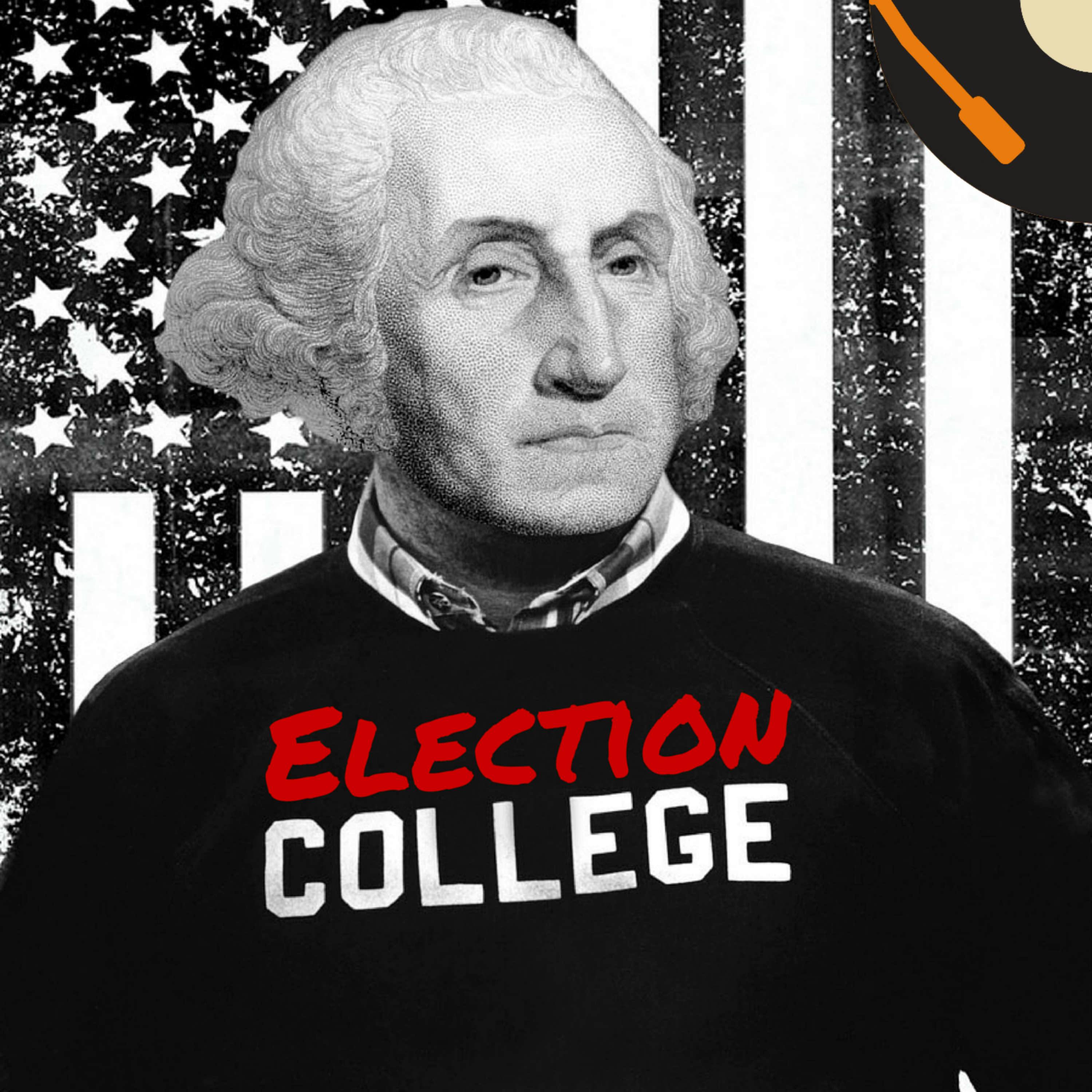
Election College is built on a simple premise: pick one figure from American presidential history and talk through the life with notes open and the jokes left in. Jason Goff and Ben Smith share the microphone, and the back-and-forth between them matters as much as the chronology. Larger lives get room. Among the episodes shown here, Nixon runs to three parts, Calvin Coolidge and Benjamin Harrison are both split into parts, and Grace Coolidge gets an episode under her own name, a sign that the show's interest reaches past whoever held the office. Within each part the story moves in rough chronological order through schooling, early work, party jobs, campaigns and results. The specifics are the draw. Harrison's time as Indianapolis city attorney comes with its $400 salary and a quick conversion into today's money. Then come a law partnership, a post as reporter of the Indiana Supreme Court and a Civil War role spent largely recruiting soldiers. Nixon's early years include basketball at Whittier College and a football tryout he was too small for. The campus literary society, the Franklins, turned him away, so he founded the Orthogonian Society instead. Later parts reach the Checkers speech, which drew around 60 million viewers and took its name from a dog, and the 1972 election against George McGovern, in which Nixon carried everything except Massachusetts and D.C. From there the talk turns to Watergate, with the hosts wondering aloud why anyone would spy when the result looked so certain. Party machinery gets its due as well. The Coolidge material follows the 1920 Republican convention through ten ballots to Warren G. Harding, then turns to the vice-presidential slot. None of it comes in a lecture voice. Sentences start as summary, bend into a side comment and come back, and the stumbles and self-corrections stay in. Running jokes build across parts, like insisting on Nixon's middle name every time, and the hosts cheerfully admit how often people confuse their show's name with the Electoral College. The show keeps track of its own back catalog, too: when the Checkers speech comes up, the hosts mention that an earlier episode already covered it and give the short version. Throughout, the tone stays warm, with flashes of excitement over a good story and a dry note when a figure turns out odd or unimpressive. For anyone deciding where to begin, the three-part Nixon run shows most clearly how the show spreads one life across several episodes. It suits a listener who wants the names, dates and results but would rather hear them from two people enjoying the material than from a narrator at arm's length.