Topics / Performing Arts
Performing Arts Podcasts
737 shows and 88,613 episodes sit under Performing Arts.
Curated guide to performing arts podcasts in 2026: live literary performance (Selected Shorts), theatre-practitioner interviews (STAGES with Peter Eyers)
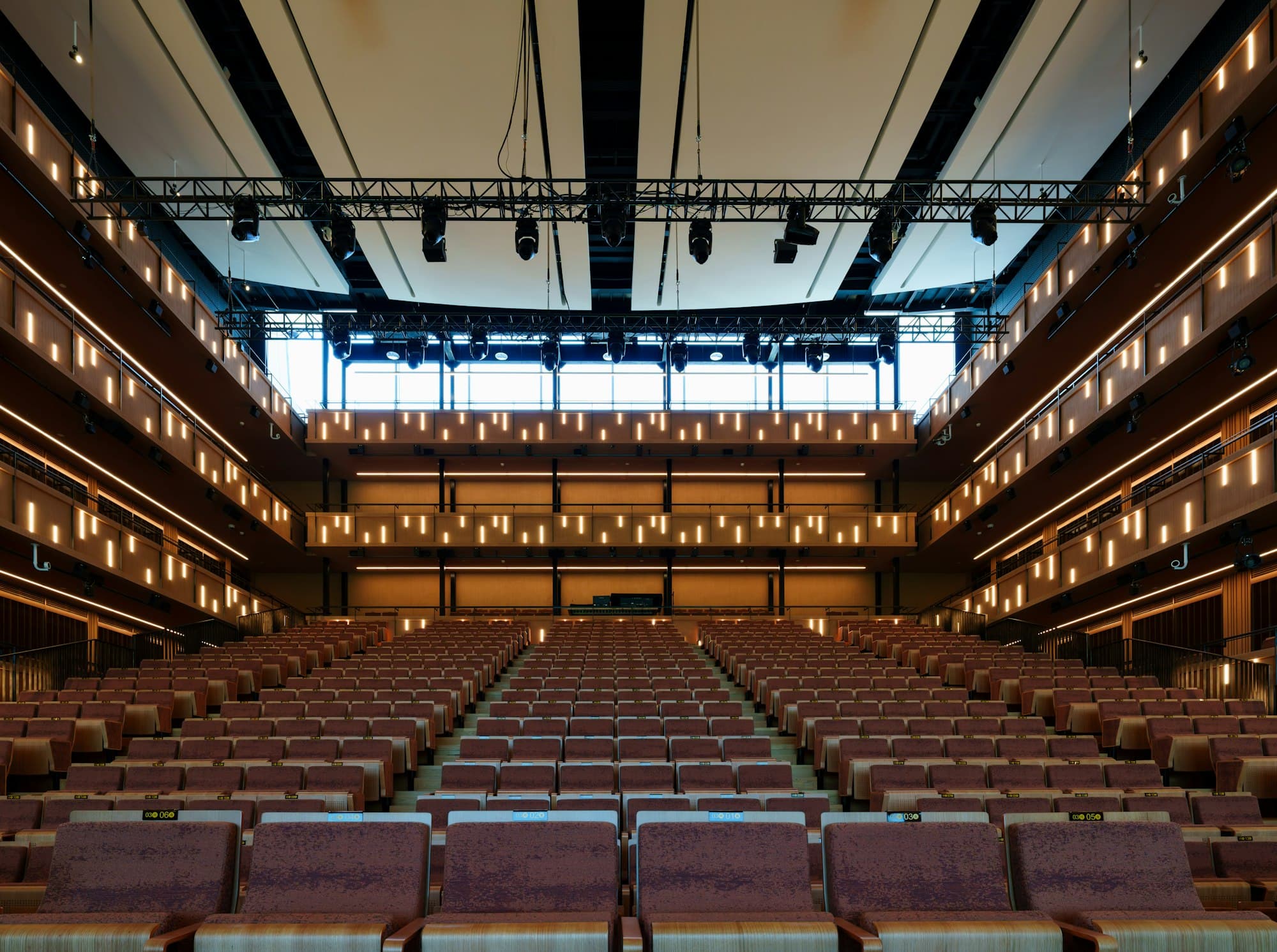
Photo: Declan Sun on Unsplash · Unsplash License
Swipe · Performing Arts only
Swipe through Performing Arts
Save time discovering your next favourite podcast by listening to just the best minute of an episode.
The performing arts slate · every cover a link
All 737 performing arts shows →



Read this first
Some great Performing Arts podcasts to get to know

In Doubt, a talk with the Director, Neuse Little Podcast host Matt Gore describes a moment that would not come right in his production of Doubt. Father Flynn sits down beside Sister James, closer than he should. Gore told the actor playing her to grip the wood with her fingernails, and that small, tense gesture, he says, "was the key to unlocking what was wrong."
Performing arts podcasts work at this scale: a hand on a bench, a song cut before rehearsal, a line flubbed on a stage. This guide covers theatre and musicals, improv, ballet, magic, live readings and audio documentary. Some of these shows are recorded in a community playhouse. Others are radio interviews taped decades ago.

The arguments around these shows are practical. Edison Research's June 2026 report found weekly podcast consumers about as likely to watch as to listen, and both DRAMA. and Neuse Little Podcast ask audiences to subscribe on YouTube. The same June 2026 report found 69% of podcast consumers approving of AI-assisted brainstorming, while 59% called AI a threat to creativity. That unease surfaces on What's The Rate?, where first AD Rebekah Strauss describes AI starting to replace hired background performers. Listeners also weigh depth against fun, and rare access against rough editing.
Performers explaining the work

Up Close with Carlos Tseng stays with actors long enough to hear them think. In Elliot Cowan: An Actor's Actor, Cowan discusses Miller's writing and playing a character's belief while knowing, underneath, that it is a lie. He calls it "believing that you can think two things at the same time." He also admits a stage mishap: falling through a trap door that was opened five lines early. In Stuart Thompson: The Power of Sad Young Men, Thompson recalls playing Oswald in Ghosts. With emotion that heavy, he says, it is "very easy as an actor to become indulgent."
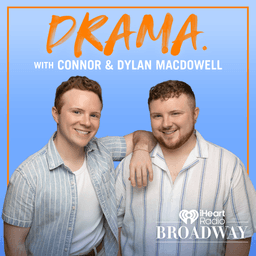
DRAMA. with Connor & Dylan MacDowell trades that seriousness for gossip and warmth, so the craft talk arrives sideways. In "Bitch, I AM the Drama" with Abigail Barlow, Barlow, then starring as Catherine Howard in Six, explains how she decides case by case whether to sign at the stage door after two-show days. In "Roadkill Daddy" with Claybourne Elder, Elder recalls playing a funny callback monologue completely straight while the room was "laughing and crying." The Actor & Performer Interviews page gathers more conversations like these.
Archives that sing back
Two shows recover old radio. Anything Goes revives the 1980s series that Paul Lazarus produced and hosted, and it places the interviews beside the songs. In Maury Yeston I, first broadcast in 1982, Yeston remembers playing a new song for a performer who said "I hate it." She then clarified that she meant the music, not the lyric, and he offered to write another song. In Alan Menken I, Menken is asked why "A Little Dental Music" was dropped so early, and the answer is blunt: "It just wasn't needed."

BROADWAY HOUR-Sheraton NY Hotel & Towers 1993-1996 was taped before a live audience. In B'WAY HR 47 JULE STYNE Special / partTWO, Styne recalls running backstage in Philadelphia to praise Ethel Merman, who answered that she was "not doing this goddamn thing eight times a week." "Small World" from Gypsy follows. Expect sponsor reads and trivia contests from another era. The Musical Theater & Broadway page continues the thread.
History, and the arguments it changes

Archive interviews tell you how a show was made. History asks why it landed when it did. BROADWAY NATION is David Armstrong's history of the musical. Ep 10: The Great Depression & The Silver Age of Broadway, Part 2 sets 1930s shows against the crash. It includes a producer who, dodging creditors on a fishing boat in the Pacific, conceived an ocean-liner musical first called Hard to Get, later Anything Goes.
In Feminist Approaches to Musical Theatre, authors Paige Allen and Stacey Wolfe introduce "triple historiography." The idea is to read Chicago through its 1920s setting, its 1975 flop and its 1996 Encores revival, then ask why the same show failed and later succeeded. "Affective dissonance" names the feeling of being moved by a show while also feeling "kind of icky and angry about it." The vocabulary is academic, but each term is explained, and listeners who enjoy changing their minds will get the most from it.
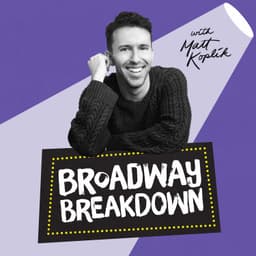
Criticism elsewhere is quicker and more personal. The Cheese Wheel Podcast is a comedy show that spins a wheel to choose its topics, and it also reviews Detroit stage productions under the Theatre in the D banner. In Back to the Future The Musical | Theatre in the D, a host savours a flubbed line and a mixed-up audio cue as "a little reminder that you're live." The same host is unsure about recommending the show to anyone who doesn't know the film. Broadway Breakdown's Matt Reviews: TITANIQUE works through the cast down the Playbill. The Theater & Stage page is the place to keep going.
Hearing the work itself
Some shows skip commentary and perform. Selected Shorts, produced by Symphony Space, has actors read short fiction. Adios, Sayonara, Goodbye! gathers stories by contemporary Japanese writers in translation, recorded live with the Japan Society, including one about a man who keeps a mermaid in his bathroom. In Hiding in Plain Sight, a slow reading of a story about a village lottery lets its procedural detail pile up into dread. Earlier, actor Jelani Aladdin, interviewed backstage, explains approaching his story "from a place of innocence." The Literature page sits next door.


Short audio drama meets the same appetite. Playing On Air: Short Audio Plays offers DISNEY/FUKIJAWA BY Lloyd Suh, PlayME serialises The Drawer Boy (Part One), and Unbound Theatre performs 'Henry IV, Part 2' (Act 5).
The Heart, Kaitlin Prest's show from Mermaid Palace and Radiotopia, bends performance into documentary. In NO: Inheritance + Reality Check, Prest interrupts a reenacted scene about consent, drawn from her own life, to warn listeners that "what you're hearing isn't the real thing." She built the scene to match her memory. AHMA-NOLOGUE | An Anniversary + A Birthday threads dated news of the Gaza war through the voice of Ahmed Jaber, with material from Ashtar Theater in Ramallah. Both episodes handle sexual violence or war directly. They ask for full attention and some readiness.
Practice rooms: improv, ballet, magic
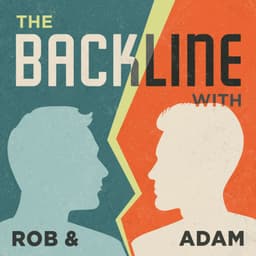
These shows are for people who do the work themselves. In Underwhelmed, The Backline - An Improv Podcast, hosted by Rob Norman and Adam Cawley, answers a listener whose teammate's emotions barely register on stage. The advice is concrete: choose an emotion you can genuinely feel, start there, then grow it. "Frustration is usually the unmet expectation," one host observes.
In PATREON EXCLUSIVE: What Makes a Scene with Mick Napier, Napier recalls seeing his first Herald, a long-form improv format, and wondering why the performers never left the stage. Billy Merritt's (Improv) Spotlight is looser. In SHUT UP GAIL w Jay Sukow - Bonus Double Episode/Season Finale, the talk arrives at "failure is the gift in comedy."

The Balanced Ballerinas Podcast brings that inside view to ballet. In 167. The Gift of Struggling at Something Beautiful, Georgia Dostal reads an email from Bex, an adult student in her 50s. Bex writes that wrestling with a diagonal exercise is "making me a better operator in my day job." 151. Ballet Burnout in Children with Kaitlin Hague! draws on a studio director's doctoral research into early specialisation. The Ballet & Dance page has more.

For opera, The CVH Podcast's MICHAEL FABIANO finds the singer weighing how long he will keep performing at his peak, which points toward the Opera page. Magic Talk: by White Rabbit Magic treats patter as performance. Magic Talk #286 | 03.24.2026 | How to Create Catchy Dialogue | MT picks apart filler words and hedges, and debates whether "Let me show you a card trick" is a weak opening line. The Creative Process page extends these questions beyond the stage.
Local stages and working lives

Much of the richest texture is local. Neuse Little Podcast speaks with the casts and directors of a theatre in Smithfield, North Carolina, which celebrated its 51st season in 2026. Mouthing Off comes from Bad Mouth Theatre Company and airs on Frogtown Radio in St. Paul. In Hungry Like the Wolf at History Theatre, actor Sam Landman talks frankly about playing the jerk, quoting a teacher: "I'd rather be typecast than not cast at all." In Dark Pony Productions Talk Ed Fringe & Dark Pony Radio 2026, the company recalls Edinburgh audiences ranging from under 10 to almost 40 people a night.
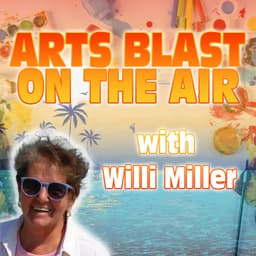
Arts Blast on the Air with Willi Miller works more like a listings show for Florida's Treasure Coast, with dates, venues and ad reads. What's The Rate? covers the business side: in Acting 101:The Real of Being A Working Actor- Jonathan Cruz: Episode 10, Cruz advises actors to approach agents' assistants rather than the agents themselves.
Where to start
- If you want a performance: Selected Shorts, Adios, Sayonara, Goodbye! No prior reading needed.
- For acting craft, taken slowly: Up Close with Carlos Tseng, Elliot Cowan: An Actor's Actor.
- For history with an argument in it: BROADWAY NATION, Feminist Approaches to Musical Theatre.
- For composers discussing songs: Anything Goes, Maury Yeston I.
- For anyone who improvises: The Backline - An Improv Podcast, Underwhelmed.
After a few of these, you may find yourself watching an actor's hands as closely as you listen to their lines.
Featured shows below are part of the PlayNext catalog. Updated weekly.
Featured shows
8 shows, described rather than listed
Each one comes with a short write-up and the role it plays in this guide.
Long-running American literary-radio program: short fiction read aloud by professional actors before a live audience. The host provides editorial framing; the performance carries the episode.
Patient, process-focused interviews with directors, actors, lyricists, and producers. Comfortable with rehearsal-room craft vocabulary and decades-long career spans.
Multi-episode deep dives into musical-theatre songwriters — Alan Menken, Stephen Schwartz, Burton Lane — built from research and archive. More radio documentary than conversation show.
Caitlin Prest's audio art show. Personal essay, reenactment, montage, and interview braided together. Transparent about its own construction in ways rare in audio fiction.
Multi-person panel covering musical theatre, film, and pop culture. The recurring Theatre in the D segment grounds the show in regional production reviews and frank production critique.
Public-radio arts-desk show covering local performances, community theatre, and regional cultural events. Locally rooted in ways national arts shows aren't.
Production-specific theatre reviews. Two episodes in corpus; review-format rather than practitioner-interview-format.
Opera-focused interview show. Marshall Pynkoski and Jeannette Lajeunesse Zingg of Opera Atelier in the corpus episode; early-music and period-opera signal.
Where to start
5 routes in, one per reader
*A Celebration of Langston Hughes* is the entry. Performance before a live audience, actor-read, the format at its most distinctive.
*STAGES Episode 615: LYNN AHRENS* is the entry. Pair with *Anything Goes*'s *Alan Menken I* for the musical-theatre-composition complement.
*Welcome to Suburban Paradise* is the starting episode — establishes the series' formal premises before later episodes assume you're inside the project.
*A Conversation About "Parade" (feat. LadyKnightTheBrave)* is the most production-grounded entry. Pair with *Theatre in the D | Mamma Mia!* for the regional-production review side.
*Mother Courage and Her Children and Otoe-Missouria panel* captures the show's range — live production coverage alongside community and regional cultural events.
Glossary
Performing Arts vocabulary, decoded
Performance created specifically for the audio medium — original scripts, production sound design, and voice acting rather than recorded stage productions. Distinct from radio drama in that modern audio theatre is produced for podcast distribution. *The Heart* operates in this space.
Live or recorded vocal delivery of literary or original text as performance — readings, monologues, slam poetry, and literary-fiction performance. *Selected Shorts* covers the literary-fiction-performance end of this range.
Sub-genre of performing arts podcasting focused on the songwriting, orchestration, and compositional development behind Broadway and West End musicals. *Anything Goes* is the slate's primary example, organized around multi-episode composer profiles.
Classical and contemporary dance forms, including ballet technique, choreography, company culture, and performance history. An L3 subtopic with episode presence in the corpus; not yet represented by a voice-profiled flagship show on this slate as of mid-2026.
Scripted dramatic performance produced for radio or podcast audio, typically featuring a cast, dialogue, and sound design. Distinct from audio theatre in that it often adapts existing texts or draws on broadcast-radio dramatic traditions. Classic radio drama (vintage broadcast recordings) and contemporary radio drama both appear as L3 chips in the corpus.
Solo vocal performance in which a single speaker delivers a sustained piece — confessional, theatrical, or narrative. Monologue-forward formats appear across audio drama and spoken-word podcasting.