
Topics / Organized Crime
Organized Crime Podcasts
56 shows and 7,688 episodes sit under Organized Crime.
Crime World, Cyber Hack, and Gangland Wire offer reported cases, cyber investigations, and investigator-led accounts of organized crime.
Photo: Raymond Kotewicz on Unsplash · Unsplash License
Swipe · Organized Crime only
Swipe through Organized Crime
Save time discovering your next favourite podcast by listening to just the best minute of an episode.
The organized crime slate · every cover a link
All 56 organized crime shows →






Read this first
Picking your next Organized Crime podcast
Some listeners want the names, nicknames and family trees. Others want to understand the machinery: how money moves, how territory is held, how institutions bend and how an apparently ordinary business becomes useful to a criminal network. On the Organized Crime shelf, the biggest difference is usually method. One show talks through a case like friends arguing over a crowded table; another reconstructs it in polished documentary scenes; a third works from court records, reporting or first-hand testimony.
That range makes this a distinct stop within True Crime. Case Analysis stays closer to the mechanics of individual investigations, Cold Cases follows crimes that remain unresolved, Fraud & Scams concentrates on deception, and Murder Cases puts the killing itself at the centre. The shows here tend to keep their eyes on relationships and systems, even when one person or one violent event provides the way in.
The table crowded with names
Wiseguy's Hideaway has the loosest chair in the room. It is rapid, profane and happily interruptive, with dates and underworld lore competing against jokes, corrections and sudden detours. This is a show for listeners who already know enough mafia vocabulary to enjoy an argument over the details. The rough edges are part of the appeal.

Original Gangsters Podcast is similarly fluent in factions, territories, reputations and legal pressure, but its conversations feel more like live reconstruction. A long setup may pass through several relationships and competing theories before it finally reaches the question. The pleasure comes from hearing assumptions tested aloud rather than receiving a spotless history lesson.
Gangland Wire brings an investigator’s working cadence to the same terrain. The language is plain, the questions keep the thread moving, and anecdotes are expected to prove something. Its episode list can move from John Binder on Accardo, Giancana, and the Chicago Mob to Inside Kansas City’s Criminal Underworld, then narrow the frame with Who Shot Joe Colombo? The show suits listeners who want detail without the performance of a prestige documentary.
The Sit Down: A Crime History Podcast is busier and more record-minded. It backtracks through family connections, adds caveats before allegations and fills silence with clarification. Recent titles such as Episode 269- Mob Associate Peter Tuccio, Episode 268- Genovese Mafia Associate Joseph Bonelli and Episode 261- Chicago Mobster Gigi Rovito & RECENT Gambling Indictment make its preferred scale clear: named people, specific affiliations and the documents or recollections around them. It sounds like someone assembling the case while you listen.
When history gets a script

Kingpins takes the prepared route. Its voice is measured, cinematic and controlled, often beginning inside a scene before widening toward institutions, motives and consequences. There is little banter and no need to pretend the narration is spontaneous. Choose it when you want a firm guide and a story with deliberate architecture.

MobstercastChronicles uses a scripted two-voice exchange instead. Short prompts break up longer explanations, while ordinary places and jobs become routes into questions of logistics, geography and power. Carlo Peter Caputo: The Quiet Don of Madison, Wisconsin is representative of its interest in figures beyond the most repeatedly dramatized mafia capitals. The show is fascinated by infrastructure, especially the quiet arrangements behind a public reputation.
Deep Dive: Exploring Organized Crime is calmer still. It sounds like a briefing built to make technical or political material understandable without flattening it. Its three-part Haiti sequence begins with Living Together: The Gangs of Haiti - Part 1: "The Death of a President" | Deep Dive: Exploring Organized Crime, continues through Living Together: The Gangs of Haiti - Part 2: Fighting Back | Deep Dive: Exploring Organized Crime, and reaches Living Together: The Gangs of Haiti - Part 3: "Wake Up! The Bandits Are Coming!" | Deep Dive: Exploring Organized Crime. That structure rewards listeners who prefer causes, actors and consequences to a rush of shocking turns.
Networks in the present tense

Narcology moves faster and keeps expert explanation conversational. Questions, quick acknowledgements and reframing do much of the structural work, allowing technical subjects to arrive in ordinary language. Behind the Badge and Inside the Cartel: A Retired DEA Agent Pulls Back the Curtain on Colombia's Most Dangerous Criminal Empires signals its interview-led side, while Weaponizing Narcocultura: The Cartel Marketing Machine and Cartels Targeting Chemistry Students: The Recruitment of University Talent for Fentanyl Production in Mexico point toward the practical systems it examines. It is a strong fit for listeners who want cartel reporting connected to recruitment, culture and production.

Criminal Record works like a local crime desk. Its questions carry context, its guests receive room to answer, and the language can shift from familiar Scottish phrasing to policing and court procedure without fuss. Criminal Record 31/03/26 | Scotland's criminal underworld in meltdown as cops arrest gang bosses and Criminal Record 25/02/26 | Glasgow and Liverpool's organised crime pool with Richard Elias keep the geographical focus tight. The show is serious without becoming theatrical, and it treats place as part of the explanation.
Crime World is brisker, with reported facts and careful qualifications providing the spine. A plain question often opens the discussion; dates, claims, relationships and locations then accumulate around it. The two-part Raffaele Imperiale: Mafia Rat (Part 1) and Raffaele Imperiale: Mafia Rat (Part 2) sit alongside When will James English release the podcast with Daniel Kinahan? The result feels immediate and reporter-led, with uncertainty left audible rather than polished away.
Testimony, pressure and argument
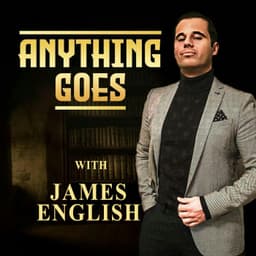
Anything Goes with James English reaches organized crime through the person sitting across the table. The prompts are blunt, the answers can run long, and emotional escalation matters more than tidy exposition. London Gangster on Fighting Terrorists & Paedophiles in Prison and Daughter of a Mafia Hitman - Mob Wives Star Karen Gravano Tells Her Story show the first-person framing plainly. Start here when voice, memory and personal consequence matter more to you than a network diagram.

Catch Me On The Run with John Alite is more confrontational. Its long spoken runs stack grievances, questions, corrections and examples until the conversation begins to resemble a sustained argument. Prison language, justice-system commentary and crime-world shorthand arrive without much translation. The tone is raw and convinced, best suited to listeners who do not require neutrality from the person holding the microphone.

Rackets Podcast takes the opposite temperature. It walks through troubling material in layers, separating background, pattern, example and speculation while keeping the language accessible. The sentences may wander, but they wander in search of motive or institutional context. This is the patient option for someone who wants to think alongside the investigation.
Where to start
For classic mob history delivered as informed conversation, begin with Gangland Wire and John Binder on Accardo, Giancana, and the Chicago Mob. If you prefer a documentary briefing with room for political context, try the opening instalment of Deep Dive: Exploring Organized Crime’s Haiti series. Narcology is the on-ramp for cartel systems and practical explanations, starting with Weaponizing Narcocultura: The Cartel Marketing Machine. For a named-figure, record-heavy approach, The Sit Down: A Crime History Podcast and Episode 269- Mob Associate Peter Tuccio will put you immediately in its preferred register.
Featured shows below are part of the PlayNext catalog. Updated weekly.
Featured shows
8 shows, described rather than listed
Each has a short write-up and a note on what it does best here.
A measured narrated documentary mixes interviews and archival material, connecting large criminal forces to human-scale details. It suits listeners who prefer careful, scene-built reporting.
A suspected international caviar-poaching ring turns quiet Warsaw, Missouri, into the site of an undercover federal sting. It suits listeners drawn to unusual crimes in small-town settings.
VICE News follows Joaquín “El Chapo” Guzmán’s trial through people caught in the drug war on both sides of the U.S.-Mexico border. It suits listeners seeking a human view of a cartel case.
Reported cybercrime unfolds step by step through malware, botnets, indictments, sanctions, burner phones, and surveillance evidence. It suits listeners who want complex cases explained in practical terms.
Reporter-led questions trace Irish and European crime stories, from cocaine seizures and extradition appeals to criminal debts. It suits listeners who want brisk facts with uncertainty left intact.
Rotating documentary packages combine grave narration, interrogation audio, and expert commentary to connect motive, timeline, and consequence. It suits listeners who prefer brisk, case-by-case storytelling.
This Arabic-language podcast presents accurate information in concise, minute-based segments and welcomes contributions built around a fact or idea. It suits listeners looking for compact explainers.
A working investigator talks through mob history and tradecraft in plainspoken interviews, covering figures from Accardo and Giancana to Gallo and Colombo. It suits listeners who value lived-in case detail.