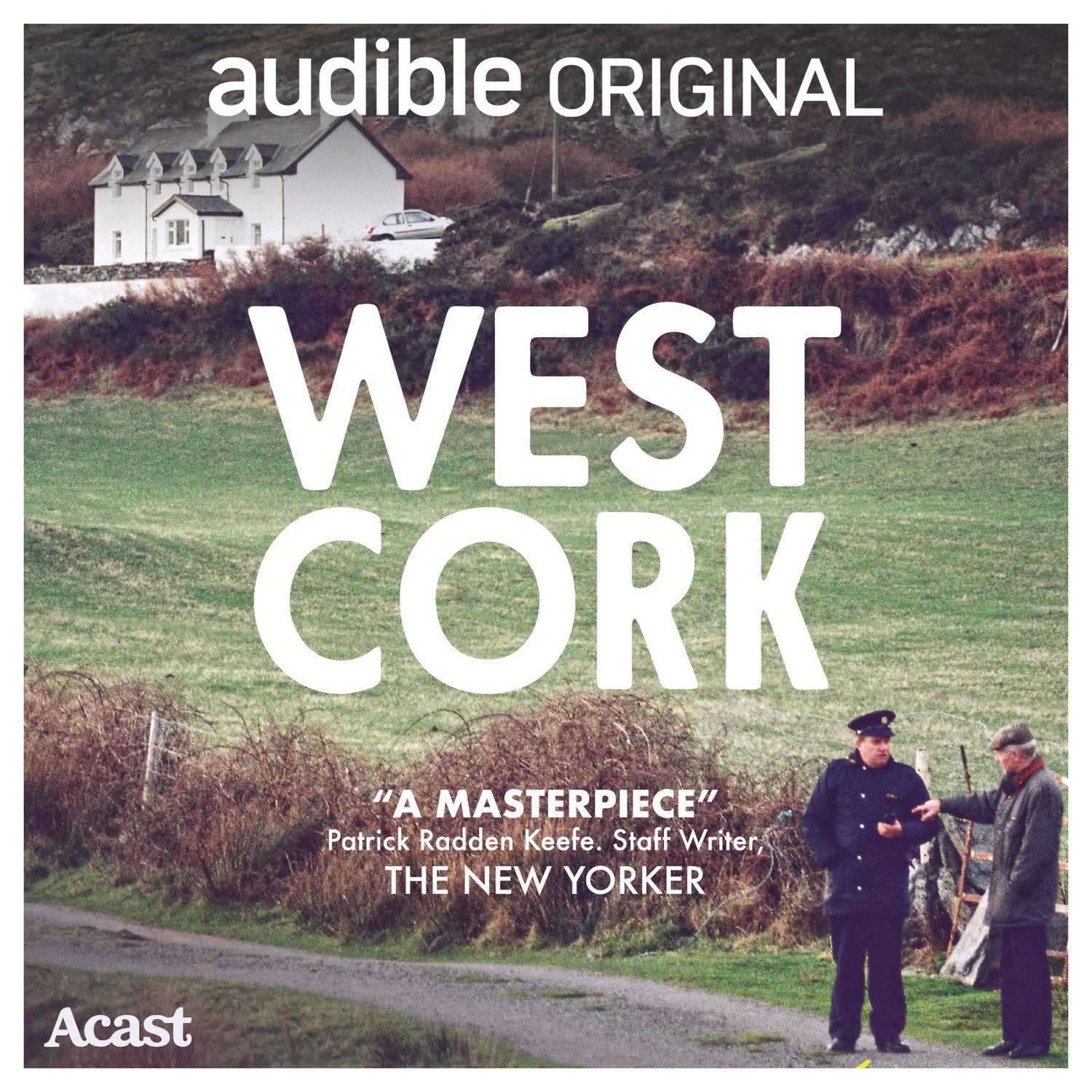
West Cork is a true-crime documentary about Sophie Toscan de Plantier's murder near her holiday home in southwest Ireland. It begins with a place that seemed almost resistant to the idea of murder. There is a pub in Crookhaven, a quiet road, a house with white walls, and a winter night described as still and full-moon bright. Then there is Sophie's body, found by the path below her home, and a community forced to ask whether danger had been beside it all along. The series follows the investigation that came to focus on Ian Bailey, an English man living near Skull with his partner, Jules Thomas. He looms over the story even when he is not physically present. France charges him with Sophie's murder, Ireland blocks extradition, and the later Paris trial proceeds in a way that feels both formal and strangely incomplete. The show is interested in that incompleteness. Witnesses remember, revise, fear, accuse, withdraw, and sometimes cling to accounts even after police find reasons to doubt them. Billy O'Sullivan's pub becomes important because he was the last known person to see Sophie alive. Detective Eugene Gilligan's first look inside the farmhouse matters because the ordinary details feel so sharply at odds with the violence outside. The series also gives Sophie more space than the shorthand of victimhood usually allows. It looks at her life in Paris, her relationships, her family, her child, and the image of her on a windy rooftop, present and unreachable at the same time. The case spreads outward through boreens, villages, courtrooms, old resentments, and local talk. Some people see a framed outsider. Others see a man who made himself easy to suspect. The show does not flatten those tensions into a single theory. It treats rumour as a force with consequences, not just colour. It also keeps returning to the people damaged by the investigation itself, including those driven into hiding or fixed forever in public suspicion. The result is grave, careful, and unusually humane. West Cork suits listeners who can sit with ambiguity, legal friction, and uncomfortable testimony. It is not built for quick shocks. It is built for the slow recognition that an unsolved killing can become part of a region's weather.