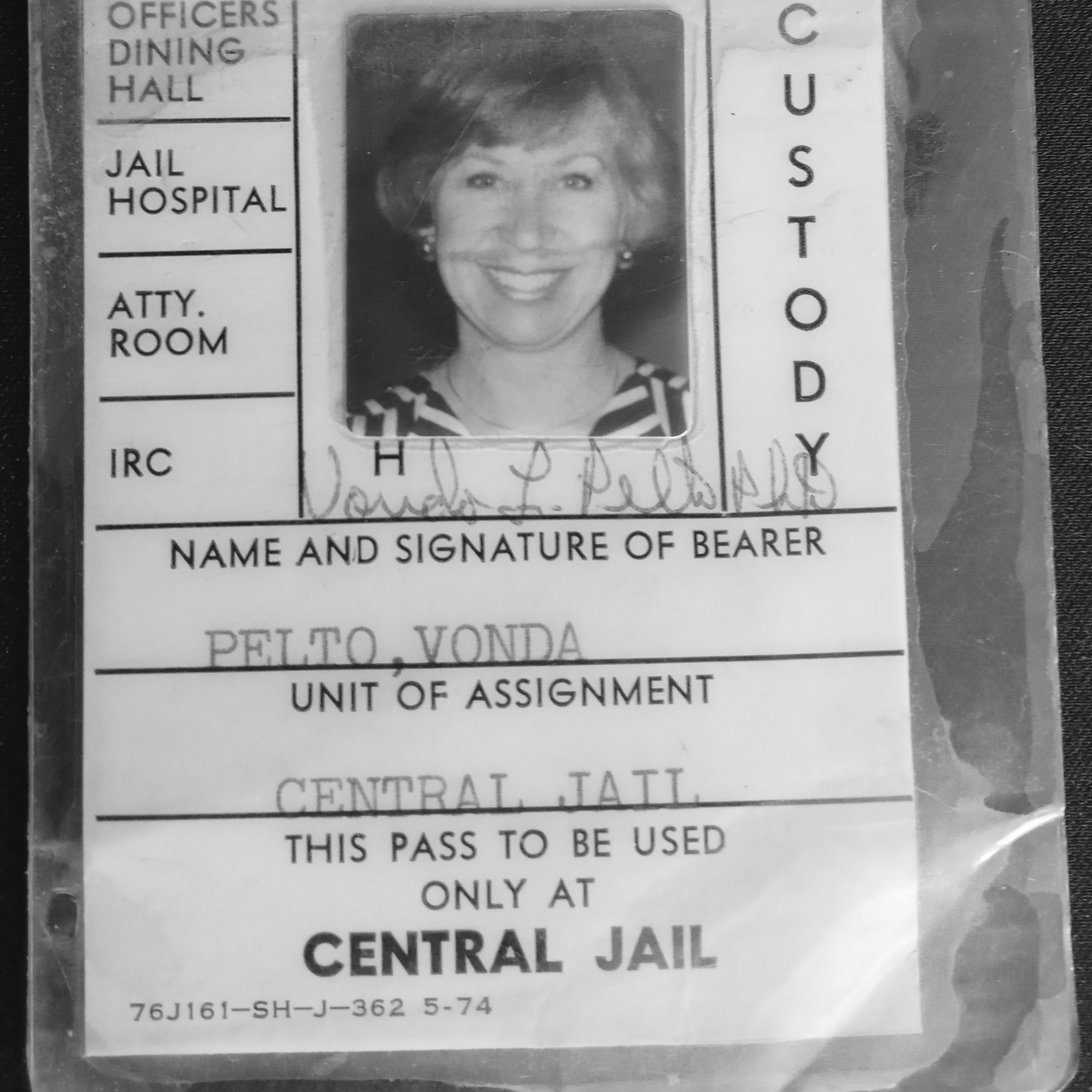
Vonda Pelto says she decided at age eleven to become a psychologist, and that people took the plan for a joke. She got there anyway, going back to school after a divorce and two children. At about thirty she was hired into a men's jail, with an office on a floor set aside for prisoners who had to be kept away from the general population. This feed gathers her talk-radio interviews about that work and the two books that came out of it, 'Without Remorse' and 'Without Redemption', the second written with Michael Butler. The format is simple. An interviewer asks, Pelto answers, and the broadcast wrapping stays in place, from station identifications to website plugs to teasers for the next segment. So do the interviewers' asides, which run from a pun on the word serial to the advice that her books call for a glass of wine. The draw is proximity. Ken Bianchi, the Hillside Strangler, was held across from where she worked, one of the Freeway Killers was around the corner, and Douglas Clark, whom she calls the Sunset Killer, was on the same floor. John Holmes was kept in an even more secure module on the main floor, behind a sally port. Attorneys and police personnel were housed on the keep-away floor too, and she explains the logic: a general-population inmate wins real standing for killing a big-name prisoner. Her account of why these men sought her out is unsentimental. She could get them out of a boring cell, bring hot coffee and a cookie, and give them a chance to look at her legs; she did not mistake any of it for being liked. Bill Bonin, leader of the Freeway Killers, is a constant presence. Asked how killing felt, he told her it relaxed him, and that agitation built until he felt he had to go. She saw him the night he was sentenced to death, and describes a man raised Catholic who seemed to think a last-minute confession might still get him into heaven. Holmes gets a different story: he first told her he felt safer in jail than outside, then reconsidered after hearing that Eddie Nash had tried to pay a deputy for a few minutes in his cell. Her clinical position is firm. None of these men were psychotic, she says; they were sociopaths without a conscience, and a killer whose thinking is too disordered gets caught fast. She sets them against Arthur Jackson, whose attempt on the actress Teresa Saldana grew out of a delusion. Some of the Freeway Killers write to her from Mule Creek Prison, she says, and even phone because they are lonely. The speaking circuit comes up as well, rotary groups, women's clubs and church groups, where a common question is how she could stand it. Her hope is that audiences leave knowing anyone can be vulnerable, and glance around on the walk to their cars.