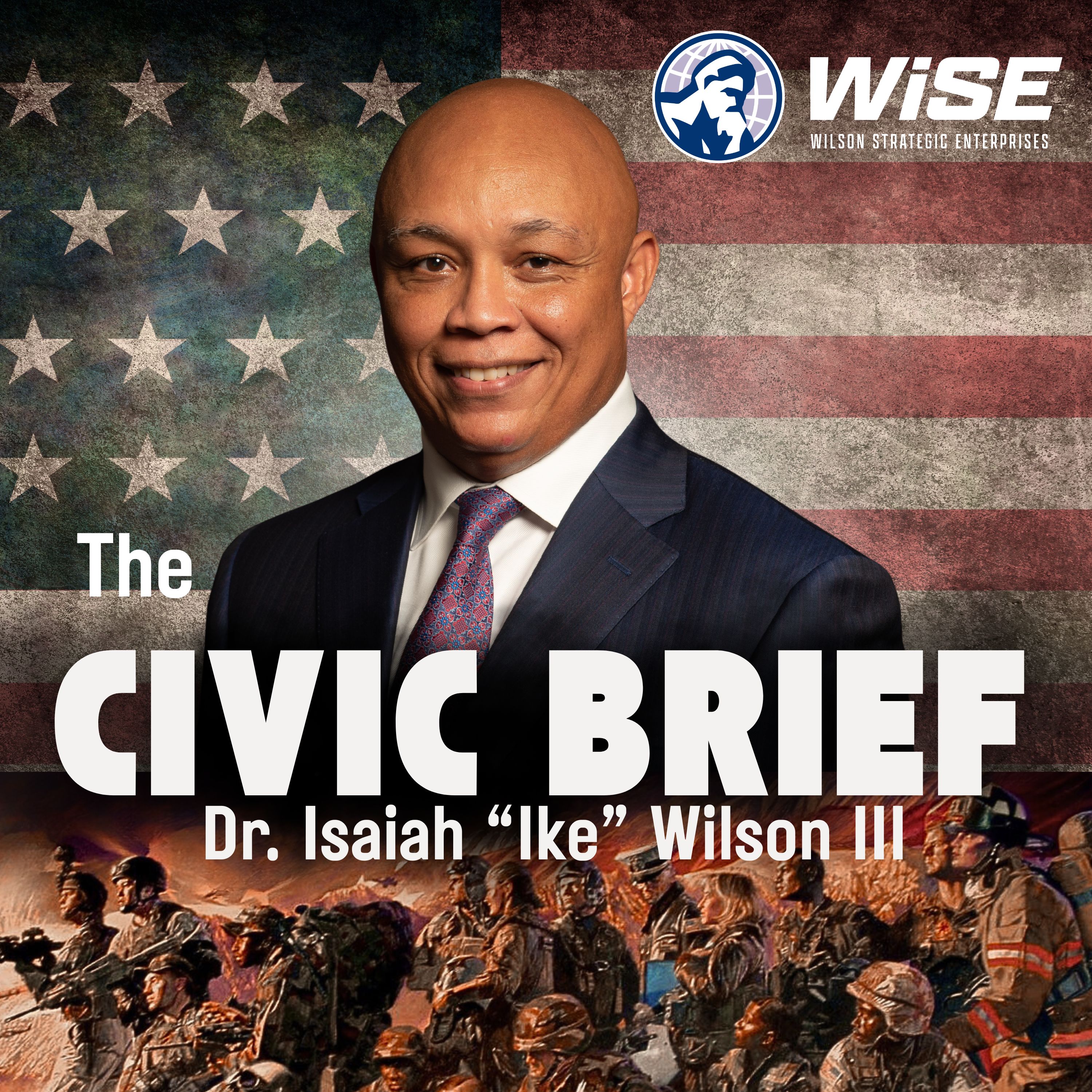
The Civic Brief is built for a moment when public policy no longer stays in its lane. It treats security as a civic affair, shaped by institutions, alliances, identity, markets, energy systems, faith communities, classrooms, factories, and ordinary democratic trust. The show’s recurring framework is compound insecurity. Crises do not arrive one at a time here. Domestic fracture meets alliance uncertainty. Regional war meets industrial capacity. Strategic technology meets commercial innovation. The result is a program that sounds less like a headline recap and more like a guided systems briefing for citizens trying to understand why so many pressures now move together. Episodes on Europe examine strategic de-risking, defense industrial sovereignty, NATO compatibility, ammunition production, air defense, drones, energy resilience, and the hard balance between autonomy and alliance. The show is especially interested in what happens when American domestic volatility becomes a strategic variable for Europe. It also spends serious time on the United States itself. American founding paradoxes, the 250th anniversary frame, civic belonging, institutional restraint, minority rights, peaceful transfers of power, and the dangers of narrowing loyalty all recur as moral and strategic questions. The register can be intimate. In walking episodes, James Baldwin, Jimmy Carter, and Ronald Reagan become figures for thinking through exile, dignity, democratic duty, strength, optimism, and national self-scrutiny. Guest conversations widen the lens, bringing in ambassadors, Bishop John Stowe, and Dr. Kenneth Weinstein of the Hudson Institute for discussions of force, faith, global leadership, China, NATO, reciprocity, and the limits of the nation-state. The show favors long arcs over quick takes. It repeats core concepts, returns to them, and links them across scales until geopolitics feels close to home. Its best fit is the listener who wants civic seriousness without cable-news speed, and who is willing to sit with contradiction rather than flatten it.