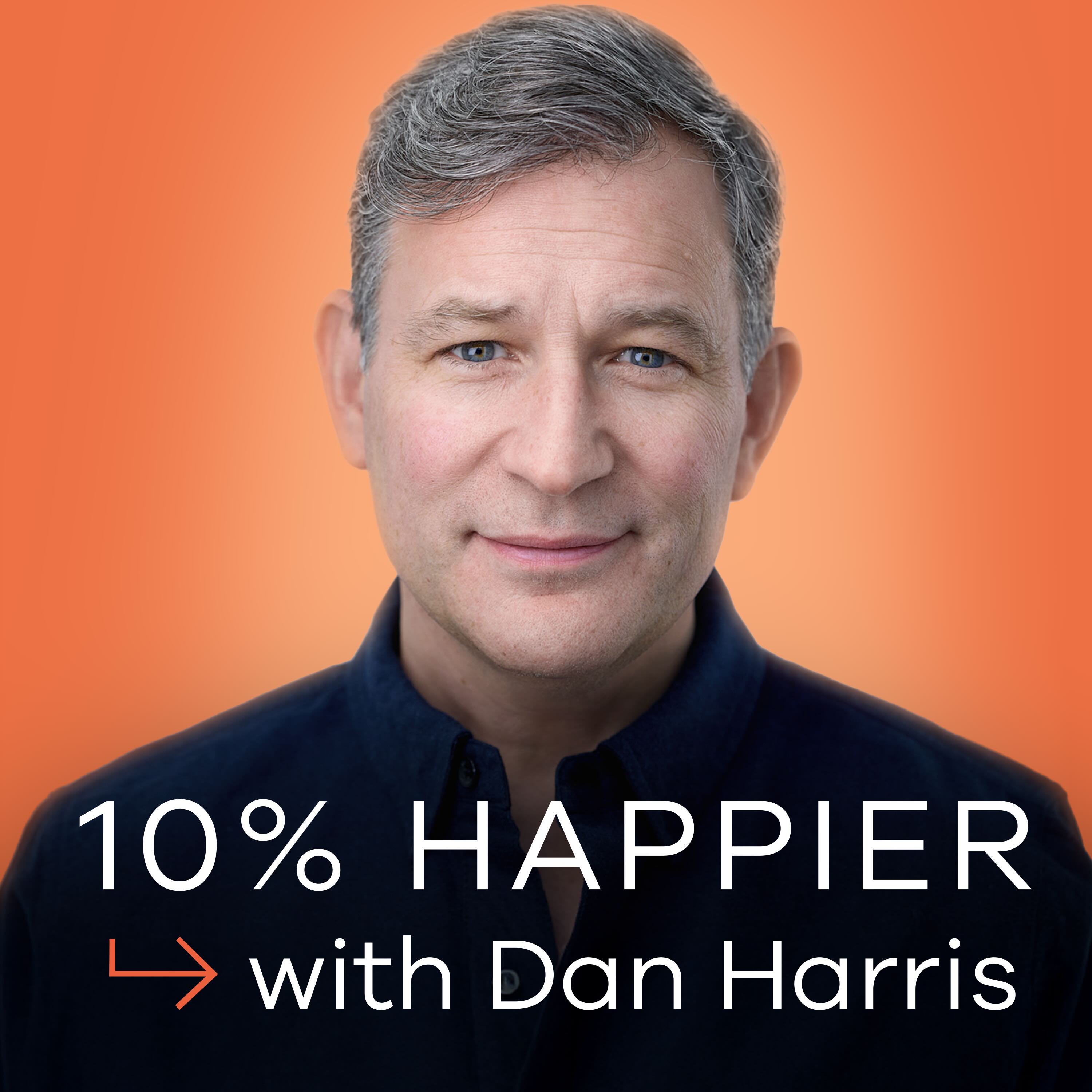
Ten Percent Happier is a thoughtful interview show about the difficult, ordinary work of feeling less trapped by the mind. It brings meditation, neuroscience, Buddhism, therapy, grief work, and habit change into conversations that sound practical rather than polished. The recurring move is simple: take a large wellness word and ask what it means when someone is anxious, distracted, grieving, comparing, bored, or reaching for a numbing habit. That keeps the show grounded. Dan Harris regularly asks guests to define terms, simplify claims, and connect ideas to real situations. The result is a show that can talk about embodiment one week and addiction-prone scrolling the next without treating either as a lifestyle accessory. Recent episodes spend time with Prentice Hemphill on nervous-system regulation, movement, and micro-interdependence. Gabor Maté argues through childhood stress, addiction, ADHD, and compassionate curiosity, with room for challenge rather than automatic agreement. Bart Van Mellick brings meditation back to community, boredom, forgiveness, and the body. Arthur Brooks talks about meaning, achievement culture, boredom, and the emptiness that can come from productivity and clout seeking. Other episodes widen the frame through beauty, art, depression, intrusive thoughts, grief, and hope. The show can be funny and candid, but it does not force a bright finish onto heavy material. It is especially good at making spiritual and psychological frameworks legible to people who mistrust vague uplift. A conversation may wander through family history, a dentist-chair breathing technique, emotional reunion videos, or the loneliness of ungrieved loss. Those digressions usually serve the point. They show what the idea costs and what it might help. The pacing is measured, with space for explanation and story. The show’s best moments come when a guest’s framework is slowed down enough to become usable. Ten Percent Happier is for people who want relief, but also want the relief to survive contact with real life.