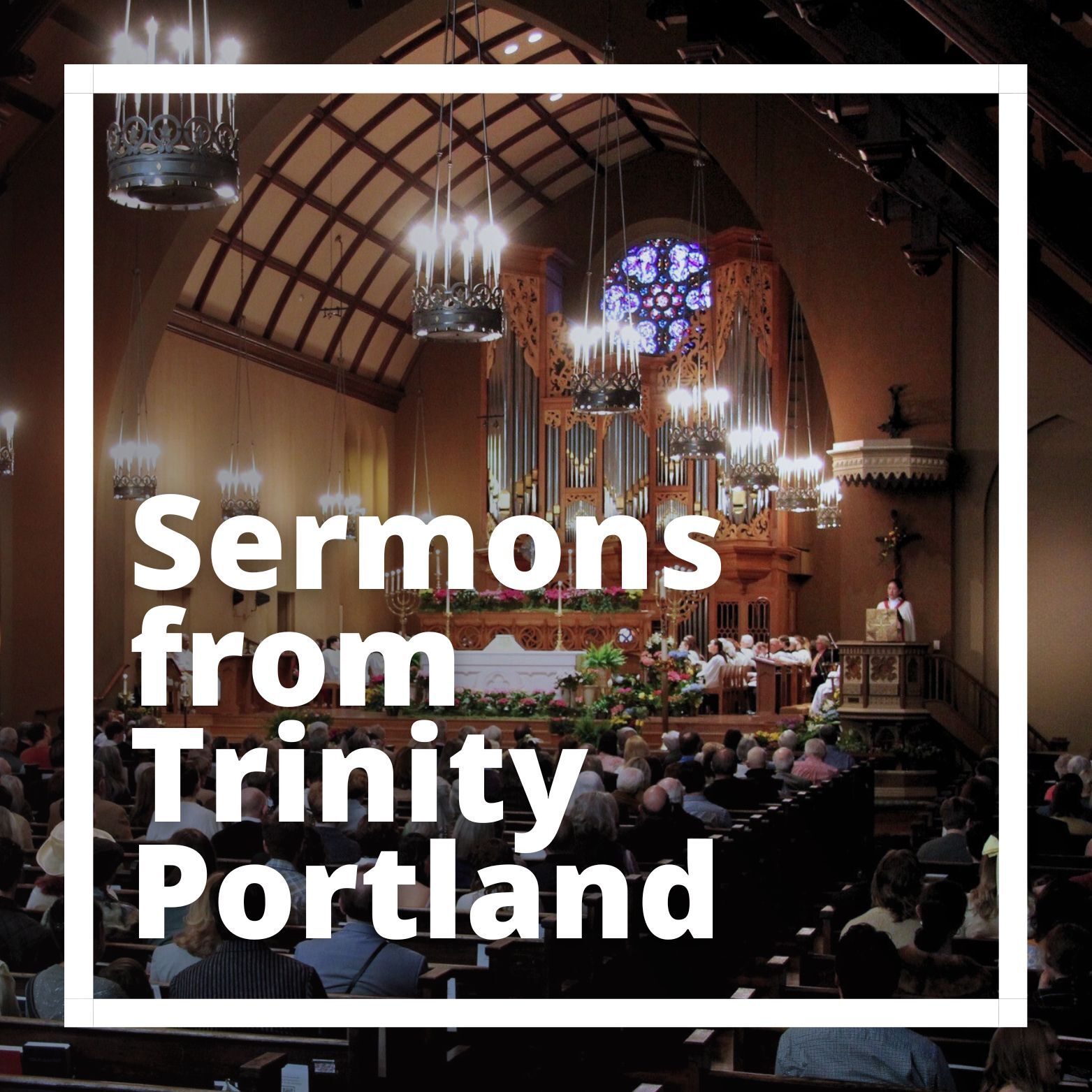
Sermons from Trinity Cathedral Portland presents Christian preaching as a meeting place between worship, memory, scripture, and the moral weather of the present. The episodes do not stay abstract for long. They begin with tangible scenes: a child asking why her Air Force father has to leave, a person finding order through ironing, a sanctuary lit from one small fire, a cataract treatment that makes the world suddenly brighter, or a funeral that becomes painfully uncomfortable. Those concrete openings give the sermons their shape. They let theology arrive through lived detail rather than through slogan or formula. The feed is rooted in the church calendar, with sermons from Lent, foot washing, Easter, and ordinary Sundays carrying themes of hope, blessing, ritual participation, grief, and resurrection. It has a distinct concern for power. Speakers return to empire, authoritarianism, war, captivity, civic control, and the people left vulnerable by those forces. At the same time, the tone remains pastoral. Even when the subject is conflict in the Middle East, child death, funeral grief, or abandonment, the sermons look for practices that sustain human dignity. Hope is not presented as cheerfulness. It becomes a disciplined way of seeing: looking on the heart, honoring children in the present, remembering blessing under pressure, and trusting that death does not have the final word. The preaching is also comfortable with humor and texture. March Madness, applause after sermons, theater-kid candor, fancy sherry, and awkward church etiquette all appear without breaking the reverent frame. Scripture is treated as a living conversation with real social consequences. Jesus, Samuel, David, Abraham, Nicodemus, Fotina, and the disciples are read alongside contemporary anxiety, family memory, and communal worship. The result is a sermon feed for listeners drawn to thoughtful, justice-conscious Christianity that still values ritual, prayer, and sacramental life. It is measured, vivid, and often tender. Its best episodes linger where faith has to face sorrow, power, and uncertainty, then ask what kind of hope can still be practiced there.