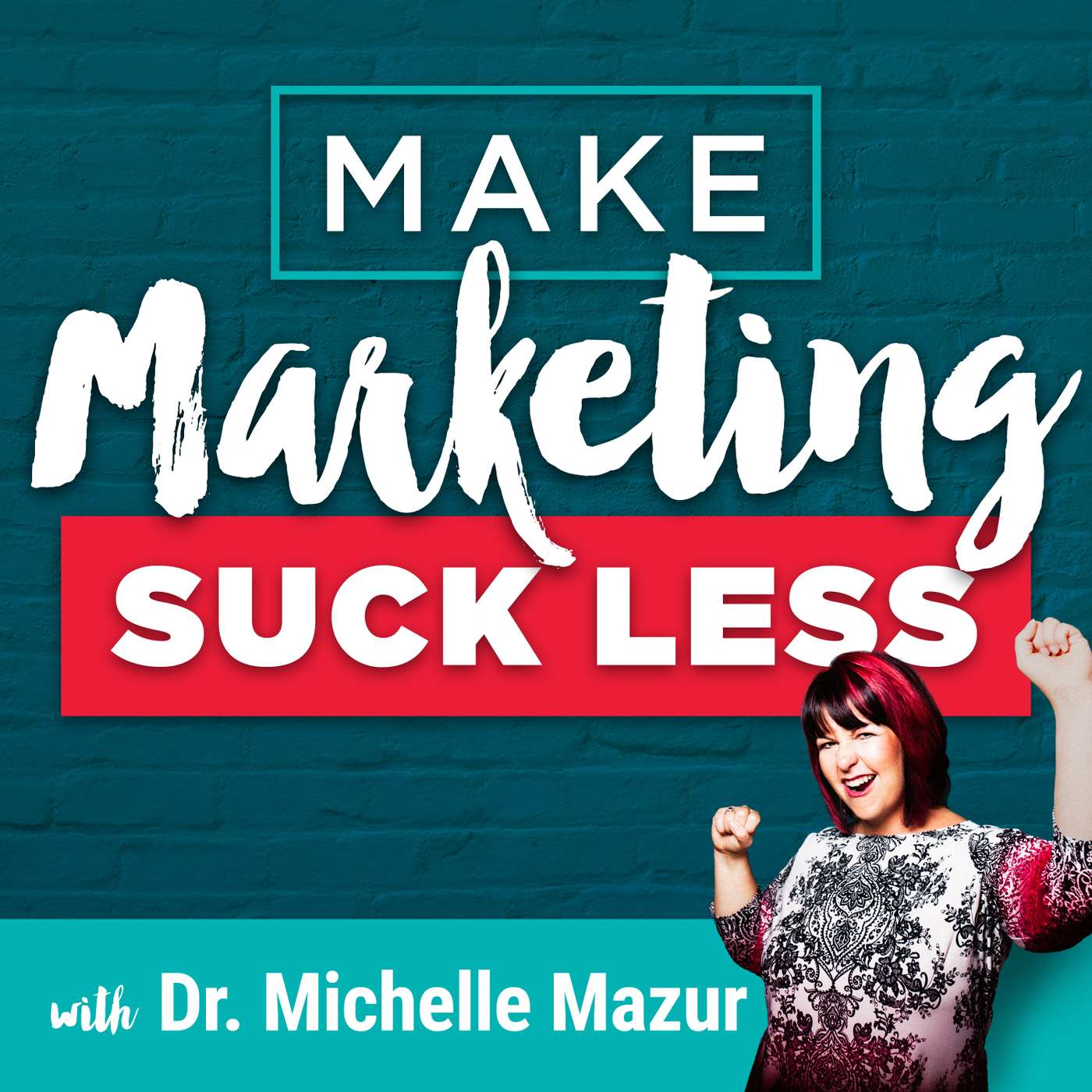
Make Marketing Suck Less speaks to a specific kind of business owner: the solo expert with real skill, real clients, and a nagging sense that the marketing advice around them was built for someone else. Dr. Michelle Mazur is not selling the fantasy that marketing becomes effortless with the right tactic. The show’s baseline is more honest than that. Marketing is messy, visibility is uneven, and smart people can still struggle to explain why their work matters now. From there, the episodes get practical. Message clarity comes up again and again, especially when buyers are cautious, budgets are tighter, and “nice to have” services are easier to delay. The show argues that more content is not the same thing as better communication. It also separates business-owner marketing from creator marketing, pushing back on advice to post constantly, give everything away, or chase attention on platforms that do not fit the buyer’s journey. That skepticism gives the show its edge. It is not anti-marketing; it is anti-waste. Episodes with Laura Litwiller, Bev Feldman, and Jessica Lackey turn that argument into lived examples, from choosing SEO and collaboration over social media to dropping lead magnets that create extra work. A conversation with Ben Albert broadens the lens to expertise, humility, specialization, and why flashy marketers often outshine people who can actually solve the problem. The Duped episode with Maggie Patterson adds a sharper consumer-protection angle, looking at persuasion tactics and how online business can misuse influence. The tone stays conversational, but the editorial spine is firm. Experts do not need to become influencers to get hired. They need a clearer message, a more suitable marketing system, and enough confidence to ignore advice that makes their work smaller, louder, or less sustainable.