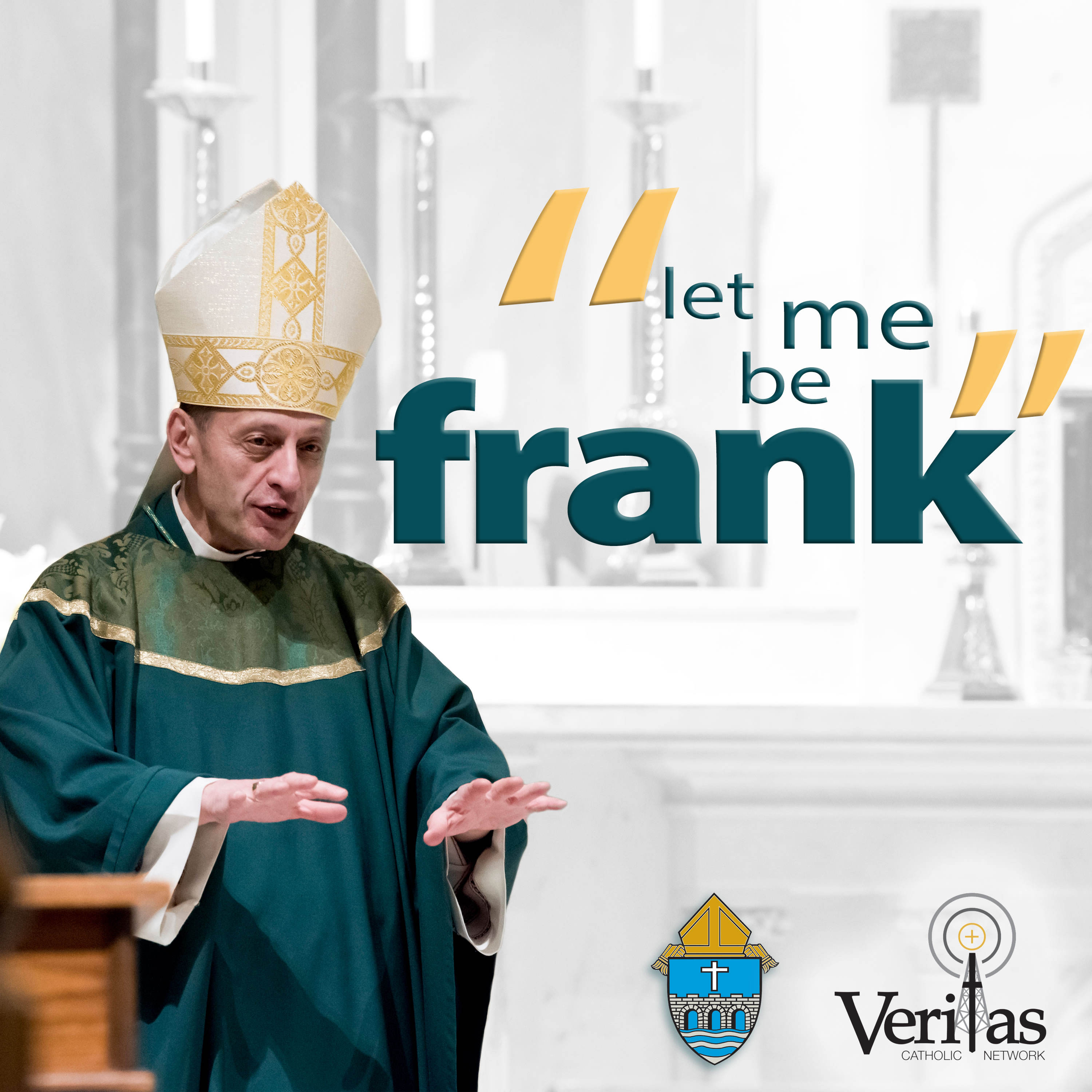
Let Me Be Frank is a Catholic weekly show anchored by Bishop Frank Caggiano’s conversational approach to faith, moral questions, and the practical life of the Church. It has the feel of a standing pastoral appointment rather than a polished lecture series. Steve Lee often opens the room, introduces Bishop Frank Caggiano, and helps set the path for the episode. From there, the show can move quickly. A listener-question episode may touch Easter, Eden, papal protocol, possession, languages, and St. Paul in one sitting. A guest episode may slow down around a single human reality, such as chronic illness, grief, death, or spiritual danger. The register is warm but not vague. Bishop Frank Caggiano tends to answer with a mix of Catholic teaching, personal reflection, humor, and blessing. Recent conversations show the range clearly. One episode treats Maria, an autonomous AI fundraiser, as a real test case for how a diocese might use new technology while still honoring the human texture of donor relationships. Another brings Maureen Pratt’s Peace in the Storm Project into focus through ministry to people with chronic illnesses, along with their families, friends, and caregivers. Mike Carlin’s visit turns The Waiting Room into a conversation about accompanying dying loved ones and reframing grief through faith. Dr. Stephen Doran brings the perspective of a neurosurgeon and Catholic deacon to the spiritual and moral issues around dying well. Dr. Tom McGovern examines the Passion through medical and physiological detail, keeping Lent close to the body as well as the soul. Monsignor Stephen Rossetti discusses deliverance ministry, possession, divination, and discernment between psychological problems and demonic interference. The show does not avoid unsettling subjects. It usually places them inside prayer, Church teaching, and a steady confidence in Easter hope. That pattern makes the difficult episodes feel pastoral rather than sensational. Let Me Be Frank suits listeners who want Catholic conversation with specificity: names, cases, books, diocesan initiatives, and concrete questions rather than abstract inspiration alone.