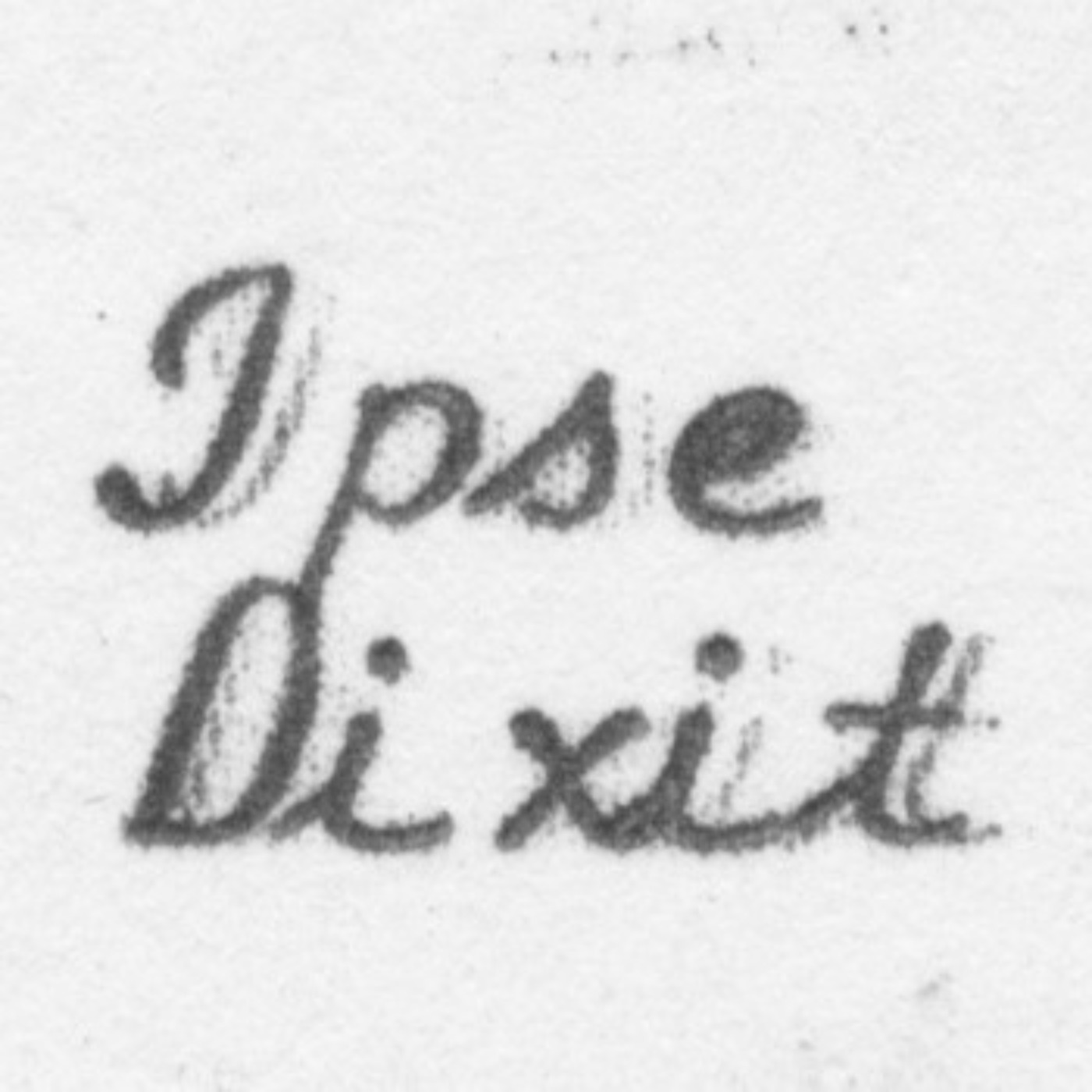
Ipse Dixit is a legal-scholarship interview show that gives academic arguments the space they usually need. It is quiet by design. Rather than racing toward a verdict, the conversations tend to begin with first principles: what a trademark is, how lawyer discipline works, what counts as art for tax purposes, or what responsible AI use might mean in legal education. From there, the show follows the structure of the guest's work. That structure matters. Recent episodes have examined state-bar transparency around sanctions for lawyers who commit crimes, the role of charitable deductions in shaping arts institutions, and the possibility of taxing generative AI firms through equity rather than cash. Other conversations turn toward human legal reasoning in the age of AI, consumer confusion around zombie marks, and the ethical codes that sit beside formal law in the visual arts. The show also has room for stranger intellectual territory. An episode on Brakhage and Sartre treats experimental film as a way to think about seeing, contingency, and death. A guest-hosted conversation with Sam Williams considers unusual legal scholarship, including monsters, true crime, embarrassment, and nihilism as prompts for legal thought. The range is wide, but the method is consistent. Ipse Dixit asks careful questions, clarifies terms, and lets guests build answers in stages. It is not a banter show. It is not a quick-take legal explainer. Its best moments come when a narrow legal question opens onto a larger question about institutions, incentives, professional responsibility, culture, or power. Listeners hear scholarship while it is still alive as an argument, with its assumptions visible and its consequences under inspection. The closing music and archival-feeling fragments can give episodes an eccentric edge, but the core remains disciplined and seminar-like. Ipse Dixit is for people who like law as an intellectual practice: precise, sometimes odd, and rarely reducible to a simple position.