A candid birth story where logistics and endurance carry most of the weight.
The story is anchored in practical strain: more than 100 gallons of water, no running water, and the need to line up a tank and delivery help through a Facebook post.
500 episodes listed below
Home birth, one long story at a time.
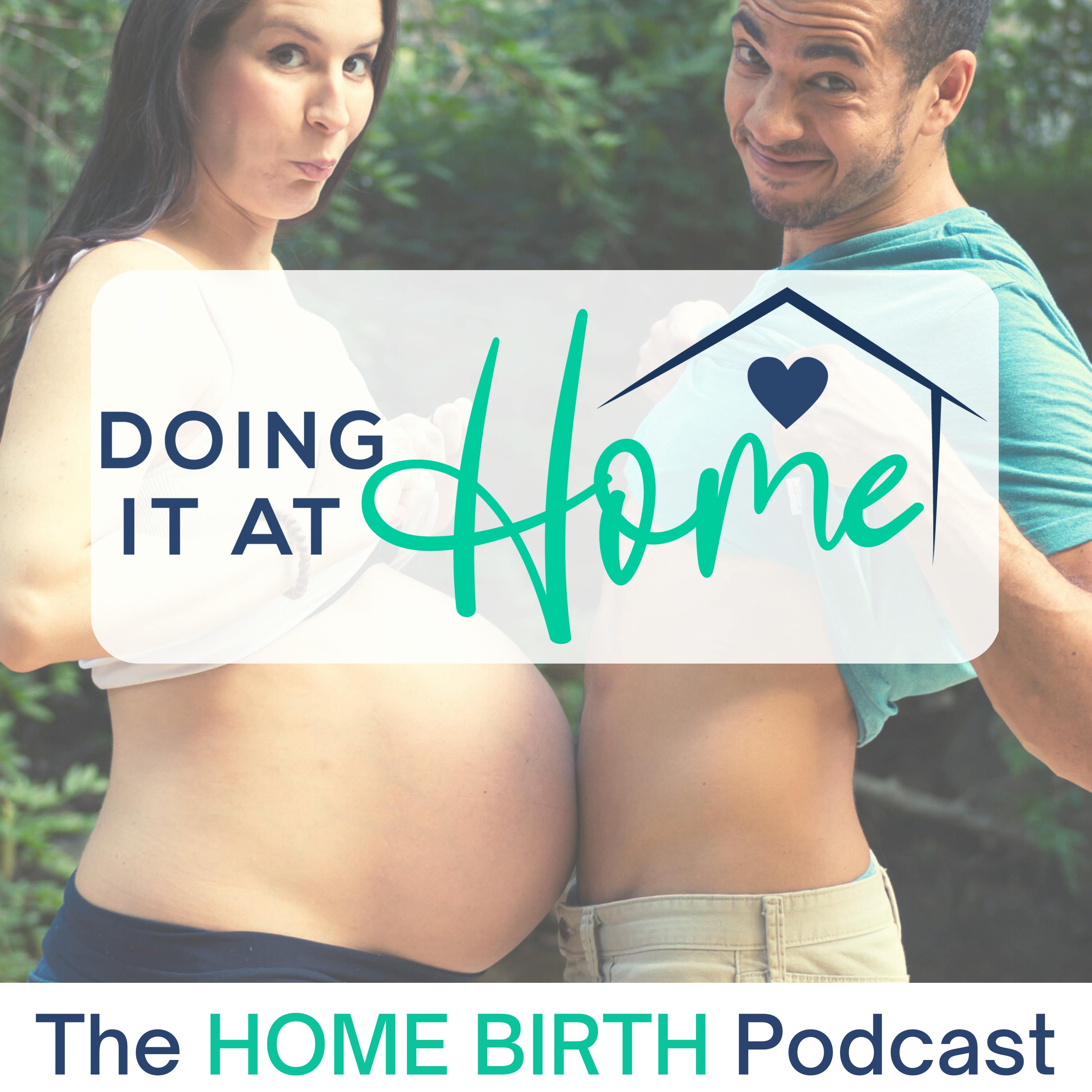
Doing It At Home is a weekly conversation about planning and living through home birth, hosted by Sarah and Matthew, who started the show after finding few honest resources of their own. Most episodes are a single family's birth story, told slowly and in full detail, with the practical logistics left in.
PRESS PLAY
Doing It At Home is a weekly show about home birth, and after several hundred episodes it has become something like an oral history of the choice. Sarah and Matthew started it out of frustration. Planning their own home birth, they found the available resources thin, and little of it honest or empowering. So they began recording other families instead. The format is simple. One family, one birth, told at length. What makes it work is that nobody rushes. A guest can spend several minutes on the logistics of borrowing a water tank, because she wanted a water birth, her house had no running water, and a tank left outside would freeze. She posted on a local Facebook page. A man who worked at the water facility offered to deliver a hundred-plus gallons whenever she called, at any hour, and she kept checking in with him for weeks to be sure he meant it. That kind of detail rarely survives a tidier interview. Fathers are in the room too. Episodes with couples let both sides of a birth surface, including the parts that were confusing or funny in hindsight, like trying and failing to remember the name of a homeopathic remedy someone ran out to buy mid-labor. Fear comes up constantly. The hosts tend to slow down when a guest describes working through fear, and they will list back the specific things that helped: following positive birth accounts, tending to the body, finding a midwife who builds community around her clients. Interviews branch out from birth stories now and then. Debra Pascali-Bonaro walks through building a birth environment deliberately, asking what a person wants to hear, smell, see and feel, and noting how strange it is to expect intimacy in a standard hospital room. Jessicca Moore discusses the documentary Why Not Home?, including the awkward truth that birth data will always be imperfect and what a person can reasonably do with the studies that exist. Repeat guests give the archive a long memory. Lindsay first appeared around episode twenty, pregnant with her second, and came back later to tell that birth's story alongside advice on squats as preparation. The register throughout is warm and neighborly rather than authoritative. Guests are validated, not cross-examined. Digressions are allowed. Listeners should know that difficult and challenging births come up as part of the territory, and that sexuality and intimacy in pregnancy are discussed frankly. Advertising is heavy at the top and tail of episodes. The substance sits in the middle, and it is generous.
Made for: People planning or considering a home birth, and partners who want to hear how other families actually handled it. It also suits anyone drawn to long, unhurried personal storytelling about pregnancy, midwifery and the transition into parenthood.
What sets it apart: Rather than expert monologue, the show hands the microphone to families and lets them narrate an entire birth in their own order, keeping the logistics, the false starts and the improvised solutions that most birth content edits out. Fathers are interviewed alongside mothers, and some guests return later with a second, entirely different birth.
Doing It At Home - The Home Birth Podcast is a weekly podcast about home birth and our decision to go from a traditional hospital birth with an OBGYN to a natural birth at home with midwives. This is a raw and honest show that explores homebirth from every angle. We talk about the fears and judgements thrown at you when you choose home birth. We share resources that we found tremendously helpful for understanding our birthing options. We confess the magic and craziness in preparing for pregnancy, home birth, motherhood and fatherhood. We talk about having sex while pregnant and maintaining your connection and intimacy as a couple. We reveal how to stay centered and not lose yourself through…
Based on 6 episodes we listened to · September 2026
Detailed parent interviews turn home birth from an abstract position into a series of practical choices, bodily events and emotional adjustments.
Doing It At Home builds its interviews around birth stories told by the people who lived them. Sarah and Matthew let parents reconstruct the choices, fears and practical arrangements behind home birth, then follow the account into labor itself.
A birth pool needs 100 gallons; this is where your calm plan meets real-life logistics.
Press play if you want
Short reviews from the PlayNext desk, based on the episodes we processed.
A candid birth story where logistics and endurance carry most of the weight.
The story is anchored in practical strain: more than 100 gallons of water, no running water, and the need to line up a tank and delivery help through a Facebook post.
A sensory look at birth space, intimacy, and how support changes labor.
The episode frames orgasmic birth as a question of setting, sensation, and support. It keeps circling back to concrete details like lighting, smell, music, touch, and the difference between a home birth and a hospital room, which gives the idea a clear shape without drifting…
A home birth story shaped by uncertainty, a major move, and the gradual shift from early labor into something more active.
Home birth is treated as something still taking shape: a couple tries to protect the birth they hoped for while a cross-country move, questions about whether home birth is witchcraft, and advice for home birth dads crowd the edges.
A grounded home birth story about fear, preparation, and the community that made the choice feel steadier.
Home birth is framed here as a choice shaped by fear, care, and deliberate preparation. John L. DuPas recalls the positive birth stories she sought out, the attention she paid to her body and health, and the steady support she found through a midwife's monthly group prenatals.
A warm, grounded conversation about home birth, evidence, and choice.
Why Not Home? gives Doing It At Home a focused, human-scale conversation with Jessica Moore, a family nurse practitioner, filmmaker, and creator of the documentary about home birth.
A planned home birth takes shape amid deployment, daily FaceTime, and a pregnancy still waiting for its next chapter.
This Part 1 follows an expectant mother preparing for a planned home birth while her husband is deployed, giving the episode a steady emotional focus: confidence built in the absence of the person she expected to have beside her.
A planned home-birth story about a second baby, a fast-changing labor, and expectations that make time feel strange.
Lindsay's planned home birth with her second baby gives this return episode a clear shape: one person can meet labor very differently the next time around.


Pregnancy science with a steady hand.

Warm perinatal talk for messy motherhood.

Research-forward birth education with a human center.

Pregnancy guidance with warmth, evidence, and agency.
Host Sarah interviews Lindsay Bonnar about her second home birth experience, which differed dramatically from her first.
Tammy Williams shares her empowering home birth story as a first-time mom at 38, emphasizing informed decision-making and the transformative power of home birth.
Hosts Sarah and Matthew interview Christie Andersen, who is 40 weeks pregnant with her first baby and planning a home birth.
A mother shares a birth story shaped by patience, planning, and a few practical complications.
The conversation opens by asking what a birth space feels like.
Doing It At Home centers on Maggie and Steve's home birth of Liam, with Sarah Bivens and Matthew framing the show around honest home-birth resources.
Doing It At Home talks with Jamar and Johnnell about switching baby number four from hospital births with midwives to a home birth in Houston.
Lindsay Bonnar shares her home birth story for baby #2 and discusses the importance of squats in preparing for birth.
Jessica Moore says home birth gave her "the most amazing" experience after infertility and IVF.
Katie Holman shares her two home birth experiences at The Farm, a community known for natural childbirth, discussing the empowering and transformative aspects of birthing at home.
Monica Smith shares her journey of learning to trust her body's intuition during pregnancy and birth, emphasizing the importance of listening to oneself for a positive birthing experience.
A pregnant vegan woman shares her ongoing home birth journey and the lifestyle choices influencing her preparation.
An interview with Charlotte Knee, an Irish mom who was born at home and shares her home birth experience, emphasizing community and cultural differences.