Topics / Software Engineering
Software Engineering Podcasts
171 shows and 28,785 episodes sit under Software Engineering.
Curated guide to software-engineering podcasts in 2026: generalist OSS flagships (The Changelog, Software Engineering Daily, Stack Overflow), Python
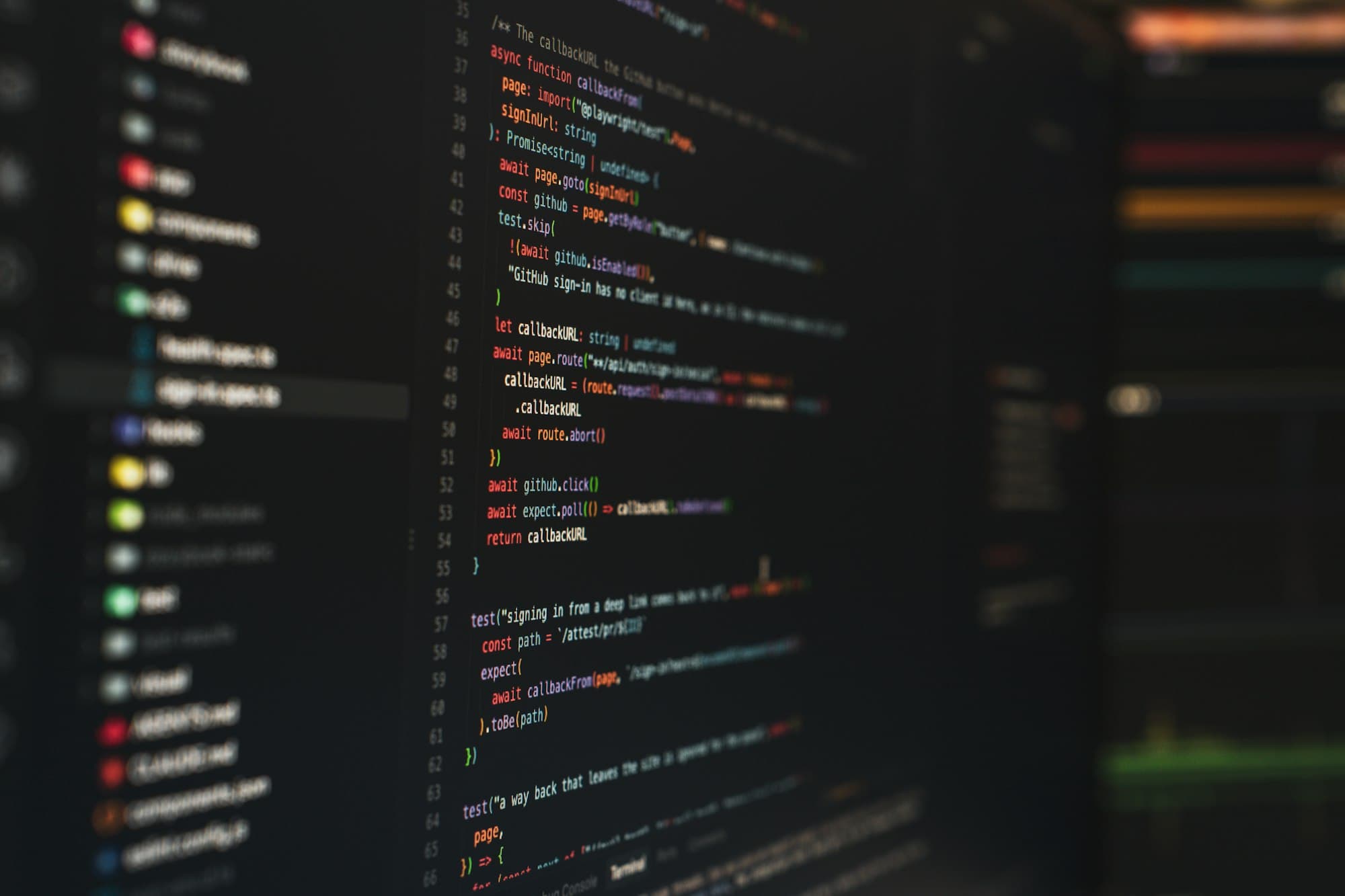
Photo: Lazar Stankovic on Unsplash · Unsplash License
Swipe · Software Engineering only
Swipe through Software Engineering
Save time discovering your next favourite podcast by listening to just the best minute of an episode.
The software engineering slate · every cover a link
All 171 software engineering shows →
Our guide
Finding the right Software Engineering show for you
Somewhere in your working week a pull request lands that you did not quite write. An agent drafted it, a colleague skimmed it, and now it is yours. The best software engineering podcasts are built for that moment. They slow down long enough to ask what the code does, who answers for it, and which old lessons still hold.
The range is wide. Some shows are two hosts sorting the week's headlines. Others hand most of an hour to one engineer explaining a single system. There are Polish conversations about careers and failure, a Telugu show that moves between coding agents and cinema, and a mainframe series discussing mentorship. A research paper published in May 2026 counted 216 software engineering podcasts in its sample, with a median of 34 episodes per show and about 39 minutes per episode. That describes a specialist ecosystem, mostly of modest length.
One argument runs through nearly all of it: artificial intelligence. In developer forums this year, some listeners have complained that favourite shows talk about little else, while hosts have defended the coverage as following a real change in the work. Others object to audio that only makes sense if you can see the presenter's screen. Whether a show is for or against AI matters less than whether it examines what AI changes in engineering or simply reviews tools again.
Keeping up with the week
Roundups do the sorting for you. In Software Engineering Daily's SED News: Anthropic’s Mythos, Supply Chain Hacks, and the AI Spending Surge (53 minutes), two hosts move from rumours about access to a restricted model, which they call "very unverified claims" and say they think Anthropic refuted, to layoffs at Snap and Meta. One host calls an AI model's discovery of a 27-year-old OpenBSD flaw "a humbling moment for humanity." The episode keeps that awe next to its scepticism, which makes it useful.
Python Bytes, with Michael Kennedy and Brian Okken, works at the scale of one language. In #474: Astral to join OpenAI (46 minutes), the hosts weigh why the Astral team might join OpenAI, and one flags his reasoning as speculation. A host's complaint that Claude Code keeps searching through files instead of understanding the project turns the news into a lesson about how coding tools read code. On The Changelog: Software Development, Open Source, The GitHub problem (and other predictions) (Friends) (101 minutes) is looser. Riffs about Chandler Bing and a childhood tennis detention threat sit alongside an argument that GitHub "earned its monopoly" and then stagnated. It rewards listeners with patience for tangents.
One system, explained by its builders
Interviews with builders are where trade-offs get spelled out. In SmartBear and Multi-Agent QA (55 minutes) on Software Engineering Daily, host Kevin presses guest Fitz on how a tester agent hands work to a "QA lead" agent. He says a tester agent checks the software, and a QA lead agent coordinates the testing. Fitz explains that the tester often puts its images into S3 storage and passes along an identifier, not the files themselves. The host plays a paranoid VP of engineering who wants hard limits, and Fitz concedes those safeguards are still only envisioned.
The Stack Overflow Podcast covers similar ground in a shorter episode. In Prevent agentic identity theft (25 minutes), Nancy Wang, CTO at 1Password, compares public and private keys to a bank vault. Asked about brute-force attacks, she answers, "I'm not a crypto expert here," and falls back on the company's own account of its breach history. A careful listener will hear both the candour and the claim.
On The Changelog: Software Development, Open Source, Selling SDKs in the era of many Claudes (Interview) (110 minutes) is about business. Its guest explains trial licence keys, pricing calls and why an SDK is "built entirely in anticipation of third party code." On Talk Python To Me, OWASP Top 10 (2025 List) for Python Devs (66 minutes) stops on a popular CDN's suggested embed code and asks what is missing: an integrity check. That moment is partly visual, so listen near a screen. For more on the security side, see the Cybersecurity guide.
Arguing about the agents
The stronger AI episodes attach their opinions to evidence. On PurePerformance, AI-Ready Codebases: Engineering Discipline for Agentic AI with Adam Tornhill (52 minutes) brings numbers rather than mood. Tornhill describes a code-health score built from 25 "code smells," which are signs of poorly structured code, scored out of 10. He says the industry average is 5.15. He also argues that his research shows a codebase needs at least 9.5 before agents can speed up work while keeping AI-induced defects low. Those are his findings, offered as his findings, and they give a sceptic something to test.
Arrested DevOps takes the human angle. In How AI Is Changing the SDLC With Hannah Foxwell and Robert Werner (40 minutes), one speaker argues that AI "has taken the actual typing off you, but it's not taken the thinking." The conversation then turns to the pressure on developers whose leaders expect faster shipping. On Software Defined Interviews, AI Doesn’t Fix Bad DevOps: Lessons from 15 Years of DORA Data, with Nathen Harvey (75 minutes), the guest explains that his team uses AI to vet survey questions, but humans write the reports.
The forecasts get bolder elsewhere. On Telugu Bytes, 087 - Tsun"AI" Warning 🌊 (104 minutes), the hosts compare the moment to Wuhan in December 2019. They state their recording date, February 6th, 2026, so the warning can be checked later, and they guess that early-career hiring will contract sharply. Treat it as a prediction, delivered with conviction. On a Talk Python To Me panel, 2025 Python Year in Review, one voice suggests an AI bubble could crash the economy while agentic coding tools survive. The AI & ML Engineering page and the Artificial Intelligence guide go deeper.
Craft, careers and the people in the room

Some shows ask what good work feels like. On Code with Jason, 318 - Adam Dawkins, CTO of Dragon Drop (53 minutes), Jason asks, "What is good code?" Dawkins answers readability and editability. He warns against a "CSSification of objects," where developers keep stacking new code on top because they do not know where to start with the old. Jason reports that someone else answered more briefly: easy to change.

Porozmawiajmy o IT, in Polish, approaches failure calmly. In Systemy IT się psują. Co z tego wynika i czego nas to uczy. Gość: Adam Korga - POIT 313 (49 minutes), Korga argues for postmortems that name what happened without hunting for blame, and mentions his own DROP DATABASE command run in the wrong terminal. Developer Tea compresses its lessons into short sessions. Your Capacity for Growth Is Dependent on This Factor - Cognitive Load Theory (24 minutes) borrows from flight training, where instructors push students to the edge of task saturation.
On Mainframe Connect, Sudharsana Srinivasan advises newcomers to join a user group where they can request a mentor. The Engineering Leadership page gathers more of this. For listening from Python Bytes to .NET Rocks! to Syntax, see the Languages & Craft page.

Operations shows sit closer to running systems. PerfBytes' Talking about Kubernetes (56 minutes) explains vertical and horizontal scaling as adding pancakes to one stack versus setting out another plate. The DevOps & Cloud page continues from there, and the Technology guide maps the wider section.
Where to start
- If agents worry you in practice: The Stack Overflow Podcast, Prevent agentic identity theft. It is compact, concrete about credentials, and honest about where the guest's expertise ends.
- For the hype-weary: PurePerformance, AI-Ready Codebases: Engineering Discipline for Agentic AI with Adam Tornhill. It gives you a measurable claim to argue with.
- To catch up in one sitting: Software Engineering Daily, SED News: Anthropic’s Mythos, Supply Chain Hacks, and the AI Spending Surge. It covers headlines and is careful with rumours.
- For thinking about design: Code with Jason, 318 - Adam Dawkins, CTO of Dragon Drop. It is a patient conversation about what makes code worth keeping.
- For Polish speakers: Porozmawiajmy o IT, Systemy IT się psują. Co z tego wynika i czego nas to uczy. Gość: Adam Korga - POIT 313.
After one episode, ask whether you could explain a single trade-off more clearly than before. If you can, the show has earned the next hour.
Featured shows below are part of the PlayNext catalog. Updated weekly.
Featured shows
7 shows, described rather than listed
Each has a short write-up and a note on what it does best here.
Adam Stacoviak and Jerod Santo's flagship. Weekly *Interview*, *News*, and *Friends* segments. Coverage spans OSS, developer-tooling, and the AI-and-coding shift.
Stack Overflow's interview-and-current-events show. AI-strategy content runs strong; recent *messy truth of your AI strategies* episode is the canonical format example.
Daily-news-plus-interview format. Recent SED News editions cover Anthropic's Mythos, supply-chain hacks, and the AI spending surge.
Deepest Python-ecosystem show on the slate. Interview-driven; covers everything Python from packaging PEPs to agentic frameworks.
Quick-cadence Python-news roundup format. Pairs naturally with *Talk Python To Me* in the same listener's rotation.
DevOps engineering-culture interviews. AI-in-the-SDLC dominates recent episodes.
Long-running Microsoft / .NET ecosystem show. Carl Franklin and Richard Campbell calibrate the show for predictable depth on developer-tooling-and-platform topics.
Where to start
6 routes in, one per reader
*Selling SDKs in the era of many Claudes (Interview)* is the entry. Pair with *News* and *Friends* episodes from the same week.
*SED News: Anthropic's Mythos, Supply Chain Hacks, and the AI Spending Surge* is the entry.
*Deep Agents: LangChain's SDK for Agents That Plan and Delegate* is the entry. Pair with *Python Bytes* for short news in the same ecosystem.
*How AI Is Changing the SDLC With Hannah Foxwell and Robert Werner* is the entry.
*ASP.NET Core in 2026 with Daniel Roth* is the entry.
*The messy truth of your AI strategies* is the entry.
Glossary
Speak the language
Sub-genre treating AI's effect on the Software Development Lifecycle (planning, coding, testing, deployment, observability) as a recurring beat rather than special-topic. Most slate shows now run AI-in-SDLC episodes regularly.
Sub-genre of language-specific shows covering Python tooling, packaging, frameworks, and community. *Talk Python To Me* and *Python Bytes* are the slate's clearest examples; one long-form, one news-roundup.
The Changelog's structured episode format with named segment-types (*Interview*, *News*, *Friends*) released across the week. Influences other generalist OSS podcasting; *The Changelog* itself is the slate's canonical example.
Anthropic's April 2026 Mythos cycle (AI vulnerability discovery) plus the supply-chain-attack surge dominate developer-news podcasting in this window. *Software Engineering Daily*, *Arrested DevOps*, and *The Changelog* all run episodes referencing the cycle.
Internal PlayNext concept: this L2 (Software Engineering) covers software-engineering podcasting broadly; the AI-Software-Engineering L3 covers shows specifically focused on AI-assisted coding (Cursor, Claude Code, Devin, etc.). Listeners narrow to AI-assisted-coding flagships at the L3 page.