Topics / Running
Running Podcasts
251 shows and 41,591 episodes sit under Running.
Curated guide to running podcasts in 2026: coach-and-education (The Running Explained), women's-runner (Another Mother Runner), competitive amateur (COFFEE CLUB), trail and ultra
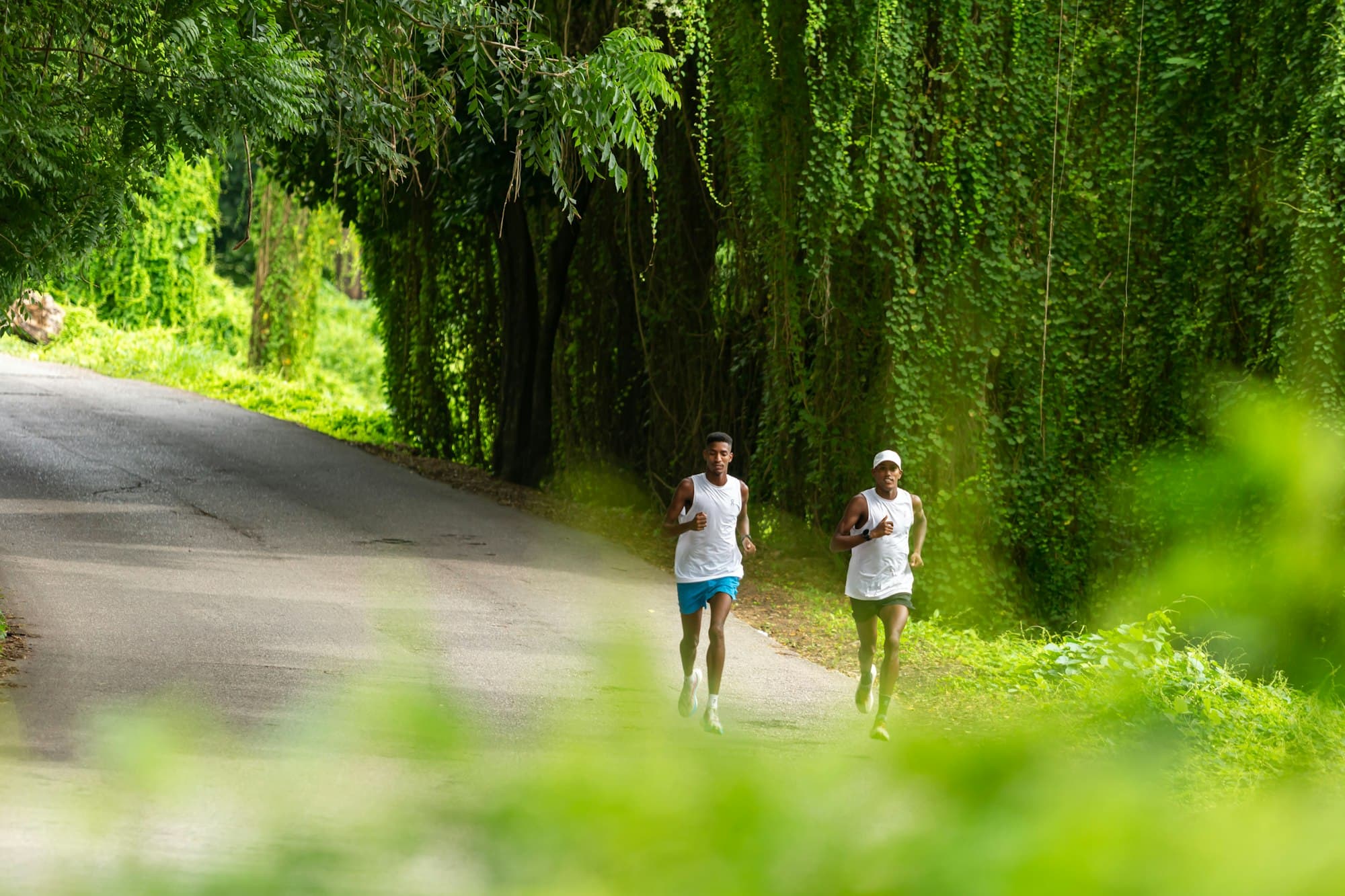
Photo: Ricardo IV Tamayo on Unsplash · Unsplash License
Swipe · Running only
Swipe through Running
Save time discovering your next favourite podcast by listening to just the best minute of an episode.
The running slate · every cover a link
All 251 running shows →



Our guide
A listener's guide to Running podcasts
After a long run goes wrong, you may want someone to explain why mile 18 fell apart. On another day you may only want voices in your ear for an easy hour. The best running podcasts handle both kinds of day. They teach you something you can use on Saturday, they keep you company while you do it, or they tell you about someone who kept going after going stopped making sense.
The form is wide. One feed has a coach walking a race route kilometre by kilometre. Another has two hosts on a live stream needling each other before they get round to hill strategy. A third is a grief memoir that happens to include marathons. Listening keeps growing as a habit: Edison Research reported in March 2026 that 58% of Americans aged 12 and over had consumed a podcast in the previous month, the highest figure in its research. Money is arriving as well. In August 2026 a retailer announced it was sponsoring a running podcast, a disclosed deal of the kind that makes careful listeners watch where coaching ends and selling begins.
Listeners argue about tone more than topic. Some want encouragement and grow restless when a show drifts into life coaching. Some love the hosts' chatter, and others wish they would skip the preamble. The useful question is what kind of relationship you want with a show, not which show is best.
Coaching for the race on your calendar


The most practical shows are built around a single start line. The Two Oceans Half Marathon Podcast and The Two Oceans Ultra Marathon Podcast are sibling feeds from Coach Parry, hosted by Shona Hendricks and Devlin Eyden with the roles swapped between them. Both count down to race day in plain, calm instalments. In Two Oceans Half Marathon (What NOT To Do In Race Week) the advice reduces to "if in doubt, leave it out." In How to Pace the Two Oceans Half Marathon Route, runners are told to settle in early, use run-walk on the big climbs and push only at the end. The pacing rule is memorable: "however easy it feels make it feel easier."
The ultra feed goes further into mechanics. How to Pace Two Oceans Ultra (Without Blowing Up) explains that its pacing charts factor in every kilometre of climb and descent, and it tells runners to switch off auto-pause on their watches. Walking, one host argues in another episode, is "a bit of a superpower." You don't need a place on that start line to borrow the method.
The Elevate Your Running Podcast, hosted by coach Sara Manderscheid, works the same ground for marathoners with a personal thread: her own Chicago build. In EP. 219 - How to Chunk Up Your Next Race with Sports Psychology Coach, Emily Saul (Replay), pace is recast as "the bumpers on a bowling alley." Pace marks the edges, and attention does the real work in the middle. The Marathon Training page gathers more of this kind of listening.
For the science underneath, The Running Explained Podcast, hosted by coaches Amanda Katz and Nick Klastava, is careful without being stiff. The Carb Ceiling Myth and What Actually Fuels a Long Run warns that a salty dinner can skew a sweat test, and it points out that one runner might need 2,000 milligrams of sodium where another needs 300. In How to Rehab and Return to Running After Injury w/ Dr. Vicky Sekely the conversation lands bluntly: "there is no biomechanical assessment that should dictate what shoe you are wearing." The Running Public offers two coaches with the tangents left in. Episode 598: Our Best & Worst Race Decisions includes a confession that maple syrup taken mid-race brings on nausea. The Coaching & Form page goes deeper on technique and training.
Trail and ultra: company for the long way round

Trail shows trade efficiency for intimacy. Höhenmeter pro Kilometer is a German-language weekly from professional trail runners Ida-Sophie Hegemann and Kim Schreiber, and it is candid about the small errors that decide long races. In #148 Königin des Mont Ventoux, one host recounts leaving a minor aid station in the chaos without refilling her bottles. She was grateful she had planned her carbohydrates around gels rather than drink mix. In #150 Nimmersatt & Half-Wheeling, a loud group of men barrels past on a narrow descent, and the host calls to the frightened runner ahead to stay behind her.
The Running Mullet is noisier. Eric and Grayce record live on YouTube on Monday nights. A guest such as Darryl appears in The Running Mullet Episode #140: 10 Rounds with The General. He describes ten loops of a local out-and-back: legs locking up on lap four, falling behind on salt, and never running a single lap alone because the community kept turning up. The Running Mullet Episode 161: Hustle to Hyner gives course advice for that race's 25K and 50K, including a warning that overcooking the climbs can cost you the rest of the race.


Endurance State of Mind, from Zach Vogt and Anthony Herrington, mixes Mississippi race talk with guests. In Episode 79: Anthony Does Berlin: How to Crush Your Marathon Debut, Zach reads Anthony's 5K splits aloud like a metronome while Anthony explains his rule of holding perceived effort steady even when the pace slips. Ten Junk Miles widens the circle further. Its Meet the Nation episodes ring up listeners: a palliative care nurse in Meet The Nation 336 - Serrah West, and a UPS driver questioned about his doorbell technique in Meet the Nation 337 - Eric Mauricette.
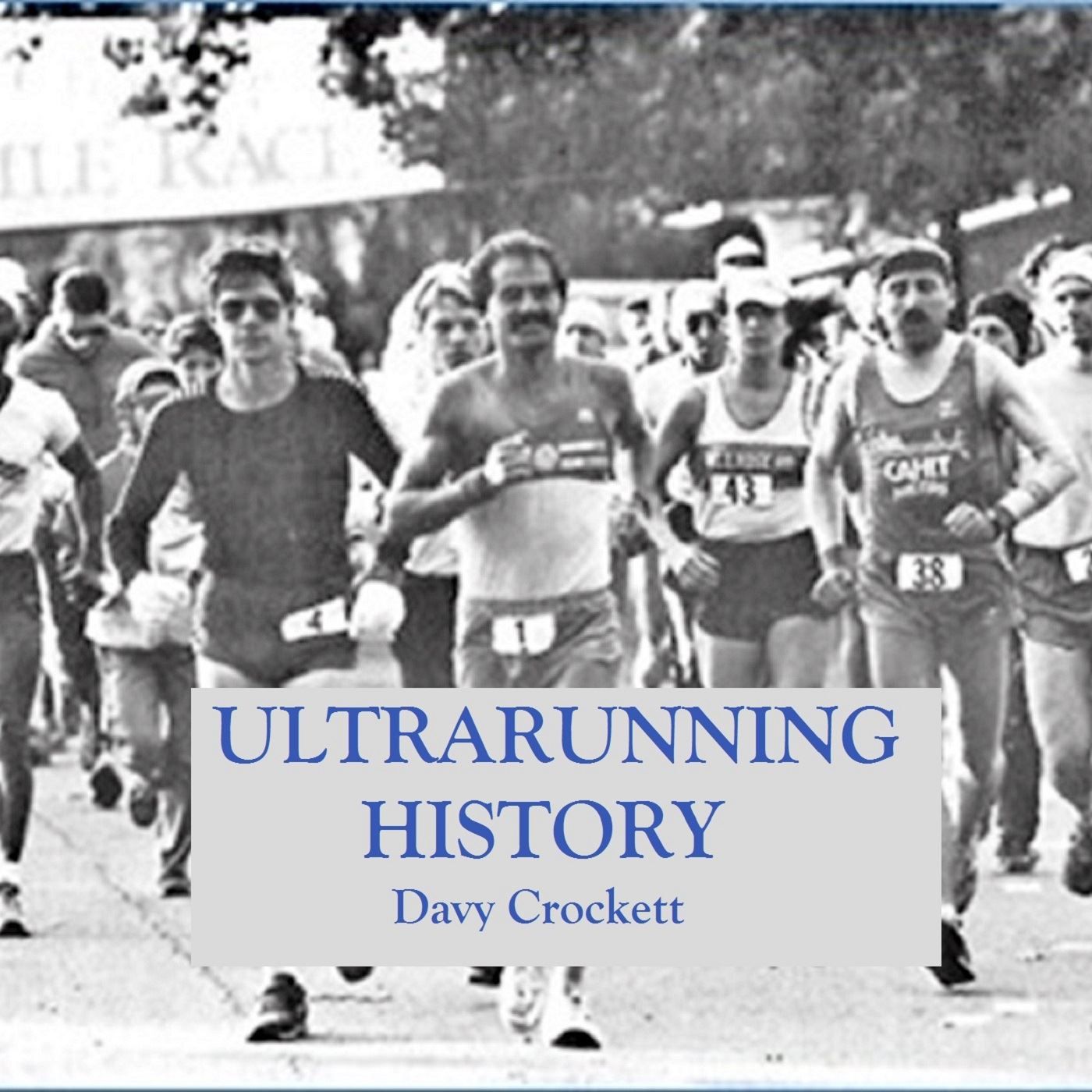

The Trail & Ultra Running page is the next stop. For the sport's backstory, Ultrarunning History's 19: Barkley Marathons – The Birth recounts Gary Cantrell scoffing at an escaped prisoner who he said managed only eight and a half miles in 54 hours. Hikers can try The Life Outside Podcast and #64 - 10 Days on the Drakensberg Grand Traverse - Trail Talk, ten days with no resupply, and then the Outdoor Sports page.
The professional sport and the majors
Marathon Talk, hosted by Martin Yelling and Deena Kastor as part of the Abbott World Marathon Majors family, brings race literacy and warmth to the elite end. EP86 | How To Get Into Every Major revisits a strange Los Angeles finish. At 26 miles, Michael Kamau followed the lead vehicles off course as a spectator waving a Kenyan flag ran onto the road, and Nathan won by one hundredth of a second. The hosts ask how you would respond to a rival in your age group who had gone the wrong way. EP88 | Meeting A Boston Marathon Legend | Marathon Talk Meets Bill Rodgers includes advice for Boston first-timers: tune out the crowds and run within yourself. COFFEE CLUB: a running podcast about nothing is looser track chat. In one episode the hosts pick apart a rival's habit of tucking behind the pacemaker and slowing the race down. The Sports page covers the wider sporting map, and multisport listeners should try The Be Fierce & Tri Podcast. In When Race Day Falls Apart: Erin Byrge on Crashing at IRONMAN Texas, Byrge describes the marathon. The Triathlon page continues from there.
Workouts to press play on, and stories that outlast the block

Some shows want you moving while you listen. The Extraordinary League is a run-along coaching feed. Goddess Series: Strategic Speedy Hills gives treadmill inclines and effort cues between stretches of Greek myth. Swiftmas Sparkle: Birth-TAY Bonus Trivia Bash sets Taylor Swift questions during 30-second sprints. It is either delightful or unbearable, and you will know which within five minutes.

Other shows ask for your full attention. Tough Girl Podcast lets women tell the whole story behind an achievement. Lisa Jackson recalls stuffing a book up her T-shirt and sprinting up the driveway to fake her childhood daily run. Later she speaks frankly about signing a do-not-resuscitate order for her husband in a hospice. The Dopey Diaries is Brittany's account of training for the Dopey Challenge, and it is unusually honest. In What Nobody Tells You About Running the Dopey Challenge she admits that "the day that I ran 26 miles on my treadmill, I was incredibly depressed." Still Becoming, hosted by Bobby Olivera, turns to later-life ambition. In Still Becoming: Interview with Jim Logan, Logan talks about writing a book through chemotherapy for stage four cancer and calls triathlon "a prescription no doctor can write." Run Canada Podcast's EP 227. Samantha Powderhorn includes a warning about addiction and violence and promises a happy ending.
Where to start
- If your race is weeks away: The Two Oceans Half Marathon Podcast, How to Pace the Two Oceans Half Marathon Route. The pacing logic allows for the hills.
- For fuelling questions: The Running Explained Podcast, The Carb Ceiling Myth and What Actually Fuels a Long Run.
- For an easy run with friends: The Running Mullet, The Running Mullet Episode #140: 10 Rounds with The General.
- If you follow elite racing: Marathon Talk, EP86 | How To Get Into Every Major.
- When you want something heavier: Tough Girl Podcast, Lisa Jackson: Still Running After All These Tears — Grief, Running & the Triumph of Tenacity.
Pick the conversation you want on your next long run, and listen for one thing you would otherwise have missed.
Featured shows below are part of the PlayNext catalog. Updated weekly.
Featured shows
8 shows, described rather than listed
A short write-up for each, plus the job it does in this guide.
Most voice-profiled running show on the slate. Coach-and-runner-education register. Recent episodes signal a season-end format transition.
Women's-and-mother-runner-specific lens. Interview and book-club episodes alongside training topics. Format reflects balancing training with parenting.
Competitive amateur running in a *Seinfeld-show-about-nothing* framing. Hosts themselves are competitive runners; format alternates race-recap, training-philosophy, and the show's own race-prep content.
Trail and ultra interview-format. Per-episode focus on one race or one personality. The slate's longest-running ultra-focused show.
Trail community-focused frame. East Coast trail scene specifically; charity-ultras and regional-race personalities the recurring beats.
Training-program and gear content. Closer to the equipment-and-recovery-protocol end than to race-day-storytelling.
Ontario amateur running scene. Provincial-level amateur runner interviews. Niche-but-deep regional running culture.
Multisport / triathlon coverage adjacent to running. Agegroup-athlete-interview format, GB focus.
Where to start
5 routes in, one per reader
*If We Could Start Running Over, We'd Do These 6 Things Differently* is the entry.
*Become a More Resilient, Confident Runner with Hillary Allen* is the entry.
*What actually happened at our National Championships? + Boston Marathon Preview* is the entry.
*Vermont 100 Beast Coast Trail Running Stories with Amy Rusiecki* is the entry. Pair with *But also… Trail running podcast*'s *Headwall & Heart: Conquering the Sleeping Giant 50K* for the East-Coast scene.
*Grant Paling GB Agegroup Triathlete* is the entry. Agegroup format throughout.
Glossary
Terms worth knowing before you listen
The week of Boston Marathon (third Monday of April) generates concentrated content across road-running podcasting. April 2026 slate shows are mostly in Boston-recap mode.
Sub-genre where each episode profiles one race or one trail/ultra runner via long-form interview. *Cultra Trail Running* and *But also… Trail running podcast* are the slate's examples.
Sub-genre at the intersection of running-coaching and listener-education. Episodes typically lean instructional (training principles, recovery, race prep). *The Running Explained Podcast* is the slate's example.
Sub-genre covering a specific regional running scene at amateur level. *Athletics Ontario Running Podcast* covers the Ontario scene; the format rarely scales to national-level coverage but produces deep community resources.
Triathlon, duathlon, aquabike, and aquathlon coverage focused on age-group rather than pro-elite competitors. *Agegroup Multisport Podcast* is the slate's example; lens differs from pro-tour coverage.