Topics / Public Health
Public Health Podcasts
95 shows and 11,744 episodes sit under Public Health.
Discover the best public health podcasts covering epidemiology, outbreak surveillance, health equity, NHS systems, and rural community health
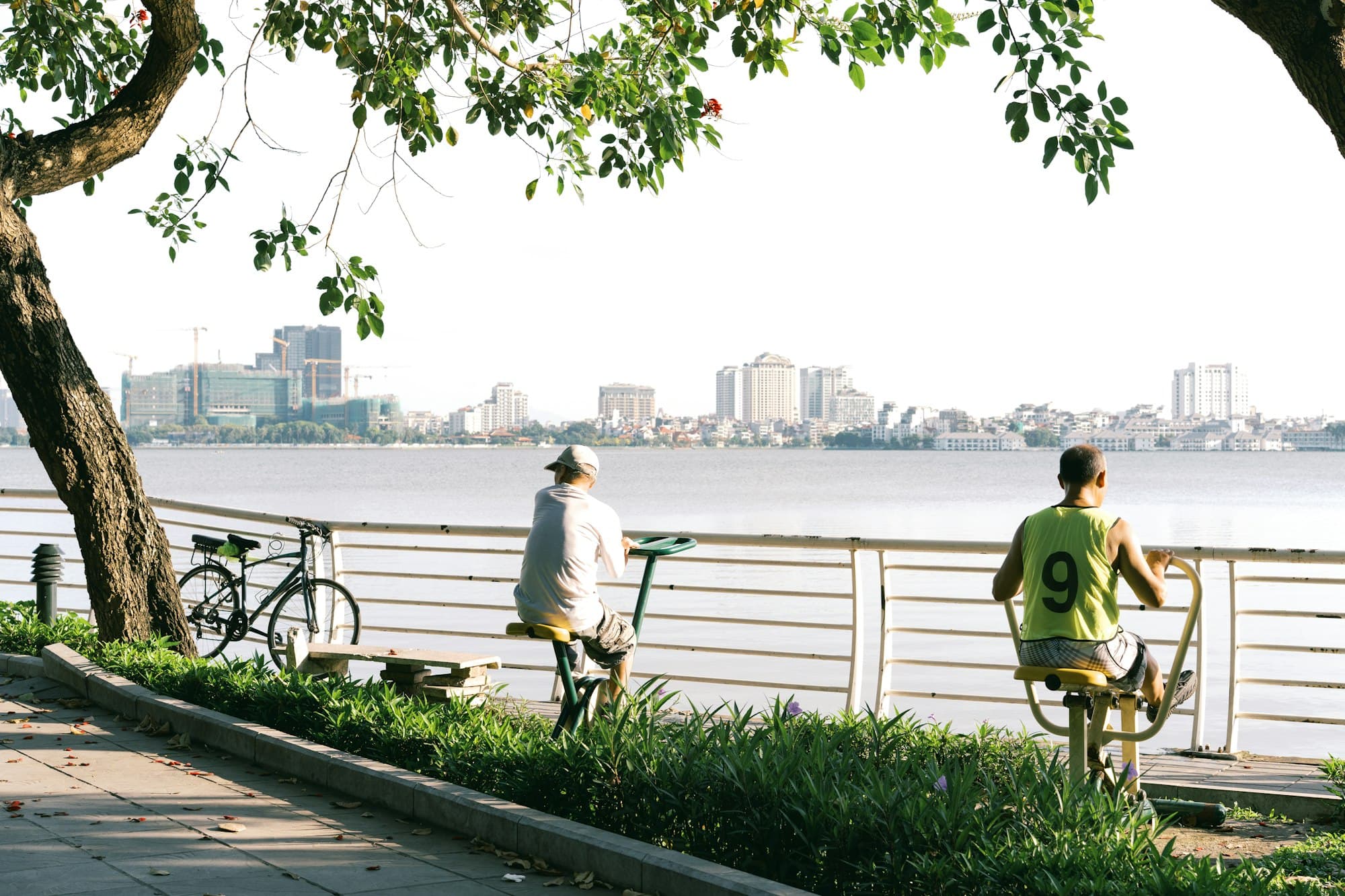
Photo: Hạnh Kiều on Unsplash · Unsplash License
Swipe · Public Health only
Swipe through Public Health
Save time discovering your next favourite podcast by listening to just the best minute of an episode.
The public health slate · every cover a link
All 95 public health shows →









The guide
Some great Public Health podcasts to get to know
You have forty minutes and a headline that unsettled you: an outbreak count, a vaccine vote, a cholesterol claim forwarded by a relative. The real choice is whose voice walks you through it. The best public health podcasts slow a claim down, ask who was counted and follow the money through a hospital ward. The range runs from hosts cross-examining a viral idea to a guest describing a fly in more detail than you wanted, and from a city official defending his homelessness strategy to panel shows where host and physician disagree about what the evidence says.
That disagreement is the live argument. One listener on a public-health forum praises a host for bringing in specialists instead of straying past his expertise. Another urges everyone to vet hosts and guests. In April 2026, AP reported that Robert F. Kennedy Jr. presented a planned podcast as increasing government transparency. In the same report, Georgetown's Lawrence Gostin warned it could further weaken HHS's reputation for dependable information. In September 2026, WHO's South-East Asia regional office began a series examining AI in public health programmes through safety, effectiveness and equity.
This guide sorts the shows by what they do with your time: check a claim, explain an outbreak, trace a system, start from a community, or argue about trust. Each section says what the method sounds like and where it stops.
Checking the claim

Unbiased Science takes claims apart without sneering at the people who hold them. Its hosts are public-health expert Dr. Jessica Steier and neurobiologist Dr. Sarah Scheinman. Spring Break Rerun: Cholester-all In! The Role of Cholesterol in Heart Health features cardiologist Christopher Labos. The conversation works through Anichkov, who fed cholesterol to rabbits, then turns the history on the listener: "would you have believed him at the time?" The answer is generous. Anichkov's skeptics weren't wrong, since the result failed in dogs and rats. You come away with a sense of how evidence accumulates, not just a verdict.
No Representation, No Generalization: Health Equity in Research is quieter and perhaps more useful. The conversation covers how some study requirements can shut whole communities out of research:
- English fluency
- daytime-only visits
- Social Security numbers for payment
It also explains why race in a dataset can stand in for things nobody measured, such as experiences of discrimination. Early on, the hosts explain why Tylenol is hard to separate from the fever it was taken for. That is confounding, in plain words. Much of the late-summer 2026 feed is reruns, so check the label. The Medicine page goes further. For food questions, Unbiased Science also has Is the U.S. Food Supply Safe?, and the Nutrition page offers more.
Outbreaks, one pathogen at a time
Outbreak News is plainer: host Robert, an expert guest, questions taken in order. In Screwworm 101 with Lee Haines, PhD, he notes the first US case reported in Texas on June 3rd. He then lets the guest explain how flooding an area with sterile male flies leaves eggs that never hatch. Her account is graphic enough that the host answers, "OK, yeah, that was that was very vivid." Squeamish listeners, take note.
Antibiotics, antimicrobial resistance and the Revenge of the Microbes gives Dr. Brenda Wilson 64 minutes. She describes working down the list of treatments until doctors must weigh "which is worse, the drug or the disease." A late rapid-fire round sorts antibiotics, antiseptics and disinfectants by where each is safe to use. The Medical Conditions page holds more single-subject listening.
Who pays, who decides
Drug resistance returns at a far higher temperature in He Said No to the NHS. The episode is Failure by Politicians in investing in Robust Public Hospital and allowing Private Equity investment to offer Healthcare will Bankrupting Families, Business in India is "ADHARMA". Two hosts work through policy briefs from physician Dr. Kadiyali Srivatsa. They argue that private-equity hospitals practise "financial triage" and that resistance is "the ultimate poverty multiplier." A claim that up to 94% of families face functional bankruptcy after one hospitalization is relayed with alarm and little examination. The proposed answer is a solar-powered, offline kiosk running Dr. Maya AI. Several recent episode titles also promote that product. Another episode challenges newborn resuscitation protocol on Dr. Srivatsa's authority. Take it as a position to put to a clinician, never as guidance.
The Other 80 asks how health works beyond the clinic, at a lower temperature. It comes from Claudia Williams at UC Berkeley School of Public Health. In Breaking the Cycle of Homelessness with Kunal Modi, Modi is San Francisco's Chief of Health and Human Services. He describes street-based telemedicine for buprenorphine or methadone prescriptions. He says treatment starts are up over 50% year over year, and concedes that retention must improve. Williams asks whether wraparound services exist or need new capacity, the right question. Of a weekly cross-department meeting, Modi says, "it's not just a tagline, it's actually a governance structure." The figures are an official's own. The value is hearing his reasoning under questioning.
Starting from the community
Some of the most practical public health audio is about meetings. Community Possibilities host Anne goes by her first name rather than Dr. Price when she is out in communities. In How to Create Authentic Community Engagement, she gives a solo lesson:
- Don't load people into a van to tour a neighborhood.
- Go where residents already gather.
- Don't hold a substance-abuse prevention meeting at the police department.
Her best example is a playground nobody wanted, because loose dogs were frightening the neighborhood.
On Community Possibilities, How Community Leaders Build Trust and Inspire Real Change: Meet Gabrielle Hawkins-Stewart gives the benefits cliff an image that sticks. A single mother's small raise costs her far more in benefits, like being placed "in front of a pond that has no fish in it." The host promotes her own evaluation course, Powerful Evidence, near the end of that episode.
Public Health Insight makes a good companion. In Turning Data To Action With Community Needs Assessments, host Gordon Thain asks early on how often organizations decide what a community needs without asking it. Epidemiologist Alexandra Piotrkowski argues against box-checking and for repeating assessments every few years. She sees AI as an aid to data collection and analysis: "I don't think it's ever going to replace talking to people."
The argument over trust
Two shows approach trust from opposite ends. In The Most Important Question episode Public Health Just Got Personal, Quinn Emmett frames things with his own alarm figures, among them six CDC health alerts in 2025. He then talks with an epidemiologist who started a newsletter at her kitchen table. Her diagnosis: public health "is really good at defense. They are terrible at offense." She describes leaning in when a parent asks whether mRNA changes your DNA.
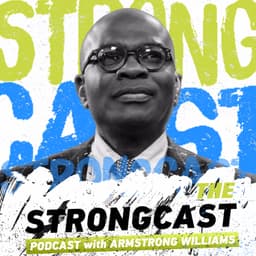
The Strongcast, Armstrong Williams's show, mixes health with federal law enforcement and national politics. In Episode 271- The State of America: Economic Trust, Infant Health, and Nutrition Reform, a physician guest separates neonatal deaths from later ones, then is pressed on vaccines. He offers a hypothesis about bundled vaccinations and immune response. Yet he says that if asked whether it is established, "the answer would be no." The conversation keeps pushing past that line, so hold onto it yourself. Compare the Unbiased Science health-equity episode, where the conversation holds that the best evidence finds no causal link between vaccines and autism.
Public health in other clothes


Public health also surfaces in shows that never name it. On Vitamin D with Dawn Dai, Vitamin D Live - Dena Relief Drive (w/ Brandon Lamar & Roland Wiley) features a fire relief drive. A guest describes having 150 volunteers by 11 that morning and warns listeners to give only to fundraisers they can verify. Taiwan Talk's Your Cycling Guide to Taiwan features two authors who came to Taiwan for doctorates in environmental geography and epidemiology. The episode insists "You don't need the most expensive bike." The Fitness page picks up that thread. The Health & Fitness category guide maps the wider field.
Where to start
- If a forwarded claim is bothering you: Unbiased Science, Spring Break Rerun: Cholester-all In! The Role of Cholesterol in Heart Health, 48 minutes of history used to judge evidence.
- If you follow epidemics closely: Outbreak News, Screwworm 101 with Lee Haines, PhD, a clear primer with one stomach-turning stretch.
- For anyone organizing locally: Community Possibilities, How to Create Authentic Community Engagement, practical enough to change your next meeting.
- For policy minds: The Other 80, Breaking the Cycle of Homelessness with Kunal Modi, an official explaining his choices under fair questioning.
- If credibility is your worry: The Most Important Question, Public Health Just Got Personal, on what communicators do when trust erodes.
Choose the one that matches a question you already have. If its method suits you, stay a while. If not, another section here asks for a different kind of attention.
Featured shows below are part of the PlayNext catalog. Updated weekly.
Recommended clips
Public Health moments to hear first
The highest-scoring 60-second moments anywhere in public health, one per show.
Drawn from 253 playable clips across 25 shows.
Featured shows
9 shows, described rather than listed
Each one comes with a short write-up and the role it plays in this guide.
Warm, interview-led conversations tracing how practitioners found public health and what they're building — careers, equity work, and community-level practice told as lived stories.
Fast-paced outbreak tracking across infectious diseases worldwide — measles, Lassa, dengue, and more, reported as they develop with an eye on what public health systems are actually doing.
Evidence-based health systems journalism anchored in the premise that 80 percent of health outcomes happen outside the clinic — homelessness, chronic disease, childcare, and violence interruption all treated as public health problems.
Inside-the-NHS policy conversations on workforce, wait times, pathway reform, and the operational realities of running a large national health system under sustained pressure.
Serious and mechanically focused critique of NHS failure modes, with particular emphasis on antimicrobial resistance as a systemic threat requiring coordinated public preparedness.
Policy-grounded public health journalism that stays close to evidence — Flint's water crisis, snakebite as a neglected disease, cash transfers for maternal health, and the politics of data.
Public health as a political question — post-evidence epistemics, plastic pollution as a systems failure, and what it means to practise public health when institutional trust is thin.
Nonprofit and community health infrastructure in practice: grants, trust-building, organizational resilience, and the people who keep health programs running on the ground.
Rural health systems from the inside — workforce pipelines, dental access, aging advocacy, and equity analysis specific to the constraints of place-based rural communities.
Where to start
5 routes in, one per reader
Follows practitioners through how they arrived at the work — makes the field's scope legible before the technical vocabulary lands.
Rigorous evidence-based analysis of social determinants, with episodes on homelessness, chronic disease, childcare, and community violence treated as interconnected health problems.
Fast surveillance reporting on active outbreaks worldwide — the right feed if you need to track what public health agencies are actually responding to.
Organizational layer under policy: grants, trust, resilience, and the practical work of keeping community health programs funded and functional.
Dedicated to the operational realities of rural health systems — workforce, access, equity, and what community collaboration actually looks like at rural scale.
Glossary
Public Health vocabulary, decoded
The non-medical factors — income, housing, education, environment — that shape health outcomes, estimated to account for roughly 80 percent of population health variation.
The study of how disease and health conditions are distributed across populations, what drives those patterns, and how to intervene at the population level.
The process by which bacteria, viruses, and fungi evolve to resist the drugs used to treat them, increasingly described as a slow-moving public health emergency.
The goal of eliminating avoidable, unfair differences in health outcomes between population groups — typically those rooted in structural, historical, or economic causes.
A systematic approach to improving health outcomes across a defined population by identifying risk, coordinating care, and addressing upstream determinants at scale.
The continuous monitoring of disease events and health indicators across populations and geographies, enabling early detection and coordinated public health response.
A group of infectious and non-communicable conditions disproportionately affecting low-income populations in tropical regions, often under-resourced relative to their disease burden.