
Topics / Politics
Politics Podcasts
280 shows and 82,499 episodes sit under Politics.
Curated guide to political podcasts in 2026: Open to Debate, Uncommon Knowledge, The Realignment, The Dispatch Podcast, Deep Dish on Global Affairs, The Good Fight
Photo: Martin Guido on Unsplash · Unsplash License
Swipe · Politics only
Swipe through Politics
Save time discovering your next favourite podcast by listening to just the best minute of an episode.
The politics slate · every cover a link
All 280 politics shows →



Our guide
Politics podcasts, explained
You have half an hour, and the news has left you with two different questions: what happened, and how anyone could think it was a good idea. A brisk conversation can put a parliamentary dispute in order; a sustained interview can explain the rules underneath it. At their best, these shows give you an account of how a decision gets made and where the argument remains unsettled.
Some listeners welcome a declared allegiance; others resent feeling recruited. Critics question whether access to powerful people produces scrutiny or merely another platform. Listen for what happens when somebody’s explanation meets an awkward fact. That is often where a programme earns its place in your week.
Following a story as it changes

Politics Weekly UK’s Hormuz, Hungary and the UK shifting closer to the EU, released April 13, 2026, fits several connected stories into 20 minutes. The presenters discuss Hungary’s election result, then bring foreign affairs back to British energy bills and relations with Europe. It suits someone wanting the connections quickly, though each subject gets limited room.

Longer roundtables make disagreement audible. In The Editors (National Review)’s Episode 859: What Happens in Havana . . ., from March 24, 2026, Rich Lowry challenges Noah Rothman’s description of a rise in petrol prices as marginal, supplying prices and recalling his own reluctant purchase at the pump. The Political News Analysis page is a next stop for this kind of interpretation.
Arguments that show their workings

The Argument works through counterexamples. In Destroy the internet to save it?, released April 16, 2026, Jerusalem Demsas argues that removing online anonymity could curb harmful political behaviour. Matthew Yglesias raises valuable pseudonymous accounts and the vulnerability of employees whose opinions might reach their bosses. The proposal acquires a cost in people’s working lives.
The exchange suits listeners who enjoy following an idea through objections, although the hosts initially set implementation difficulties aside.
Open to Debate gives disagreement a moderator. In Will the AI Bubble Burst?, also released April 16, 2026, John Donvan interrupts to ask for an explanation of business-to-business adoption. Later, the debate reaches government’s role in supporting displaced workers and distributing prospective gains. Rival arguments meet, though forecasts remain unresolved. Continue through the Political Commentary page if testing positions is your reason for listening.
A viewpoint is a starting position
Conservatives disagree about what conservatism means. The Remnant with Jonah Goldberg’s Has Trump Betrayed His Base?| Interview: Ross Douthat, from April 6, 2026, explores whether Trump’s approach to Iran contradicts his political identity. Douthat distinguishes longstanding hostility towards Iran from the promise of avoiding Middle Eastern entanglements; Goldberg questions the betrayal interpretation. It rewards listeners interested in differences within the right, while assuming some knowledge of its factions. Continue through the Conservative Commentary page.
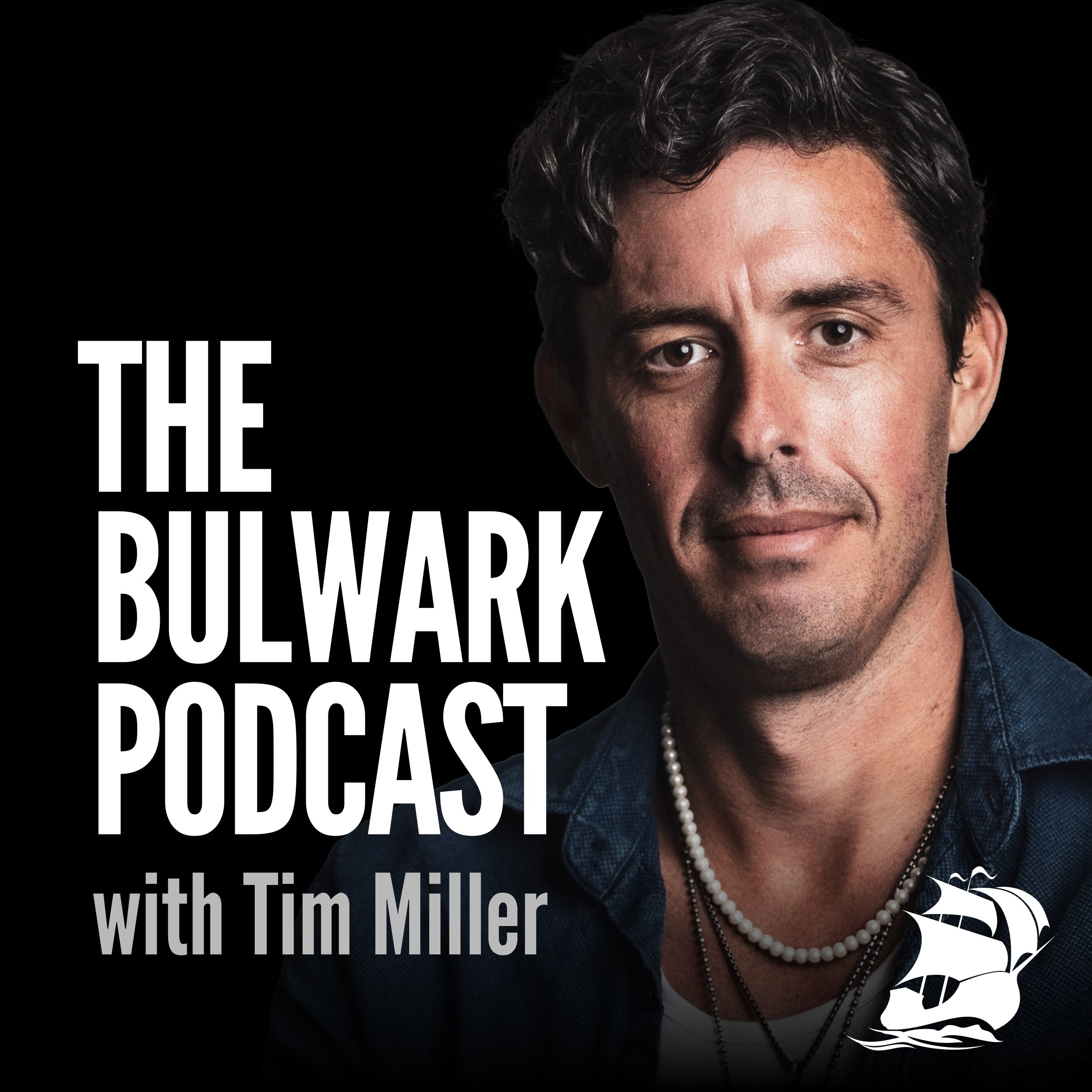
The Bulwark Podcast’s Ben Rhodes: Trump Is Getting a Terrible Deal, released April 17, 2026, offers an openly critical discussion with a participant in earlier diplomacy. Tim Miller asks where enriched uranium went under the previous agreement; Rhodes describes the process and argues against the approach under discussion that morning. His experience supplies detail; his involvement deserves scrutiny.

The Professional Left Podcast with Driftglass and Blue Gal begins Ep 984: War On Hiatus Due To Bad Ratings, from April 9, 2026, by correcting a confusion between films before developing its argument about changing justifications for war. The Progressive Politics page is a route onward for listeners who want that declared perspective.
Follow the policy down to the mechanism

An interview earns its length when it gets past what a policy promises. The Ezra Klein Show’s Our Tax System Should Make You Furious, released April 17, 2026, follows tax-law specialist Ray Madoff through borrowing against assets and devices for transferring wealth. Klein stops over the unintuitive question of how loans can sustain a wealthy borrower’s lifestyle without repayment on an ordinary household timetable. Their criticism of the system is explicit. Expect sustained attention rather than a quick tax primer.
The Realignment moves from machinery to political ambition. In its January 29, 2026 conversation, Saikat Chakrabarti describes a government framework involving mission, management and decluttering, then discusses the institutions and permit changes he believes a clean economy would require. Marshall Kosloff asks how improving administration connects to a larger political story. It suits listeners who want to understand reformers’ plans, although describing a programme does not establish that it will work. The U.S. Politics page and Business News guide provide further routes from these questions.
Politics has an address

The consequences become easier to grasp when the place has a name. In Wag the Doug’s Doug Ford vs. the Mayors, released December 20, 2023, the hosts weigh Toronto’s financial relief against the loss of municipal control when discussing provincial responsibility for highways. It is a useful Ontario archive listen, rather than an update on today’s arrangements.

POLITICO Energy’s The data center boom is running into local resistance, from April 13, 2026, makes a similar change of scale. Reporting on Port Washington, Wisconsin, identifies residents’ concerns about electricity bills, freshwater and a proposed data-centre campus. National technological ambition meets a household bill. The Local News page is a route for readers wanting that proximity.

For British and European discussion, The Rest Is Politics brings a different friction. In Is Trump a Fascist and is his War with Iran Unwinnable?, released April 7, 2026, stand-in Dominic Sandbrook challenges Alastair Campbell’s historical comparison between Trump and Hitler. Listeners can assess the analogy instead of simply inheriting it. Continue through the UK & European Politics page, or News Commentary for the wider format.
Beyond the national argument
Specialist programmes can change the question as well as the country. The Little Red Podcast’s Education Nation: China’s Exam Fetish, released December 8, 2025, puts someone who sat China’s college entrance exam alongside scholars who study it. When they consider an essay prompt, Karen Huang explores its possible meanings while another guest reads its ideological expectations. Expect discussion of schooling and social mobility rather than a diplomatic briefing.

Reported narrative offers another kind of access, including an account of where access fails. In The Prince (Economist)’s Bonus: Behind the propaganda, released October 17, 2022, a reporter recalls approaching villagers who stopped talking when the people following her intervened. It suits listeners interested in reporting political power, with its historical setting kept in view. The Investigative Journalism page is a route onward.
On Deep Dish on Global Affairs, Is International Law Built for Today's Wars?, from April 16, 2026, hears Louise Arbour distinguish human rights from the restrictions that laws of war place on states. Leslie Vinjamuri also asks about prosecuting a sitting head of state. The International Relations and Legal Affairs pages are next steps for those questions; the News & Politics guide offers a broader route between formats.
Where to start
Choose one episode for an immediate question and one whose subject will still interest you next week.
- For a compact catch-up: Politics Weekly UK — Hormuz, Hungary and the UK shifting closer to the EU. A 20-minute edition connecting foreign events to British choices.
- For a proposition to test: The Argument — Destroy the internet to save it?. Follow the anonymity debate through its consequences for people with employers.
- For differences within conservatism: The Remnant with Jonah Goldberg — Has Trump Betrayed His Base?| Interview: Ross Douthat. Begin with competing readings of a political promise.
- For policy explained patiently: The Ezra Klein Show — Our Tax System Should Make You Furious. Start with the questions about borrowing, then follow the tax mechanisms.
- For institutions beyond Washington: The Little Red Podcast — Education Nation: China’s Exam Fetish. Hear an exam discussed by both a former candidate and researchers.
Keep the shows that leave you able to explain an argument and identify what it has yet to answer. Familiar voices are pleasant company. Your listening time should buy something more.
Featured shows below are part of the PlayNext catalog. Updated weekly.
Featured shows
8 shows, described rather than listed
Each has a short write-up and a note on what it does best here.
Oxford-style debates with named participants and a measured moderator. At its strongest when the debate produces genuine disagreement worked out in real time.
Peter Robinson's long-running Hoover Institution show. Conservative editorial line, but guest selection regularly includes serious foreign-policy interlocutors and centrist Democrats.
Chicago Council on Global Affairs. Foreign-policy analysis with non-partisan posture. Among the slate's strongest entries for the 2026 overlapping-wars news cycle.
Australian-hosted China-specialist political podcast. Substantially more depth on China than American shows usually muster. The slate's strongest country-specialist entry.
Saagar Enjeti and Marshall Kosloff. Populist-conservative starting point, interviews across the spectrum. The slate's strongest entry for understanding what's shifting under the daily news.
Yascha Mounk's defense of liberal-democratic norms against both populist-left and populist-right pressure. Centrist-intellectual register; consistently substantive guest list.
Daily-tempo center-right news-cycle show. National Review-flavored institutional-conservative editorial judgment with serious sourcing.
Looser conversational Dispatch show. Conservative-but-anti-Trumpist. Worth listening to for the conservative-internal arguments broader-audience shows don't make space for.
Where to start
4 routes in, one per reader
*Will the AI Bubble Burst?* or *Wartime Kill Decisions: Human or AI?* are the cleanest entries. Format-driven, not partisan-framing-driven.
*Is the Middle East Heading Toward a Much Bigger War?* pairs well with *The Little Red Podcast*'s *State Capture or Mind Capture? China's Spy Strategy on 3 Continents* for two different regional registers.
*Noam Scheiber: How the Revolt of the College-Educated Working Class Could Reshape America* + *The Good Fight*'s *Ruy Teixeira on What the Liberal Patriot Closure Says About the Center Left* describe both sides of the same restructuring.
*Presidents vs. the Supreme Court* + *Uncommon Knowledge*'s *Ben Shapiro and The Battle For The Soul of Conservatism* are the entry pair for serious-conservative political coverage.
Glossary
Terms worth knowing before you listen
Sub-genre that uses Oxford-style format with named debaters and a measured moderator. *Open to Debate* (formerly *Intelligence Squared US*) is the slate's standard-bearer.
Format that covers foreign affairs without partisan framing, often hosted by think tanks. *Deep Dish on Global Affairs* (Chicago Council) is the slate's primary example.
Show dedicated to deep coverage of a single country's politics and society. *The Little Red Podcast* (China) is the slate's exemplar; format produces working mental models that single-region episodes can't.
Sub-genre focused on the restructuring of party coalitions, populism, and class realignment rather than daily news cycle. *The Realignment* (Enjeti/Kosloff) and *The Good Fight* (Mounk) cover the two sides of the same restructuring from different starting points.
Conservative-but-anti-populist register associated with the Dispatch / National Review ecosystem. *The Dispatch Podcast* and *The Remnant with Jonah Goldberg* are the slate's examples.
Editorial convention adopted in this article: when the show roster has a visible ideological skew (in this case center-right and academic-establishment overrepresented vs. progressive/activist-left underrepresented), the article names it up front rather than pretending the slate is balanced.