Topics / Medical Science
Medical Science Podcasts
436 shows and 46,640 episodes sit under Medical Science.
The Life Scientific profiles researchers, JAMA Editors' Summary interprets new studies, and Neuro Resus turns evidence into neurocritical-care decisions.
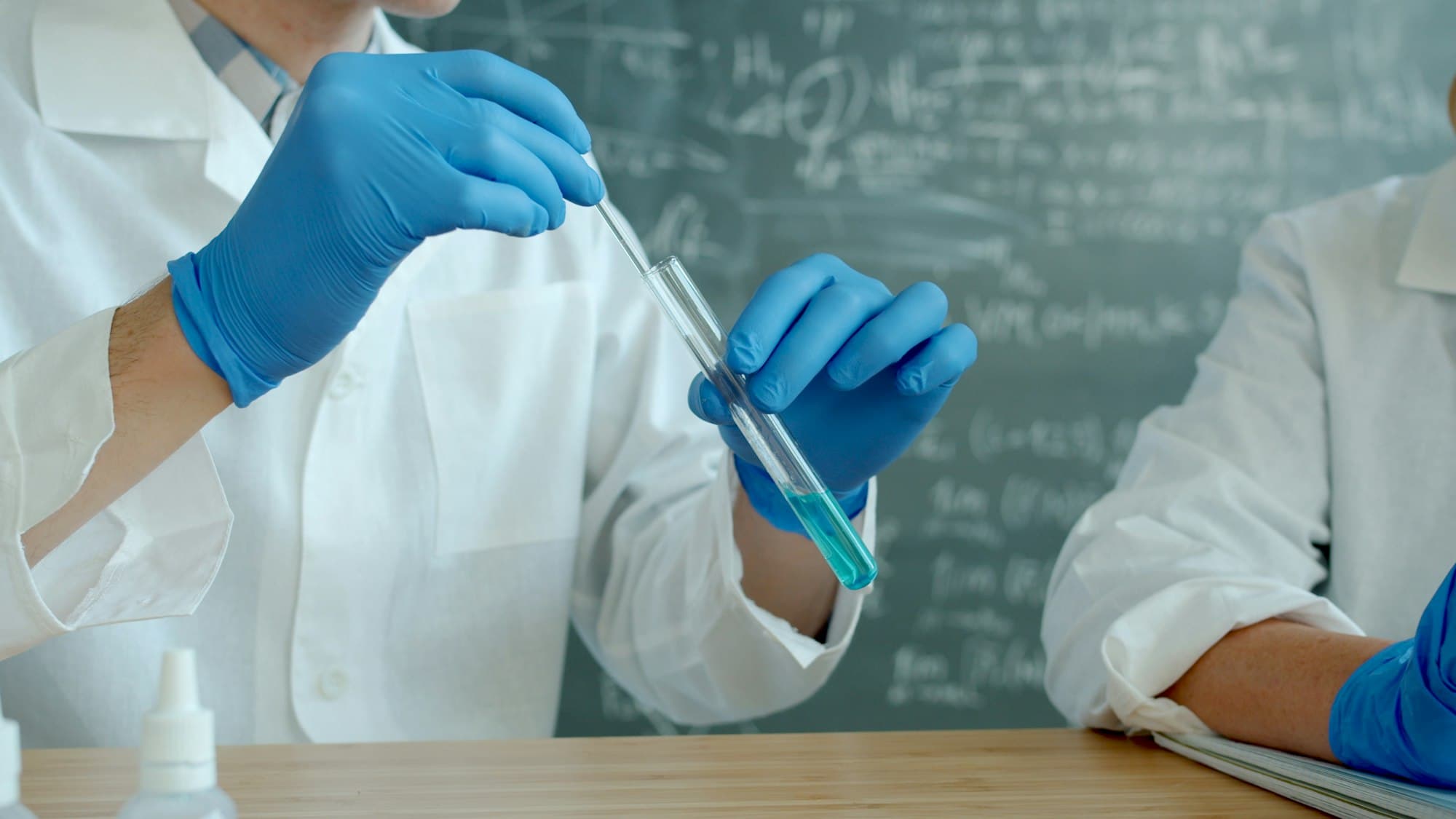
Photo: Vitaly Gariev on Unsplash · Unsplash License
Swipe · Medical Science only
Swipe through Medical Science
Save time discovering your next favourite podcast by listening to just the best minute of an episode.
The medical science slate · every cover a link
All 436 medical science shows →


The rundown
What you'll hear on Medical Science podcasts
There is a moment in a good medical podcast when the tidy answer gives way. A Copenhagen physiologist explains why the gut hormone behind today's weight-loss drugs was useless as a single injection. A Hamburg infectious-disease show weighs a fresh trial and concludes that the question is still open. A toxicology show reconstructs a midnight scramble over a snakebite of a type with few reports in the Western literature. These are the moments worth pressing play for. You hear how a conclusion was reached, and you hear where it is still soft.
The range is wide. There are conference briefings for specialists and plain explanations for frightened parents. There are career portraits, and there is company-sponsored talk about surgical technique. Across all of it, the argument is about responsibility. Edison Research reported in June 2026 that, in the third quarter of 2025, 82% of weekly podcast consumers watched video podcasts and 78% consumed audio-only ones. Those habits overlap, and the figures cover podcasting generally. They sharpen a point a commentator made in January 2026: fact-check annotations shown on screen do little for people who only listen.
So this guide uses a simple test. Prefer the shows that let you hear the evidence, the doubt and the correction in the audio itself.
Lives behind the findings
The gentlest way in is the career interview, where the science arrives attached to a person. In The Life Scientific, Jim Al-Khalili's Jens Juul Holst on the gut hormone discovery behind weight-loss drugs turns on a practical snag. GLP-1 worked as an infusion but failed as a single injection because, Holst explains, "half of what you have in the body is eliminated within two minutes." The episode then follows the problem through:
- an enzyme that could be blocked
- higher doses that brought nausea
- a single amino acid swapped so the molecule resisted that enzyme
It is biography that teaches mechanism.
Surgical Hot Topics offers a professional version in its Same Surgeon, Different Light strand. Doug Wood recalls applying to Harvard secretly after his parents forbade it. Stephanie Chang describes building robotic lung transplantation and says of the new technique, "I'm not sure if there is a benefit to it yet." That candour is worth more than the inspiration.
Raw Talk Podcast, run by graduate students at the University of Toronto, puts a patient in the room. #134: The Art, Science & Healing of Head & Neck Reconstruction pairs Mr. Patel's recovery from oral cancer surgery with two professional accounts. One is a surgeon describing transplanted tissue that must arrive with its own artery and vein. The other is a speech-language pathologist on swallowing.

Research Renaissance: Exploring the Future of Brain Science runs looser. In Bioethics at the Bedside and Beyond: How Ethics Shaped Modern Medicine, Arthur Caplan traces his interest in medical ethics to childhood polio and a hospital where "they didn't tell us the truth." Try the Neuroscience page for brain research.
Explainers that pick a fight
Some shows exist to map an argument. In its statins episode, The Deep Dive pairs two voices that move from definitions to mechanism to money. Statins: Controversy, Efficacy, Safety & Cost is careful where it counts. It explains why water-loving statins stay mostly in the liver, then warns that the FDA's adverse-event database "doesn't prove cause and effect" before reading its signal. Vaccines: A Victim of Their Own Success recovers Onesimus, who explained variolation to Cotton Mather, and shows how Wakefield's study lacked a control group.
The same confidence can overreach. Epigenetics: Your Lifestyle is your Genetic Software promises to "completely shatter" genetic destiny, leaning on a famine and a mouse experiment. Enjoy the analogies, and take the larger lifestyle claims as the hosts' framing rather than settled findings.
Clinicians explaining their own territory sound different. Understanding Childhood Cancer With Dr Geoff speaks to families from the Children's Hospital at Westmead. In Where did my child's immune system go?, the rule for a child with a temperature of 38 degrees is "infection, infection, infection, until proven otherwise," and the reasoning comes with it.

PoisonBoy Podcast is the loose-limbed cousin: toxicology with banter. One of its 2021-05-07 episodes, titled simply The PoisonBoy Podcast, reconstructs treating a Gaboon viper bite, an envenomation with few reports in the Western literature.
Reading the literature out loud
For listeners who want new studies weighed rather than announced, the review shows do the reading. Pediheart: Pediatric Cardiology Today brings an author on to discuss a paper. In Pediheart Podcast #379: How Often Are CHD Surgical Patients "Non-Responders" or Aspirin Resistant?, the first author reports results from a Queensland cohort:
- 18% of children did not respond to a standard aspirin dose after heart surgery.
- Only 5% failed to respond to a doubled dose.
It is one centre's cohort, and worth hearing as such.
infektiopod, a German show from three clinically active infectiologists in Hamburg, is denser. Its ESCMID roundup weighs trials endpoint by endpoint and covers a test of large language models on complex infection cases. Its English-language episode with Pranita Tamma includes a useful reminder: "an n of one is never enough."
Neuro Resus works through neurocritical care and once tried something stranger. In Vasospasm in aSAH - A Conversation with AI, the host's co-host is ChatGPT. On Neuro Podcases, Genetic Causes of ALS/FTD with Prof. Isaacs models the right caution. The guest says the team "probably just didn't sequence deeply enough" to rule out off-target effects.

Persiflagers Infectious Disease Puscast is the grouch's version, a 2020–21 archive in which the host quotes a law: "For every study, there is an equal and opposite study."

Retina Synthesis shows why a sceptical ear helps. In Ophthalmic Artery Angioplasty for Geographic Atrophy, a guest describes average vision gains of 6.7 letters at six months in 11 patients. He also offers a theory that reduced blood flow to the eye feeds the disease. He says the team was "originally very skeptical that it was real," and a further study is ongoing. The ASRS ReST Commitee is the counterweight: it explains how specialists report drug side effects after approval.
Inside the specialties
Much medical audio is built for practitioners, and outsiders can learn by overhearing. The Orthobullets Podcast's CoinFlips | Recon | Dysplastic Hip in 20M with Cerebral Palsy puts surgeons around a real case to argue approach and implants. The presenting surgeon also reveals what he did. SurgOnc Today® covers contracts alongside cancer care. ASHPOfficial's Hot Topics in Pharmacy: CE: From Viral to Verified (CE) explains how AI tools can fabricate citations or give wrong dosing.
Note who pays. In botiss talks' #21 – Prof. Piero Papi – Soft Tissue Around Dental Implants, the guest recalls the host first handing him a box of botiss biomaterials to try. He still insists on "stability over time, evidence" when choosing a material. EyePod Bayer is run by Bayer's ophthalmology arm. Neither fact makes these shows wrong, but it suggests which questions may go unasked.
Health beyond the hospital
The widest shows treat medicine as a public problem. Global Scalpels: A Global Surgery Podcast is strongest on ground-level detail. In Ep 56: Coleen Sabatini, she describes 402 children treated surgically for post-injection paralysis at one Ugandan hospital over six years. She also describes a belief that the more it hurts, the stronger it is.
Infectious Questions : An Infectious Diseases Public Health Podcast follows disease modelling, First Nations data sovereignty and women's shelters as public health questions. Try the Social Sciences page for related listening. Raw Talk Podcast's #132: A Shot at Cancer Prevention: The HPV Vaccine works through a study built on Scotland's national vaccination programme and Canada's uneven provincial programmes. The Science guide maps the wider territory.
Where to start
- If you are new to all this: The Life Scientific, Jens Juul Holst on the gut hormone discovery behind weight-loss drugs. Mechanism told as a life, in 28 minutes.
- For an argument mapped carefully: The Deep Dive, Statins: Controversy, Efficacy, Safety & Cost. Listen for how it treats a safety signal.
- Caring for a child in treatment: Understanding Childhood Cancer With Dr Geoff, Where did my child's immune system go?. Practical, calm and specific about fever.
- Reading trials for work: infektiopod, Infektiopod 91: Stenotrophomonas maltophilia with Pranita Tamma (english). Candid about how thin the data can be.
- Thinking about surgery worldwide: Global Scalpels: A Global Surgery Podcast, Ep 56: Coleen Sabatini.
Whichever you choose, listen for the moment someone says what the data cannot yet tell them.
Featured shows below are part of the PlayNext catalog. Updated weekly.
Featured shows
8 shows, described rather than listed
A short write-up for each, plus the job it does in this guide.
A measured host frames scientists' biographies and translates technical ideas as guests recount their work, from vaccines and ocean chemistry to gut hormones. It suits listeners drawn to the people behind research.
A guiding host builds a public-radio investigation from narration and tape with scientists, doctors, patients, and families. It suits listeners who prefer medical questions told through reported stories.
Three Hamburg clinicians discuss human infectious diseases and research, sometimes with guests, in German. It welcomes medical professionals as well as anyone curious about infections.
Specialist guests answer detailed questions about implant dentistry, connecting evidence to techniques, procedures, and clinical tradeoffs. It suits dental professionals comfortable with technical terminology.
Two editors move briskly through new studies, translating findings into clinical risks, workflows, and practice implications. It suits clinicians who want concise journal guidance across specialties.
An interviewer guides experts through critical care studies and practice, clarifying terms, caveats, and what conclusions the evidence supports. It suits clinicians who value careful, technical discussion.
A neurocritical care team works through mechanisms, trials, and competing explanations before returning to the bedside decision. It suits clinicians who prefer teaching-rounds precision over casual chat.
A solo host reviews pediatric cardiology studies, moving from cohorts and key numbers to implications and caveats, then brings in specialist guests. It suits clinicians seeking data-backed takeaways.