Topics / Crimea
Crimea Podcasts
A guide to how podcasts cover Crimea: the shows that reference Crimea most, what they focus on, and where to start. 38 episodes across 30 shows in the PlayNext corpus.
Swipe · Crimea only
Swipe through Crimea
Save time discovering your next favourite podcast by listening to just the best minute of an episode.
The crimea slate · every cover a link






Before you press play
Crimea podcasts, explained
The most useful Crimea listening divides into a few distinct lanes: military chronology, present-day operations, international law, and the longer history of Russian strategic thought. Dedicated coverage is fairly thin, so choosing by format matters. A patient academic interview and a battlefield briefing may share the same place name while offering entirely different listening experiences.
Campaigns and current operations
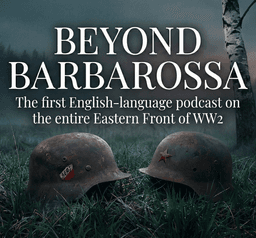
For a chronological military narrative, start with Beyond Barbarossa: The Eastern Front of World War 2. The show is a brisk solo guide that pauses to orient the listener when the geography or wider campaign becomes complicated. The Third Crushing Blow: Odesa and Crimea offensives places Crimea inside a larger sequence of operations rather than separating it into a self-contained history. That makes the episode a good fit for listeners who want movement, context, and consequences explained together.
Frontline: The War in Ukraine and Global Security approaches the subject through a sharply contemporary military headline. Its July 7, 2026 episode, Putin’s nightmare: Ukraine demolishes Russia’s A2/AD and targets Crimea’s grid | Maj Gen Chip Chapman, foregrounds air-defence terminology, Ukrainian action, and the electrical grid. This is the direct route for listeners following operational developments. The framing is urgent and specific; it assumes that Crimea is already part of the listener’s map of the war.
The strategic-history route
Three academic channels carry the same book-focused title: Gudrun Persson, "Russian Military Thought: The Evolution of Strategy Since the Crimean War" (Georgetown UP, 2025). The subject here is Russian military thought across a long period, with the Crimean War serving as the starting point named in the book.
New Books in Military History is the most approachable doorway. Its interview style is serious but conversational, letting the guest move through origins, sources, arguments, and consequences without forcing everything into quick conclusions.
New Books in Russian and Eurasian Studies presents the discussion in a more explicitly scholarly register. Questions tend to arrive with historical framing already attached, and answers are given room to unfold. The episode was published there on March 15, 2026.
Also dated March 15, 2026, the listing from New Books in Eastern European Studies suits listeners who enjoy something closer to a recorded seminar: long contextual questions, patient explanation, and attention to misconceptions and historical continuities. There is little reason to treat these three listings as separate starting points, but their shared presence makes the book interview the clearest option for sustained strategic analysis.
Law, literature, and remembrance
Sustainability Matters provides the cleanest departure from battlefield coverage. Its September 7, 2022 episode, “War and Peace” Episode 4: Understanding Where International Law Stands on the Question of the Secession of Crimea, with Dr. Majid Nikouei and Dr. Masoud Zamani, announces a tightly defined legal question. Choose it when the vocabulary of offensives and military systems is less useful than a structured discussion of international law.
The unusual outlier is Great Stone of Sardis. Into The Valley Of Death Crimea, Balaklava, The Light Brigade Russell, Tennyson And Kipling-Various, published August 16, 2026, gathers Crimea, Balaklava, the Light Brigade, and several named writers into one title. It offers a literary-historical doorway rather than a policy briefing or strategic interview. That makes it the most distinctive choice alternative choice here, though the title gives less guidance about the episode’s format than the academic and military shows do.
Where the coverage becomes incidental
Beyond those dedicated titles, Crimea commonly appears inside broader conversations about Russia and Ukraine. Russian Roulette, for example, ranges across occupation, negotiations, economic warfare, battlefield technology, and escalation in episodes such as Thresholds of Survival: The Latest Report on Ukrainian Resistance to Russian Occupation by Jade McGlynn, The State of Russia-Ukraine Negotiations with Michael Kimmage, and Drones and AI on the Battlefields of Ukraine with Kate Bondar and Sam Bendett. Those episodes may supply useful surrounding context, but none presents itself as a focused Crimea treatment. Listeners searching for a clear entry point should begin elsewhere.
Where to start
Start with Beyond Barbarossa: The Eastern Front of World War 2 for a guided campaign narrative in The Third Crushing Blow: Odesa and Crimea offensives. For the legal question, choose Sustainability Matters and its episode on Understanding Where International Law Stands on the Question of the Secession of Crimea. The shared Gudrun Persson interview on New Books in Military History is the strongest slow, scholarly option. For a current operational snapshot, use the July 7, 2026 episode from Frontline: The War in Ukraine and Global Security.
Featured shows below are part of the PlayNext catalog. Updated weekly.
Featured shows
10 shows, described rather than listed
A short write-up for each, plus the job it does in this guide.
4 episode(s) referencing Crimea.
2 episode(s) referencing Crimea.
2 episode(s) referencing Crimea.
2 episode(s) referencing Crimea.
2 episode(s) referencing Crimea.
2 episode(s) referencing Crimea.
1 episode(s) referencing Crimea.
1 episode(s) referencing Crimea.
1 episode(s) referencing Crimea.
1 episode(s) referencing Crimea.