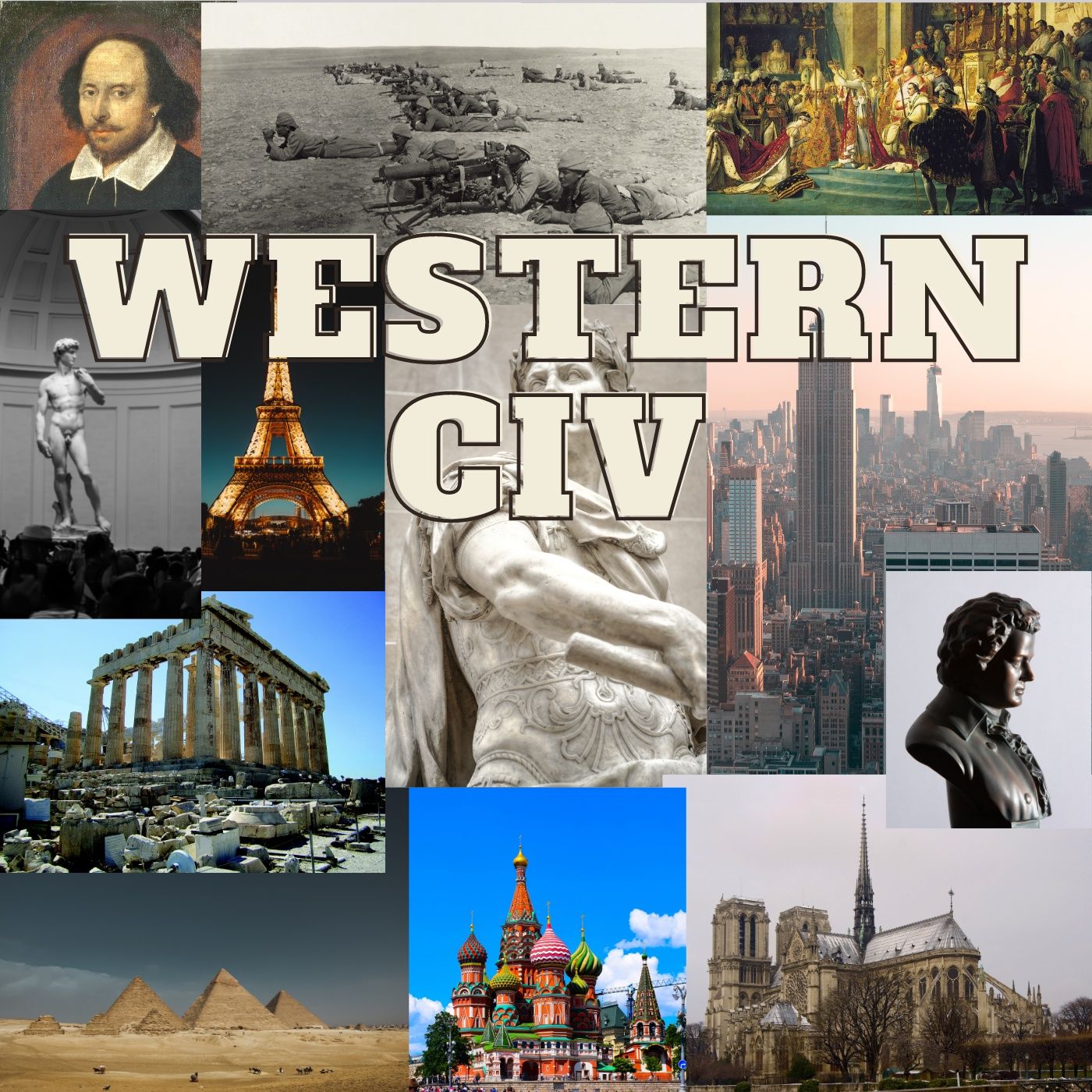
Western Civ is narrative history built around consequence. It begins with scenes that feel specific: fog at Inkerman, rain after Gettysburg, a Russian ruler in a carpenter’s smock, a parliament gathered in Turin. From there, the show moves steadily outward. Armies maneuver, leaders hesitate, supply roads fail, and political ideas harden into decisions that cannot easily be reversed. Recent episodes spend long stretches with the American Civil War, especially Shiloh, the Seven Days Battles, Antietam, Gettysburg, and the grim years between Gettysburg and Abraham Lincoln’s death. The battles are described as human catastrophes as well as strategic contests. Casualty figures matter, but so do confusion, exhaustion, miscommunication, and the way soldiers discover that war will not end quickly or cheaply. The show also follows the industrial turn in warfare, including ironclads at Hampton Roads and the growing importance of engineering, manufacturing, rivers, blockade, and steam power. It pays close attention to turning points. Antietam becomes more than an inconclusive field; it gives Lincoln the military success needed before the Preliminary Emancipation Proclamation. Shiloh becomes a warning that the conflict has changed scale. Gettysburg becomes a failed Confederate gamble whose aftermath still leaves nearly two years of war ahead. Beyond America, Western Civ traces Russia’s transformation from an isolated power into a major European actor, using Peter the Great’s reforms and Catherine the Great’s era as markers of that rise. The Crimean War is treated as both battlefield disaster and diplomatic rearrangement. Its reporting, logistics, winter suffering, and political aftermath all matter. Italy’s unification is presented as improbable and fragile, shaped by Cavour, Charles Albert, Pius IX, Austria, and the collapse of earlier nationalist hopes. The style is measured and explanatory. It can be vivid, especially around violence, but it usually returns to the question of why the violence mattered. The show is strongest when it connects battlefield decisions to institutions, borders, ideologies, and later crises. It is for listeners who want history told in order, with enough detail to follow the campaign and enough interpretation to see the larger map.