Topics / Theology & Doctrine
Theology & Doctrine Podcasts
810 shows and 158,480 episodes sit under Theology & Doctrine.
A listener's guide to Christian theology podcasts across traditions: Reformed confessional doctrine (Heidelcast), Lutheran proclamation, Latter-day Saint scripture study
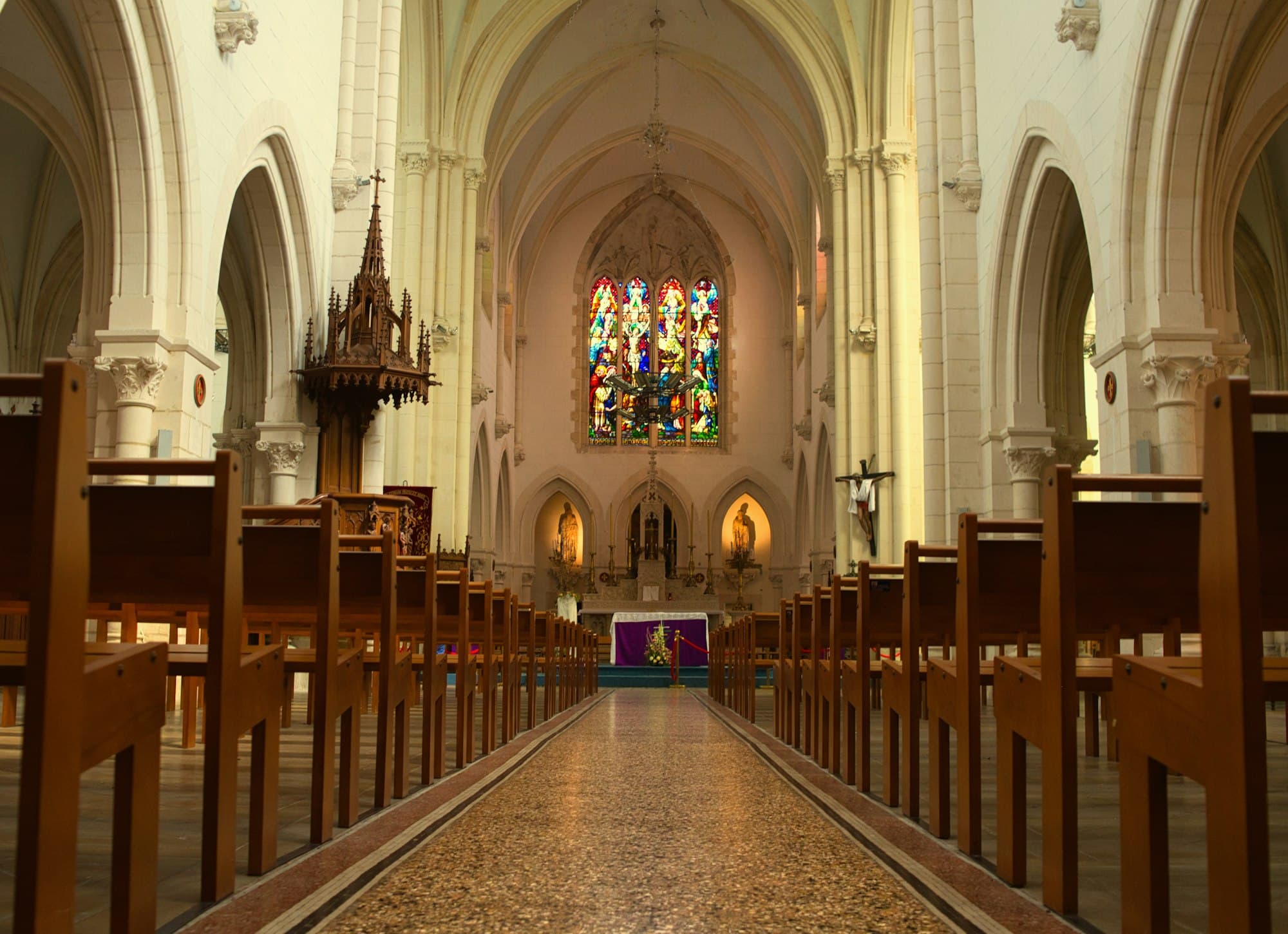
Photo: David Billington on Unsplash · Unsplash License
Swipe · Theology & Doctrine only
Swipe through Theology & Doctrine
Save time discovering your next favourite podcast by listening to just the best minute of an episode.
The theology & doctrine slate · every cover a link
All 810 theology & doctrine shows →


Next to this on the shelf
Choose a subtopic
A field guide
Theology & Doctrine podcasts, explained
The best doctrine podcasts take a disputed line of scripture and slow it down until you can hear every joint in the argument. That might be an Aramaic word for "word", a Greek word for going out to welcome a ruler, or a probability formula worked through for a Sunday class. Weaker shows simply announce conclusions. The field is also argumentative right now. In July 2026 William Lane Craig used a podcast episode to separate two views of final punishment: everlasting conscious suffering, and punishment ending in nonexistence. In January 2026 The Daily Wire announced the launch of Pints With Aquinas on its platform; listener reactions included criticism of its turn into ordinary talk and support for joining a bigger media home.
Beneath both debates sits a plainer question: who stands behind the teacher? It might be a church, a confession, a professor's chair or simply a confident voice. The shows below differ as much on that as on topic. For the wider field, see the Christianity guide or the Religion & Spirituality category guide.
Classrooms with the microphone on
Defenders Podcast records William Lane Craig's Sunday school class on doctrine and apologetics, and it sounds like a class. In Defenders 3: Doctrine of Creation (Part 17): Hume’s Abject Failure he sets out Hume's case against miracles as a ratio of probabilities and stops to ask for comprehension questions. A class member named Dennis recalls Craig's debate with Bart Ehrman and asks how anyone assigns numbers to such things. The following session concedes the probabilities are "in the end, inscrutable", which is more candour than most debate clips allow. Near the end of Part 17, the class is sent off with a prayer. The miracles material leads naturally to the Apologetics page.
We Believe - A Study of Theological Essentials is the pulpit version of the same idea. Pastor Chris Thompson of South River Baptist Church preaches a numbered series, from There Is Only One God - Week 8 to The Deity of Christ - Week 15. In The Providence of God - Week 13 he lingers over Nebuchadnezzar's untrimmed nails, joking that the king "didn't get no pedicure". He also turns the doctrine toward how to pray when life stops making sense. Listeners who want preaching for its own sake have the Sermons & Preaching page.
One anxious question, four answers
How can I know I am saved? Several shows answer from positions that cannot all be right, which makes hearing them side by side useful.
Theocast is hosted by Jon Moffitt, pastor of Grace Reformed Church in Spring Hill, Tennessee. In What Does “Examine Yourself” Actually Mean? he reads the "examine yourself" passages in context and finds no call to a daily self-audit. The episode's refrain is "Your conscience was never meant to be your Savior." In Do Catholics Believe in Grace? (Responding to Fr. Mike Schmitz) he keeps pausing a priest's video to contest it, while granting that the priest is a good communicator.
Simply By Grace Podcast teaches Free Grace theology, which it presents as the only basis for full assurance, in contrast to Calvinism. In #303 - Common Objections to the Free Grace View the preacher reads critics such as Wayne Grudem and John MacArthur aloud before answering them.
Redemption Meditations, from Redemption Bible Church in Bellefontaine, Ohio, affirms predestination in an easier manner. What's The Deal With Predestination? jokes about reaching "Rogan levels of duration" before asking Lee for a definition "for somebody who's not a theological nerd."
The Dance Of Life Podcast with Tudor Alexander pushes hardest. Who are the Reprobate? spends 85 minutes on the claim that there is only one predestination. The Gospel According to Eternal Conscious Torment rejects that doctrine outright, a hard-edged entry in the hell debate.
Other traditions, other authorities

Mary Live with Dr. Mark Miravalle is formal Catholic Mariology. Its series With Jesus: The Story of Mary Co-redemptrix reads popes and Church Fathers with a colleague named Robert. Mary Live with Dr. Mark Miravalle: IMA to DDF: Clarification on Mary? asks the Vatican's doctrinal office to clarify its note Mater Populi Fidelis, so authority is the subject as much as Mary.
Ask Christopher West brings John Paul II's Theology of the Body to listener questions, with Christopher's wife, Wendy. Its gentlest moment comes when a host admits he "should have started by just being willing to" stay with a suffering listener. Near the end of another episode, the couple note that they are not licensed counselors.
The Remnant Radio's Podcast argues for the continuing gifts of the Spirit. In Two Kinds of Prophecy? The Rabbinic Bat Kol Explored a host floats the idea that John the Baptist was an Essene, then adds, "I don't teach that authoritatively."
The Biblical Unitarian Podcast holds that the Father alone is the one true God. In 424: Does 2 Peter 1:1 Call Jesus God? Dustin Smith puts the Granville Sharp "rule" in air quotes and explains the gesture for audio listeners.
ReDiscovering God reads scripture toward a nonviolent God. 241 Who Killed Jesus according to Isaiah 53? rejects penal substitution and calls one argument for it "celestial bookkeeping."

Theology for the Curious stages disagreement on purpose in its "Are you having a laugh!" series. It hosts Tom Schreiner for Reformed theology and Brandan Robertson for an LGBTQ-affirming reading.
Where to start
- If you like arguments built step by step: Defenders Podcast, Defenders 3: Doctrine of Creation (Part 17): Hume’s Abject Failure, for a teacher who stops for questions.
- For worries about assurance: Theocast, What Does “Examine Yourself” Actually Mean?, a passage-by-passage reading.
- If rapture charts unsettle you: Ask NT Wright Anything, Puzzled by Dispensationalism: is our suffering redemptive? The rapture, new creation & becoming “Divine”, where Tom Wright calls the rapture a misreading of 1 Thessalonians.
- For warm company: Knowing Faith, Does The Manner Of Our Burial Matter?, which ranges from the catacombs outside Rome to settling what you believe about death before you need to.
Featured shows below are part of the PlayNext catalog. Updated weekly.
Featured shows
8 shows, described rather than listed
A short write-up for each, plus the job it does in this guide.
Confessional Reformed theology in two formats: longform Heidelcast episodes and the shorter Heidelminicast series — including a 2026 "What is Reformed Theology" run.
William Lane Craig's Defenders class in podcast form, mid-2026 Doctrine of Salvation series covering justification, perseverance, and the New Perspective on Paul.
Lutheran law-and-gospel preaching from Sherman Center, WI — Old Testament covenant narrative and liturgical-year sermons rooted in Word and Sacrament theology.
Boundary work between Pentecostal/charismatic theology and Reformed discernment — cessationism debates, Trinitarian doctrine, and current charismatic-movement scrutiny.
Narrative-driven Come Follow Me study of the Doctrine and Covenants and Old Testament, with historical grounding and devotional framing for Latter-day Saint listeners.
D&C study through a women's lens with Maria Eckersley, integrating artistic response alongside doctrinal content each week.
Latter-day Saint covenant-theology framing across D&C, 3 Nephi, and Old Testament prophets — focused on the continuity of covenant from Abraham through the Restoration.
Ecclesiology-focused pod tracts arguing against Christian individualism and for the communal nature of Scripture and the Church. Anglican in liturgical cadence.
Where to start
5 routes in, one per reader
The 2026 'What is Reformed Theology' Heidelminicast series (Parts 10-12) gives the clearest systematic-theology entry for Reformed confessionalism on the slate.
The early-2026 Doctrine of Salvation series covers perseverance, imputed righteousness, and the New Perspective on Paul sequentially — self-contained classroom format.
Narrative-grounded D&C and Old Testament episodes with historical context; the strongest starting point for LDS doctrinal study on the PlayNext corpus.
Current-events theology on cessationism, the charismatic-Reformed boundary, and Trinitarian doctrine — more engaged with 2025-26 movements than any other entry.
Law-and-gospel proclamation keyed to the Lutheran liturgical year — covenant narrative from Genesis through the New Testament.
Glossary
Jargon you'll hear on Theology & Doctrine podcasts
A church officer's formal commitment to a confession of faith (e.g., the Westminster Confession) as a condition of ordination or membership. Reformed churches debate the scope and strictness of this commitment.
The view that certain spiritual gifts — particularly tongues, prophecy, and healing — ceased after the apostolic era. Contrasted with continuationism, which holds those gifts remain active today.
A family of interpretations (Sanders, Dunn, Wright) reading Paul's letters in their Second Temple Jewish context, reframing 'works of the law' and justification debates. Contested within Reformed and evangelical theology.
The Latter-day Saint Church's home-centered, congregation-supported curriculum for weekly scripture study. Podcasts following this curriculum work through the same weekly reading schedule.
A central Lutheran theological distinction: the law convicts of sin and reveals God's demands; the gospel announces forgiveness and life through Christ alone. Proper distinction of these two 'words' is fundamental to Lutheran preaching.
The Protestant doctrine that Christ's righteousness is credited (imputed) to the believer, rather than infused or merited. Central to debates about justification between Reformed, Catholic, and New Perspective readings of Paul.