Topics / Buddhism
Buddhism Podcasts
227 shows and 40,228 episodes sit under Buddhism.
Curated guide to Buddhism podcasts in 2026: Tibetan / Vajrayana (Bob Thurman Podcast), Theravada / Thai Forest (Ajahn Amaro, Ajahn Sumedho), Soto Zen
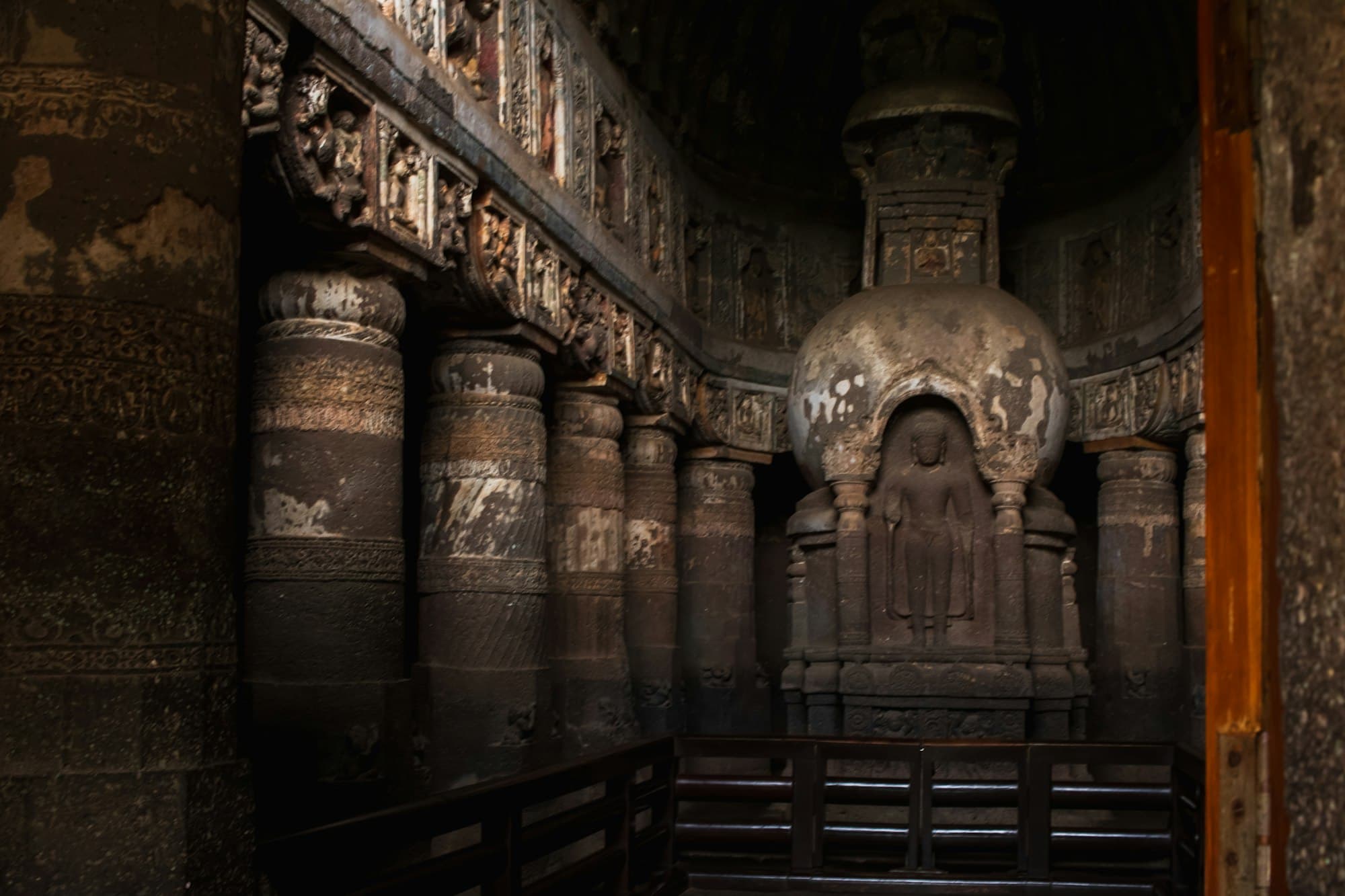
Photo: Zoshua Colah on Unsplash · Unsplash License
Swipe · Buddhism only
Swipe through Buddhism
Save time discovering your next favourite podcast by listening to just the best minute of an episode.
The buddhism slate · every cover a link
All 227 buddhism shows →





The guide
What you'll hear on Buddhism podcasts
A monk who says he is 91 admits he would rather hide in his hut. A reader deep in a study of Shingon ritual apologises for yet another footnote. Someone in a Zen discussion circle confesses that washing dishes ranks lowest among kitchen chores. Buddhist podcasts at their best sound like this. The teaching asks something of you, and the people giving it sound like themselves.
The arguments around these shows are less about whether to listen than about whom to trust. In July 2026 a request on Reddit's r/Buddhism asked for teaching from reputable ordained monastics. In September 2026 a thread on the same forum challenged AI-generated Buddhist teaching, though one reply argued for faulting irresponsible use instead. In October 2026 commenters disputed whether a prominent secular host's approach counts as Buddhism at all. So ask three things of any feed: who is teaching, from which tradition, and what the show wants you to do.
The answers run from a monastery in the UK to Zen centres in Auckland, Austin and Sydney. They also take in Tibetan teachers in long conversation and communities talking about art and grief.
Monks at the microphone
Ajahn Sumedho Podcast by Amaravati gathers talks by the monastery's founding abbot. In Giving Thanks he moves from the American Thanksgiving to gratitude and contentment as foundations of the holy life. Then he speaks plainly about age: "This is the result of being 91 years old." The talk's real gift is his warning against clinging to seniority, set beside memories of an extraordinarily grumpy father.
Ajahn Amaro Podcast by Amaravati works chapter by chapter through a book, parsing Pali terms and taking questions, but the stories are what stay with you. In Chapter 8 – Unsupported and Unsupportive Consciousness (part 3) he recalls being told "desire is a liar" on arriving at a monastery. He then sat hungry, watched a craving for pineapple and concluded "the Buddha's stupid." The joke carries the teaching.
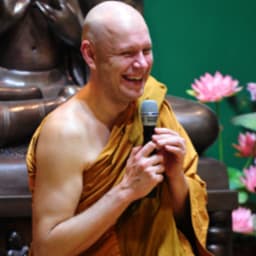
Ajahn Brahmali Podcast is the most explanatory of the three. In Memory and Mindfulness | 2025 he argues that mindfulness is awareness joined to memory of the teachings. He also pauses to praise the open-air toilet behind his hut for having "the best view in the world."
Scripture, read aloud
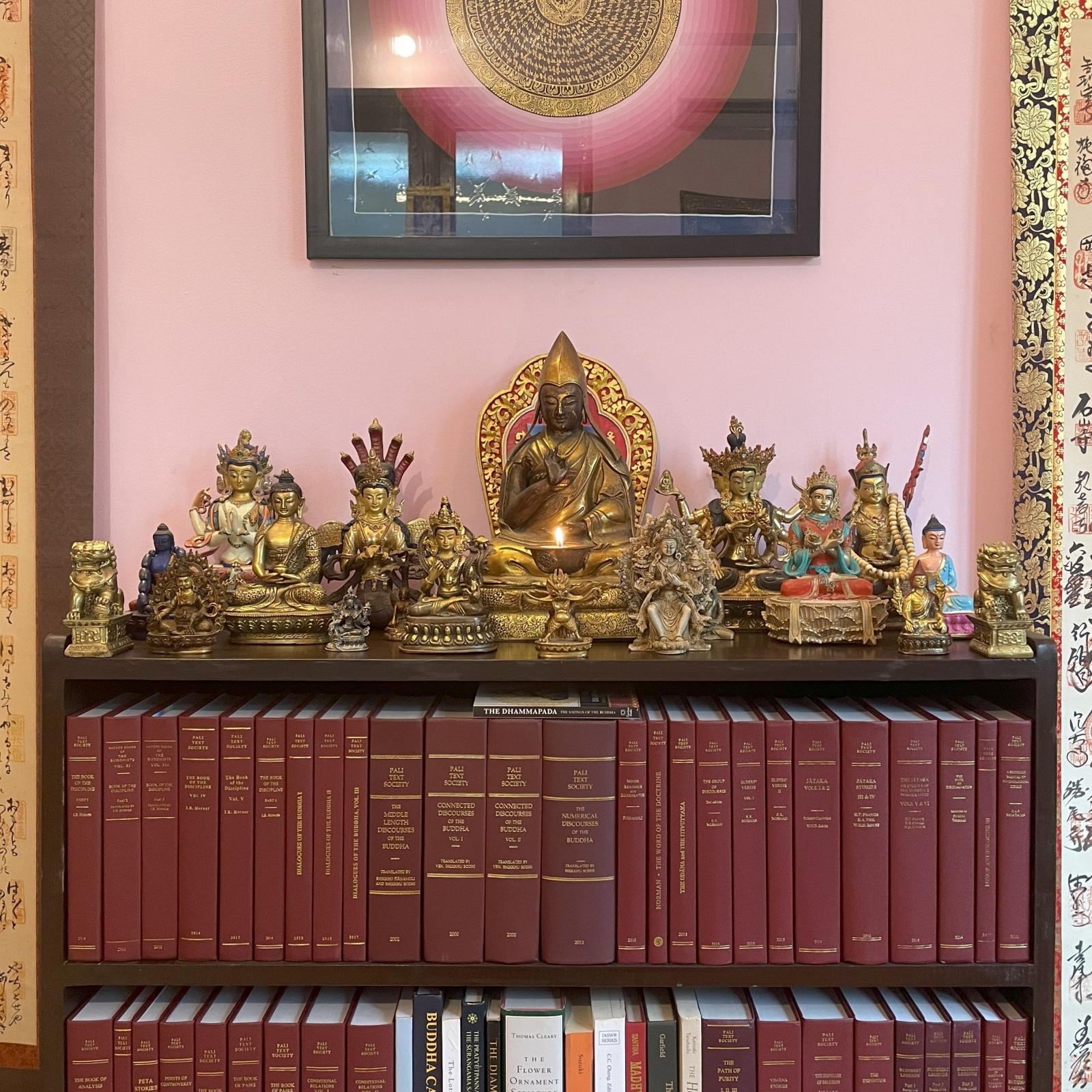
Buddhist Books Podcast reads the Tipitaka, monastic rules included, and its host interrupts freely. In Buddhist Books: TIPIṬAKA 192 • Mahāvagga IX - Part 5 the host concedes that most people skip these rules, reads them anyway, and greets a clause about levitating monks with "Levitate somewhere else." The asides keep a dry text breathing.
Daily Wisdom - Walking The Path with The Buddha, shared by David Roylance, runs as a class: chanting, meditation, then teaching from a book chapter. Ep. 1038 - (Group Learning Program) - Chapter 24 - Misunderstandings of Gotama Buddha's Teachings lasts 112 minutes and draws a hard line. The chanting, the teacher says, "isn't a rite, ritual, ceremony, worship, or prayer," and much later practice has strayed from what the Buddha taught. That is one side of a live debate, and listeners from devotional traditions may hear it differently.

Gosho Reading (Nichiren Buddhism) brings Nichiren Buddhism to the same desk. 106 The Three Kinds of Treasure thanks its recipient for seaweed and coins and grieves over the illness of the recipient's lord.
Zen, with the room left in

AZC Weekly talks archives teaching from the Auckland Zen Centre, most of it by Roshi Amala Wrightson. 2025-01-04 Teachings of Tangen Roshi 1 tells a teacher's life as an ancestral story. As a young man he knocked his own jaw out of place in self-reproach. Later he volunteered as a kamikaze pilot, and afterwards a friend sent him to see a Buddhist nun. The speaker takes encouragement from it that people can come back from very low places. The account touches on self-harm and war.
Appamada, a Zen centre in Austin, Texas, lets you overhear its sangha, or practice community. In 2026-04-05 | Dharma Talk | Cooking & the Sanga Discussion | C. Seren8y, a talk on Dogen's instructions for the cook opens onto the members themselves. One tried brushing their teeth slowly. Another admits how hard equanimity is toward a neighbour with a Confederate flag in the garage.
Ordinary Mind Zen School, with talks by Geoff Dawson in Sydney, explains koan work from inside. In Sesshin Day 3: Joshu’s Dog. Working with the first Koan Mu he describes coming before a teacher during sesshin, the intensive retreat, and saying "I don't know" day after day: "It doesn't matter how intelligent you are."
Awake in the World Podcast preserves the late Michael Stone's live talks. In Best of Awake in the World: Hope Without Optimism he weighs Slavoj Žižek's charge that meditation calms people so that nothing changes. "I think he's right and I also don't agree," he says, and his answer is a third step after bearing witness: loving action.
Tibetan teachers, talking and arguing
Bob Thurman Podcast: Buddhas Have More Fun! is gloriously digressive. A Tibet House US Menla Conversation with Henry Shukman – Ep. 336 runs 78 minutes with the Zen master and author of Original Love. It wanders to the Avatamsaka Sutra, includes an invitation to lead a meditation, and at one point loses its thread entirely. Note that A Tibet House US Menla Conversation with Andy Chaleff – Ep. 345 includes a guest's account of a man ending his life.

The Workshop is in the Mind, teaching by Venerable Robina Courtin, argues back. In Compassionate Activism (teaching) a listener objects that acceptance sounds like shrugging at the killing of children. The reply uses a broken cup to separate facing a fact from condoning it: "Acceptance is not meaning passive."

Bringing Mind Into View presents the Kagyu lineage through discussions ranging from Gampopa to 2026 search-trend data. In Emptiness. Unfusing From The Human Suit they begin to search the five aggregates for a self. The analogies are vivid. The claims that science confirms these truths are the show's own, and listeners who want a teacher in a lineage speaking directly may prefer the monastic feeds.
The Modern Buddhism Podcast, produced by the New Kadampa Tradition, is an interview show. In Pain Is Not From Loss a hospice nurse describes how teaching on attachment reached a grief that therapy and support groups had helped but not resolved.
Practitioners, in their own words

On Mangala Shri Bhuti - The Link, The Good Fortune of Encountering the Dharma and the Confidence to Walk the Path (Link #813) belongs to Sarah Gomez, speaking from Salvador, Bahia, Brazil. She does not speak English, so her daughter reads her text. It traces a path from a Pema Chodron book 25 years ago to buying crabs at open-air markets and returning them to their habitat.

The Buddhist Centre, from the Triratna community, gives Portraits of Samadhi to photographs of people meditating. One sitter, used to being seen as warm and smiley, meets a blank face, and another calls being watched "quite transgressive."

Free Buddhist Audio carries a needed caution in Dying Into Freedom: Spiritual Death In the Triratna System of Practice. After trauma, the speaker suggests, reaching for no-self can become dissociation and "even be a bit dangerous."
Near neighbours

Some feeds that surface beside Buddhism belong elsewhere. Satsang with Swaha - Audio mixes Zen stories with talk of Osho, Kabir and Rumi and fits the Spirituality page. So does MarcoToday NL, a Dutch series on esotericism. Weave & Cleave, a Christian, trauma-informed interview show, belongs with the Christian Living page. The Religion & Spirituality guide maps the rest.
Where to start
- Curious but new: Ajahn Brahmali Podcast, Memory and Mindfulness | 2025, for clear explanation and room for questions.
- Wanting a slow evening: Ajahn Sumedho Podcast by Amaravati, Giving Thanks, gentle and candid about age.
- Missing a sangha: Appamada, 2026-04-05 | Dharma Talk | Cooking & the Sanga Discussion | C. Seren8y, where the kitchen becomes the practice hall.
- Reading-minded: Buddhist Books Podcast, Buddhist Books: TIPIṬAKA 192 • Mahāvagga IX - Part 5, if you can enjoy ancient bureaucracy read with a raised eyebrow.
- Spoiling for an argument: The Workshop is in the Mind, Compassionate Activism (teaching).
Start with the voice you could sit beside for an hour.
Featured shows below are part of the PlayNext catalog. Updated weekly.
Recommended clips
Best of Buddhism, in 60 seconds
The highest-scoring 60-second moments anywhere in buddhism, one per show.
Drawn from 867 playable clips across 86 shows.
Featured shows
9 shows, described rather than listed
Each has a short write-up and a note on what it does best here.
Robert Thurman's interview-and-teaching format from Tibet House USA. Most voice-profiled Buddhism show on the slate; accessible entry to Tibetan Buddhist material for English-speaking audiences.
Theravada Buddhism / Thai Forest tradition. Ajahn Amaro is abbot of Amaravati Buddhist Monastery (UK). Book/text-based teaching series broken into parts.
Senior teacher in the Thai Forest tradition. One of the lineage's most influential Western abbots; talks span practice, doctrine, and applied dharma.
Theravada Buddhism more broadly. Title references monastic-seniority-by-rains-retreats counting system; teaching-centered format.
Soto Zen tradition. Weekly Sunday dharma talks from BZC's resident teachers; recent talks from Sarah Dōjin Emerson and Charlie Korin Pokorny.
Additional Soto Zen content. Extended teaching series from one teacher (Melissa Blacker).
Zen plus broader Soto-and-Theravada-influenced practice. Date-stamped daily-or-near-daily teaching format.
Q&A-format Buddhism explainer show. Episode-per-question design (*What is Gelug Buddhism?*, *Who is Bhaisajyaguru?*). Editorial center is making Buddhist concepts accessible to non-practitioners.
Broader-Buddhism-and-meditation content. Currently running a *Best of* archived-episode series.
Where to start
5 routes in, one per reader
Recent Tibet House US Menla Conversation series is the entry.
*Chapter 8 – Unsupported and Unsupportive Consciousness* sequential series is the entry. Pair with *Ajahn Sumedho Podcast*'s *Not Wanting Things to Be the Way They Are*.
*Centering Care: Audio Dharma Talk by Sarah Dōjin Emerson* is the entry. Pair with *Boundless Way Zen Temple Dharmacast*'s Melissa Blacker series.
Date-stamped daily teaching format. Useful for sustained daily listening.
*What is Gelug Buddhism?* + *Who is Bhaisajyaguru?* is the entry pair — episode-per-concept design.
Glossary
A quick Buddhism glossary
Theravada Buddhist lineage emphasizing monastic discipline, forest-dwelling practice, and meditation. Western branch substantially shaped by Ajahn Sumedho's establishment of Amaravati and Cittaviveka monasteries in the UK. *Ajahn Amaro* and *Ajahn Sumedho* podcasts represent the tradition on this slate.
Major Japanese Zen school emphasizing shikantaza (just sitting) and gradual enlightenment. *Brooklyn Zen Center*, *Boundless Way Zen Temple Dharmacast*, and *Appamada* represent Soto Zen on this slate; format is typically weekly Sunday dharma talk.
New York-based Tibetan cultural and educational institution founded by Robert Thurman. *Bob Thurman Podcast*'s Tibet House US Menla Conversation series provides accessible entry to Tibetan Buddhist material for English-speaking audiences.
Sub-genre where each episode answers a specific question about Buddhist concepts, traditions, or figures. *Bright On Buddhism* is the slate's clearest example; format suits new practitioners or curious non-practitioners.
Theravada Buddhist convention of counting a monk's seniority by rains-retreats observed. *45 Vassas*' title references this counting system; show is teaching-centered with the longevity-of-practice framing.