Topics / Architecture
Architecture Podcasts
212 shows and 21,807 episodes sit under Architecture.
From The Urbanist and Archispeak to New Books in Architecture, hear city reporting, practice advice, design criticism, and scholarly conversations.
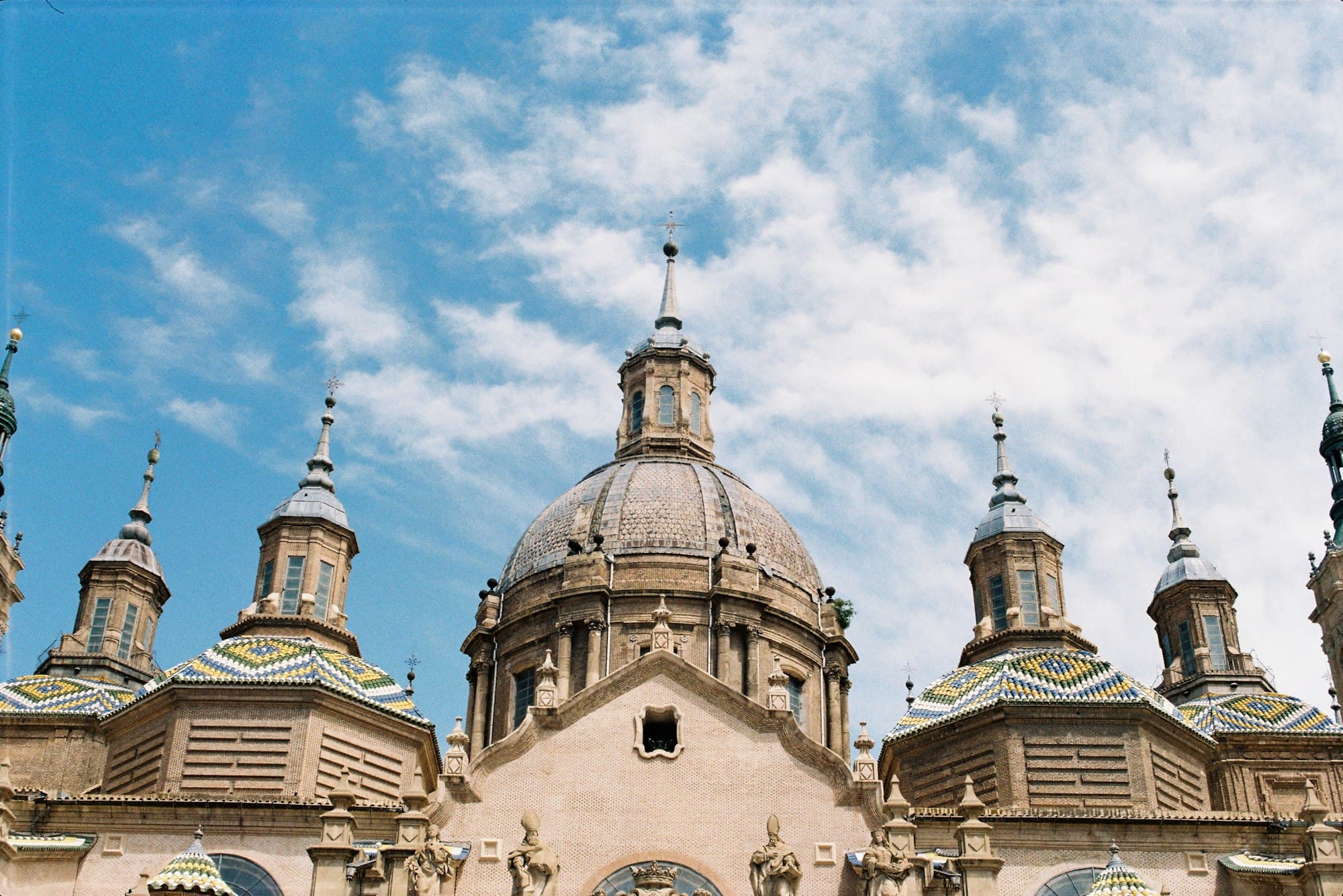
Photo: Merio09 on Unsplash · Unsplash License
Swipe · Architecture only
Swipe through Architecture
Save time discovering your next favourite podcast by listening to just the best minute of an episode.
The architecture slate · every cover a link
All 212 architecture shows →




A field guide
What Architecture podcasts actually cover
In a conversation about engineered wood on The Second Studio Design and Architecture Show, the talk narrows to tree rings. Ring count is the main thing checked in quality timber, the episode explains, because tight rings mean dense, well-performing wood. For the tree size discussed, a 40-year rotation gives, the episode suggests, three or four rings per inch instead of seven to nine. That small fact links the discussion of forest management and the case for slicing timber into veneers. Architecture podcasts at their best work this way. They pick up something you could hold in your hand and follow it out into the economy and the city.
The range is wide. Two architects field client questions. A professor records a conversation over dinner and wine. Two hosts spend four episodes on one book of architectural history. A community station broadcasts an architecture show live, on the same feed as bands. What these shows share is patience with how buildings get decided: by clients, by budgets, by historians and by the people who lay the bricks.
The arguments around the field are practical. Does AI belong inside architects' software, or does it still need experienced people checking its work? Is tall timber substance or spectacle? Does loose, joking conversation earn a listener's time? For scale, Edison Research's March 2026 Infinite Dial presentation put monthly podcast consumption at 58% and weekly at 45%. Those figures describe podcasting in general, not buildings.
Practice with the studio door open
The Second Studio Design and Architecture Show, hosted by architects David Lee and Marina Bourderonnet, is the nearest thing here to sitting in on an office. In #510 - Client Questions: Phasing Projects and Starting Before the Architect is Hired, they take on what prospective clients ask, such as whether a house can be built in phases. The answers admit uncertainty ("it's a lot of maybes. We'll see. It depends.") but stay specific, down to why a hillside site may need a particular quality of surveyor. The talk is loose enough to wander into It's a Wonderful Life. At 80 minutes, that looseness suits a long drive better than a short errand.
Guests widen the frame. In #509 - Ludwig Godefroy, Founder of Ludwig Godefroy Architecture, Godefroy traces a path from a Normandy fishing village to Tatiana Bilbao's office in Mexico. He recalls a first project with leather and copper on the walls, scratched during construction. He keeps his practice to two or three people working with him so he can choose his projects: "I don't want to be the owner of an architecture office." The Freres episode, meanwhile, becomes a materials seminar. It goes as far as a robotic process for flipping a panel so that the joints cut on each face match.
The aForm Show, which covers architecture and design in the Middle East, comes at practice from the leadership end. Asked in E114 - Drue Newcomb what design leadership means in 2026, Drue Newcomb, an owner of the practice, answers from inside the spreadsheets. Newcomb still writes specifications and does area calculations. Concept designers who never learn technical detailing, Newcomb argues, produce work that "will always be ethereal". These are career conversations more than design criticism, best for listeners curious about how a studio runs.
Where ideas get tested
Interviews about practice explain how work gets made. The next shelf asks what architecture is for. Scratching the Surface, hosted by Jarrett Fuller, aims to feel like "a great conversation in a coffee shop", in Fuller's words, though he arrives well prepared. Early in 287. Jeremy Till & Tatjana Schneider, he sets out the thesis of their book Architecture is Climate. Asking what architecture can do for the climate crisis is the wrong question, he explains; the better one is what the crisis does for architecture. Sustainability "in its current guise" is dismissed in the episode as "basically a kind of a system of minor mitigation". When Norman Foster finally comes up, Fuller admits he was waiting for it. The show reaches past buildings, too. 280. Sam Valenti concerns Ghostly International's pairing of music and album design, a natural bridge to the Design page.
ArchitectureTalk, hosted by Vikram Prakash, a professor of architecture at the University of Washington, is faster and more combative. 161. Pierre Jeanneret and the Chandigarh Vernacular with Manu Sobti recasts Chandigarh's Rock Garden, usually presented as the city's antithesis, as a Jeanneret inheritance. Along the way it turns up a postcard in which Jeanneret holds up steel offcuts from concrete shuttering and calls it art. There is real pushback here. When a defence of Le Corbusier's limited time on site grows generous, the reply comes: "So you're making excuses for him now?" The references are local, so it helps to arrive knowing a little about Le Corbusier and his circle. The Vidler conversation on ArchitectureTalk, 156. Modernism, Utopia, and Living the Catastrophe with Anthony Vidler, was recorded over dinner at Vidler's New York home. It is theory at its most conversational. It arrives at a view of modernity as a defensive recognition that we are already headed toward a kind of self-destruction.
History, read slowly and aloud
About Buildings + Cities works more like a reading group. Luke Jones and George Gingell stay with a subject across several episodes. Sigfried Giedion's Space, Time and Architecture runs to four parts, and 136 — Piranesi 1 — Prima Parte opens a series on a printmaker they introduce as "a prolific faker and interior decor merchant". The Piranesi episode is best on process. It covers site drawings that the hosts think begin in light sepia pencil and work down to ink and wash. It also covers plates that, according to researchers, Piranesi returned to the etching bath up to 10 or 12 times, until some lines opened right up. The jokes keep the scholarship honest. In 133 — Sigfried Giedion's Space, Time and Architecture — 4/4, one host concludes that Giedion attempts a great synthesis "but he's never willing to talk complete bullshit."
118 — How to be a Beaux-Arts Architect shows how the hosts handle jargon. The parti, they explain, is the little diagram that serves as your solution and your argument, a matter of taking a side. Competition sites were blank oblongs floating in space. The one year a triangular site appeared is likened to Agatha Christie making the policeman the murderer. The show leans on pictures, and near the end of that episode it points listeners to its social channels and to video versions on YouTube. Prints and drawings lead on to the Visual Arts page, and 134 — William Golding's 'The Spire' offers a route toward the Literature page.
Heritage and the local microphone
Some of the most affecting listening comes from people who were there. In The aForm Show's E116 - Peter Jackson, Jackson recalls arriving in 1974 with a letter of introduction to the Fikri family. He was asking for access to a wind tower house so that he could make a measured drawing. The project grew into the book Wind Tower, written with Anne Coles. It was first published in 2007 and has since been republished in expanded English and Arabic editions. Jackson describes repairing a reconstructed fort, Al-Hissan, with lime mortars. He also describes souk roof trusses designed to be put in by hand, because cranes could not get in. Of the stories behind the book, he says: "We were very lucky to get the last first hand."
Radio Carrum, an independent online community station on Bunurong Country, carries the most informal architecture show here. Radio Architecture with Ilana Razbash - Episode 129 (Dr.John Doyle) went out live from the station's studio. Early on, Razbash recalls meeting Doyle as a grade 10 work-experience student. The talk moves from a mud brick house where Doyle laid many of the bricks to full-size cardboard mock-ups of close living spaces from Tokyo and Ho Chi Minh City. Then it detours to the four astronauts orbiting the moon at the time, with Razbash anticipating the groan: "Alana's on with her space talk again." The rest of the feed covers a whole station's output. It includes live bands, which listeners will find better routed through the Performing Arts page, as well as frank talk shows. Pick out the architecture by episode title.
Where to start
- If you are about to hire an architect: The Second Studio Design and Architecture Show, #510 - Client Questions: Phasing Projects and Starting Before the Architect is Hired. It is candid about what clients miss and needs no background.
- For ideas with something at stake: Scratching the Surface, 287. Jeremy Till & Tatjana Schneider. Fuller summarises the book early, so you need not have read it.
- For history you can almost see: About Buildings + Cities, 118 — How to be a Beaux-Arts Architect. It stands alone and runs 96 minutes, and it rewards having images of the plans to hand.
- For a modern city argued over: ArchitectureTalk, 161. Pierre Jeanneret and the Chandigarh Vernacular with Manu Sobti. A little knowledge of Le Corbusier's Chandigarh makes the 72 minutes easier to follow.
- For heritage told first hand: The aForm Show, E116 - Peter Jackson. In 47 minutes, it gives a compact account of recording and repairing old buildings.
After a few hours with these shows, a roof truss or a stair may start to look like what it is: somebody's decision, made under pressure.
Featured shows below are part of the PlayNext catalog. Updated weekly.
Featured shows
8 shows, described rather than listed
A short write-up for each, plus the job it does in this guide.
The Urbanist pairs measured interviews with reports on buildings, transport and public space, from Auckland rail and Fifth Avenue buses to Toronto condos and Vancouver pools.
Mark R. LePage guides practitioner-to-practitioner interviews toward the business of architecture, including client retention, ethics, purpose, AI readiness and small-firm practice.
Urban Design Group Presentations offers rotating, public-facing talks on urban design, climate, metrics and governance, with live explanations that move from context and methods to findings.
Radio Carrum brings a broad community-radio mix in which architecture shares the feed with local music, mental health, creative work, grief and place. It suits listeners open to varied strands and rotating voices.
Two fast-moving operators turn architecture, construction and small-business examples into practical lessons for firm owners, builders and professionals, covering ownership risk, staffing and public trust.
New Books in Architecture gives scholars room to explain architecture through books, buildings and archives. Pointed questions lead into patient discussions of history, politics, migration and design.
Archispeak keeps its working conversations intact as two peers interrupt, clarify and think through office and project problems. Recent episodes tackle AI, meetings, expertise, boundaries and professional identity.
Scratching the Surface hosts thoughtful, guest-led conversations about design culture. Long, responsive questions pause over a phrase or historical claim, then ask what it changes for architecture and design.