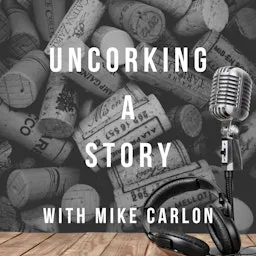
Uncorking a Story is a weekly conversation between Mike Carlin and the people who write books. The format is simple and the effect is cumulative. An episode opens with a light thematic hook, then slides into the guest's life. From there the questions run long and open. Carlin repeats a phrase back, paraphrases an idea, and lets the guest keep going. That habit of following the emotionally alive detail is the show's actual method. The subjects range widely. Nick Kemp discusses compiling a book about ikigai and pushing to include an entry he found most fascinating of all — a Japanese friend who admitted he enjoys his life and feels content, but does not feel ikigai, because for him it would mean having a child he does not have. Kemp argues there is nothing negative in that honesty. The disagreement over whether the book should stay relentlessly positive becomes a small window into how books get made. Priya Hutner remembers a community shaped by a loud, ostentatious Western guru from Brooklyn, an ashram unlike any other, with television and forced meditation and, in one chapter, a dead body. She is funny about it and serious about it in the same breath. Christian Toms-Arbel talks about reading criminal-profiling books decades ago and drawing on that world for fiction, noting that true crime often stops at bullet points where a longer story can go deeper. Jane Loeb Rubin describes writing scenes she sees cinematically — clothing, smells, tenements without heat or running water — and folding a healthcare background into the medical reality her characters faced. Her figures land hard: a life expectancy under fifty, one in five children lost before their first year, a mother who said every family lost at least one. Trauma, faith, class and homecoming surface often, but the register never turns clinical. Carlin stays companionable even when the material is grave. Guests do most of the talking, and the show is built that way on purpose. Craft questions are here — structure, adaptation, research, what a manuscript owes to the truth — yet they arrive through story rather than as a checklist. The result suits anyone who reads with curiosity about the person behind the page. Each episode closes with the same small ritual and an invitation to come back the following week for a new story uncorked. Episodes carry promotion from the podcast network behind the show, which is worth knowing before the first listen.