A sharp media critique that tracks how shaky claims harden into accepted fact.
One thread here is straightforward: the episode treats the Mueller Report and Bill Barr's summary as an early example of reporting getting ahead of the facts.
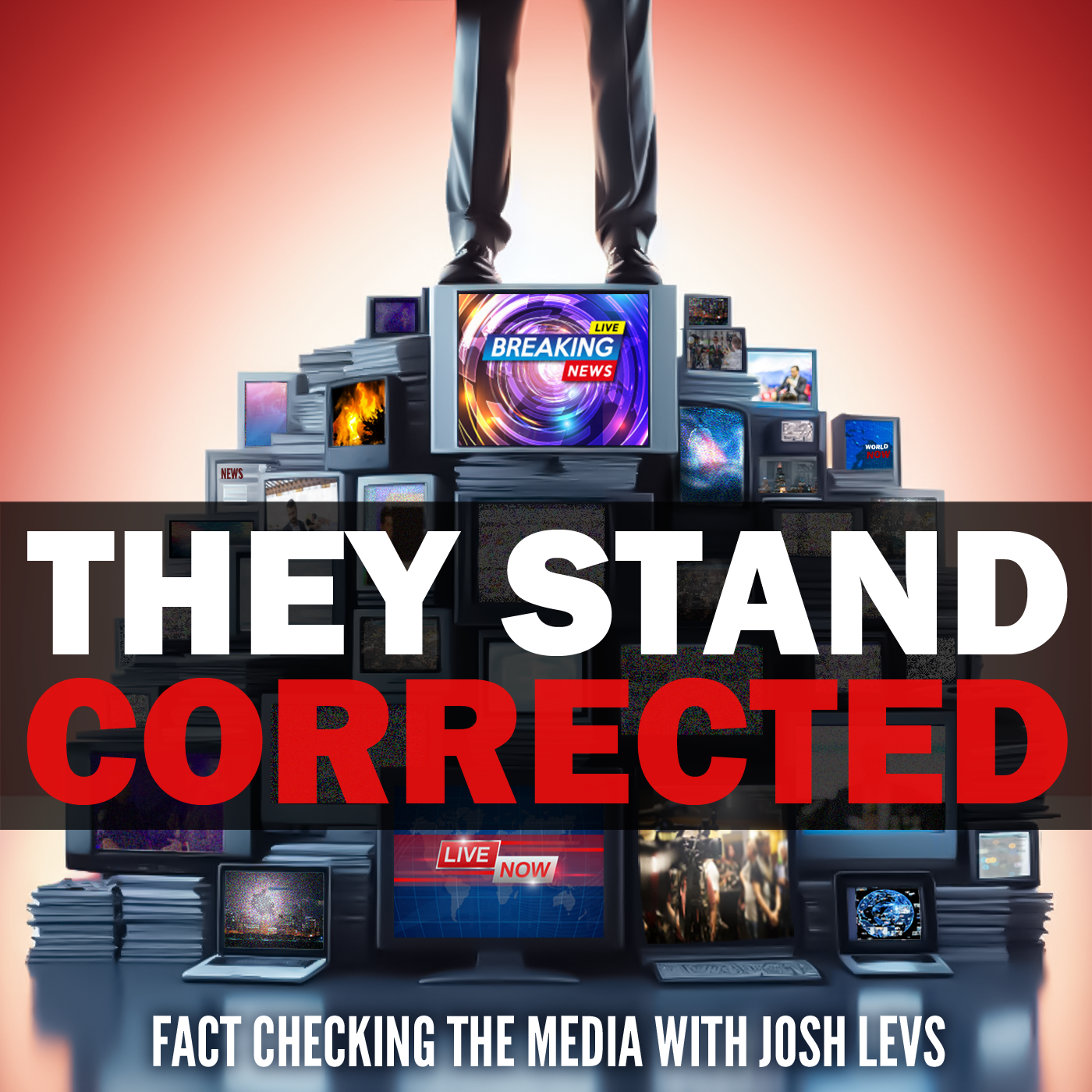
Fact-checking the news that shapes the facts.
They Stand Corrected treats the news itself as the story. Through evidence-driven monologues, it challenges rushed headlines, selective context, and political double standards in coverage of Iran, local news ownership, modern slavery, terrorism, and American politics.
PRESS PLAY
They Stand Corrected is a brisk, corrective media-criticism show built around the question of what the news leaves out. It treats headlines as evidence. Episodes often begin with a familiar media frame, then test it against facts, missing context, and the larger pattern behind the coverage. The show has recently focused on Iran, Hezbollah, ceasefire reporting, congressional authorization for military action, modern slavery, local news ownership, and the way political spouses are covered differently depending on the story. Its style is blunt but organized. Rather than drifting through opinion, the monologue stacks examples until the editorial judgment becomes clear. The show repeatedly argues that news organizations can mislead not only by getting facts wrong, but by omitting history, scale, and basic moral context. Silence is a major subject. An episode on modern slavery, for example, frames undercoverage as a failure with real social consequences, not a harmless editorial gap. Coverage of Iran becomes another test case, especially when state claims, proxy violence, protest crackdowns, and civilian harm are handled unevenly. The show also looks inward at the media industry. Local news mergers, billionaire ownership, shrinking audiences, and desperation for attention all become part of the same concern: whether journalism is earning trust or burning it down. The pacing is fast. Short judgments land between longer explanations, giving the show the feel of a case being built in real time. It is not neutral-sounding, and it is not trying to be cozy. Its appeal is in the pressure it puts on institutions that present themselves as truth-tellers. Listeners looking for soft media chatter may find it severe. Listeners frustrated by selective outrage, propaganda laundering, and context-free headlines will understand its urgency quickly. At its best, They Stand Corrected makes media criticism feel less like insider commentary and more like civic maintenance.
Made for: For listeners who follow politics and world affairs but distrust shallow headline framing. It suits people who want sharp media accountability, especially around propaganda, bias, omitted context, and institutional double standards.
What sets it apart: The show focuses less on personalities and more on the mechanics of misleading coverage: what was claimed, what was omitted, and why the framing matters. Its corrective force comes from sustained comparison between headlines, context, and repeated media behavior.
The New Podcast Fighting for Truth. Lies and myths are societal poison. As we enter into an even worse era for the rapid spread of misinformation, disinformation and “alternative facts,” we desperately need trustworthy sources of truth. News media should serve that role. When they don’t, we’re all in trouble. And sadly, every day, news organizations report some things that liars say without telling you what’s true. They give these folks platforms to spew dangerous nonsense. They even do this for terrorists. Who holds the media to account? Who fact checks the news? Now, there’s a podcast for...
Based on 5 episodes we listened to · September 2026
Josh Leves scrutinizes headline framing, omitted context, and inconsistent standards in major news coverage through detailed, openly argued media criticism.
They Stand Corrected treats major news coverage as material to be checked, compared, and argued with. Josh Leves builds each episode around specific reporting choices, moving from headlines and broadcast claims to the context he believes outlets omitted.
A Colbert interview hits the equal-time rule, and your headline starts looking underdressed.
Press play if you want
Short reviews from the PlayNext desk, based on the episodes we processed.
A sharp media critique that tracks how shaky claims harden into accepted fact.
One thread here is straightforward: the episode treats the Mueller Report and Bill Barr's summary as an early example of reporting getting ahead of the facts.
A sharp check on how sloppy framing can warp serious history.
The piece argues that news can miss the mark even when it aims to be careful, and the U.N. slavery vote is used to show how context falls away once a story gets flattened.
A sharp media critique that piles up double standards and leaves little room for doubt.
Episode 99 of They Stand Corrected takes a hard look at recent media failures, starting with the attempted terrorist attack in New York City and the rush to soften basic facts.
A pointed critique of major media coverage that argues Iran was softened, buried, and too often pushed out of view.
The episode makes a blunt case that major media outlets softened or pushed aside coverage of Iran, and it backs that up with a few pointed examples from the New York Times and CNN wire.
A brisk media autopsy that keeps dragging a tidy story back toward the facts.
Equal Time Battles treats a recent censorship-and-late-night-TV story as more than a clean headline. It slows the pace and traces the reported details: the interview booking, the campaign spin, the confusion between laws, and the wider habit of turning a messy dispute into…

Conservative scorekeeping at full speed.

Pop culture argued from the neighborhood table.

News rot, internet nonsense, sharp teeth.

Civilizational critique with dirt under its fingernails.
Remember the Mueller Report?
The media claim is the problem.
This episode explores the controversial merger affecting local news ownership, its political and ideological implications, and the broader debate over media trust and bias.
This episode examines why mainstream media often ignores critical issues like modern slavery affecting 50 million people and new findings on Iran's role in funding terrorism, highlighting the consequences of journalistic silence.
This episode explores the decline in news consumption, arguing it's a positive trend due to media failures, and examines how news organizations are worsening trust issues while enabling anti-democratic forces.
Episode 99 opens with the attempted terrorist attack in New York City and the sense that the basics got buried fast.
The episode argues that major news outlets misled listeners about Iran.
Equal Time Battles opens by arguing that a recent political media story has been flattened into a tidy but wrong narrative.
Josh Lives opens Episode 95 of They Stand Corrected by arguing that a scandal "should have erupted" over Brad Lander's highest-paid consultant, Kaif Ghilani, but that major outlets ignored it.
This episode explores the broader context and human stories behind the October 7th massacres, moving beyond typical news coverage to examine historical parallels, survivor experiences, and the lives of peacemakers involved.
This episode explores the challenges of truth in the modern era, including AI and propaganda, and visits a physical archive dedicated to preserving facts and ethical documentation.
A journalist in Tel Aviv shares firsthand experiences of living through missile attacks and bomb shelters while critiquing how U.S.
This episode discusses the controversial upcoming military parade in Washington for the U.S.
This episode critiques media coverage of Middle East conflicts, accusing major outlets of spreading misinformation that benefits terrorist groups like Hamas while undermining Israel.