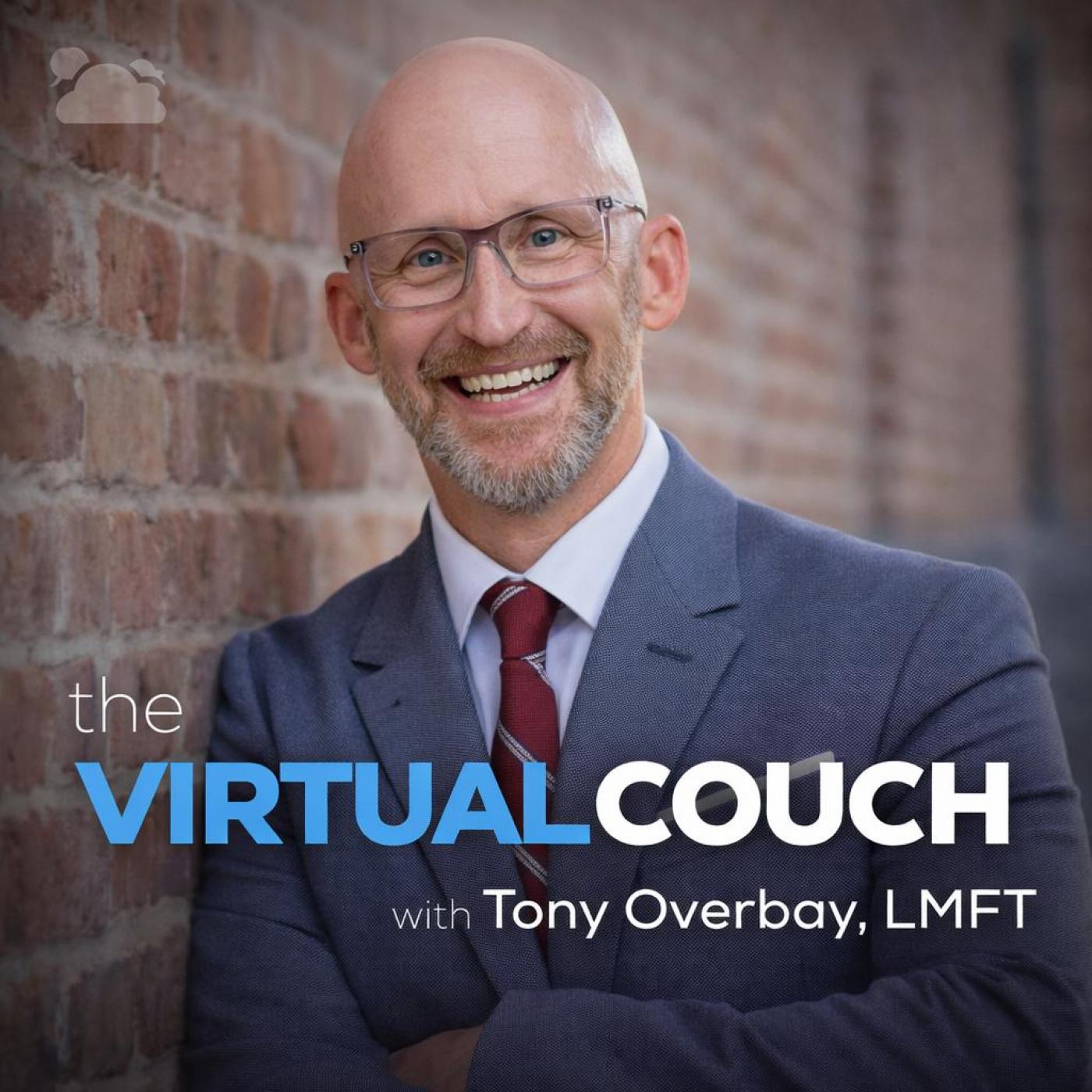
The Virtual Couch is a long-running mental health and relationship show centered on everyday emotional patterns. Tony Overbay, a licensed marriage and family therapist, brings therapy concepts into familiar domestic scenes: the repeated apology, the forgotten commitment, the unresolved conversation that somehow felt resolved. The show has a casual entry point. It does not stay shallow. Recent episodes move through anxious-avoidant cycles, shame, triggers, projection, honest communication, validation, co-regulation, spirituality, and values-based change. Tony often begins with a story, a listener email, or a phrase that has become useful in his own orbit. Then he slows it down. A promise becomes a question about behavior. A goal becomes a question about values. A comforting response becomes a question about whether anything actually changed. The show is especially interested in the gap between saying the right thing and becoming a safer, more grounded person. One recurring idea is that people can make the right mouth sounds while still avoiding the harder work. Another is that intimacy grows through truth rather than confusion. The tone is approachable, sometimes self-aware, and often built around concrete metaphors: tee times, buses, checklists, coordinates, and the small rituals people use when something truly matters. Guest conversations broaden the lens. Dr. Mark Redford brings in dentistry, military training, habits, and co-regulation. Mackie Overbay helps frame the anxious-avoidant trap through language about reassurance and stalled change. Angela De Hoyos, ALC joins a dense conversation about validation, mental health, and spirituality. The show also crosses into territory familiar from Waking Up to Narcissism, especially emotional immaturity, narcissistic traits, and projection. It is not a polished lecture series. It sounds more like a reflective working session with a therapist who is willing to follow a thread out loud. That looseness is part of its appeal. The Virtual Couch is for people who want tools, but also want the messy human context that makes those tools necessary.