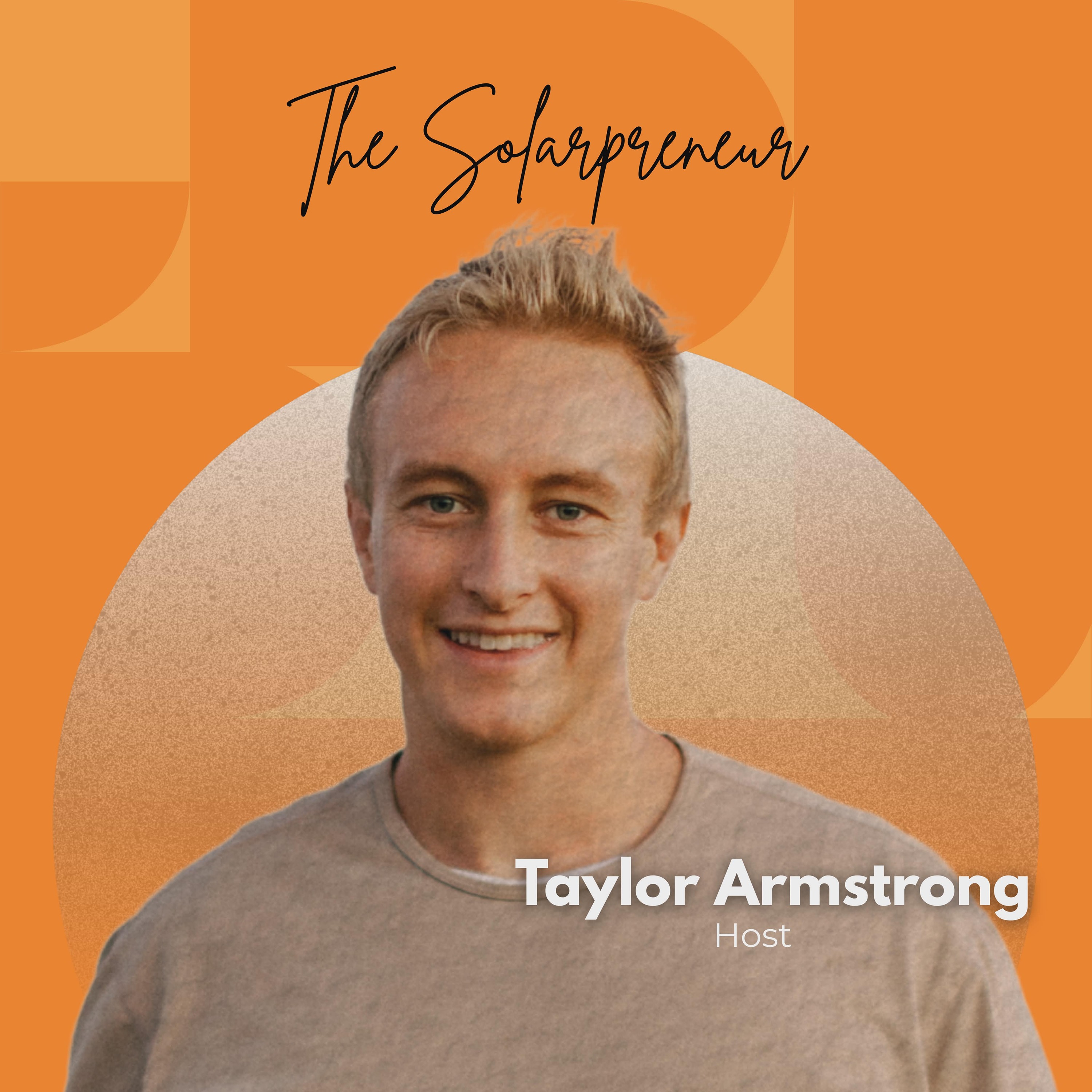
The Solarpreneur is built for the working edge of solar sales. It is not a broad clean-energy explainer. Its center of gravity is the rep trying to get better on doors, protect value in negotiation, build referrals, and stay sharp through a demanding sales season. Taylor Armstrong appears throughout the excerpts as the recurring voice of the show, using his own sales history as a credibility frame before moving into tactical coaching. The show favors examples over theory. A recent close becomes a negotiation lesson. Footage from a door approach becomes a script breakdown. Homes that already have solar become a fresh prospecting category instead of dead territory. Add-on systems get treated as a practical appointment-setting opportunity. The pace is energetic. The vocabulary comes from the field: blitzes, turf, panels, meters, referrals, top producers, Golden Door goals, and summer momentum. Guests expand the playbook without changing the mission. Jeff Mendez brings his path into the conversation. Brandon Burke is framed through production and Golden Door achievement. Travis Hartman is discussed in relation to growth, deal volume, and respected people. Taylor McCarthy’s episode leans into reverse selling, pullbacks, takeaways, and using disqualification as a way to move someone forward. Mike Brand’s appearance adds a more personal, candid sales-culture story. Across its episodes, the show keeps returning to mastery through repetition: review the conversation, find the mistake, sharpen the question, and get back into the field. It suits listeners who want specific moves more than polished business commentary. The style is casual, direct, and occasionally rough around the edges. That roughness is part of its function. The Solarpreneur sounds like a working sales room, not a classroom.