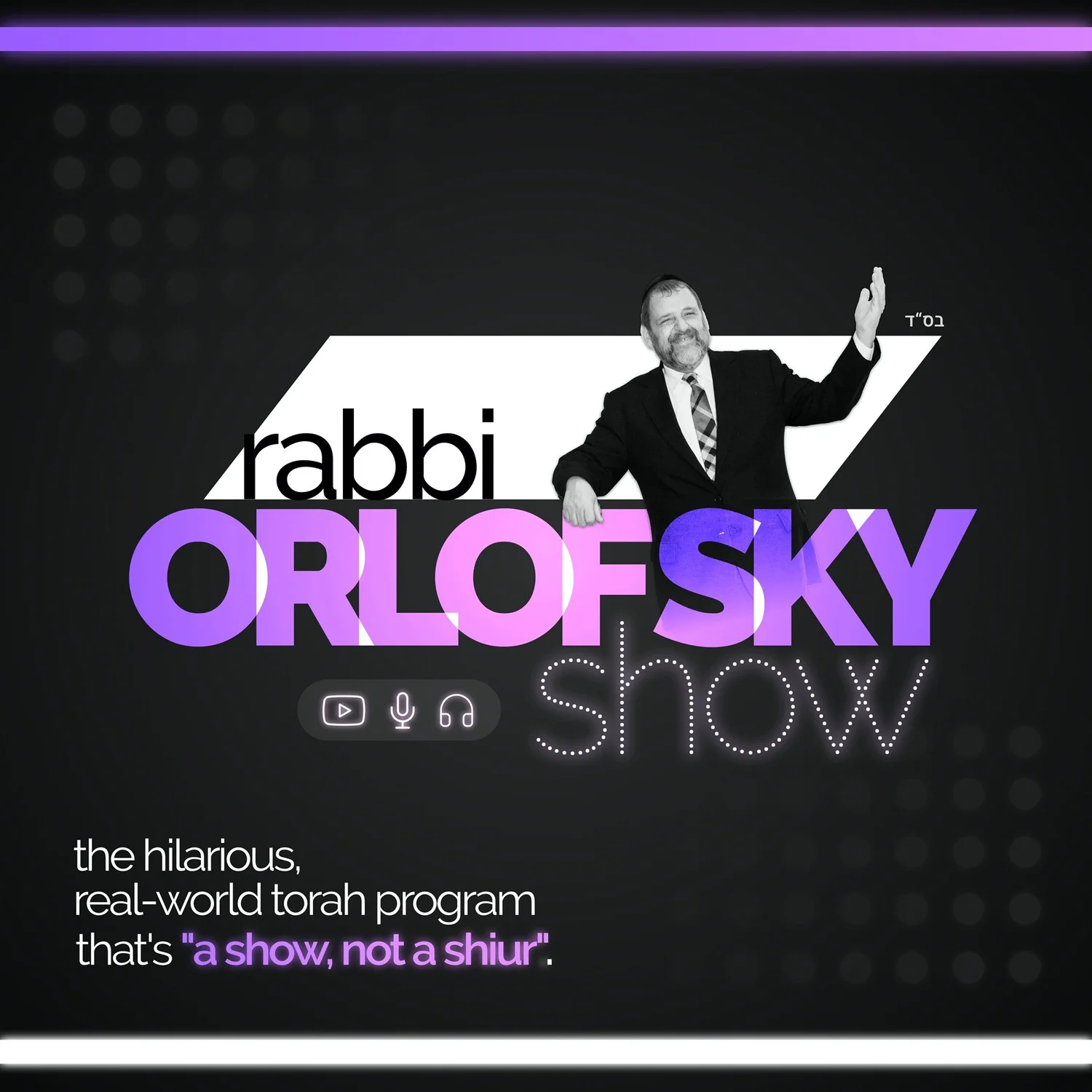
The Rabbi Orlofsky Show presents Torah discussion as something alive, busy, and close to ordinary life. It is not a polished lecture series sealed off from the world around it. The show opens with sponsorship notes, platform chatter, requests for questions, comments about online shiurim, and occasional jokes about social media, algorithms, merch, and the work of sustaining a listener community. Then it turns toward learning. The shift can be abrupt, but that is part of the rhythm. A thought about Avraham may become a meditation on monotheism, divine independence, and creation as chesed. A story about buying furniture after aliyah can become a way to examine rules, emotional reactions, and the difficulty of seeing an object differently once it has a label. The show likes examples. It reaches across Midrash, Gemara, Rambam, Rashi, Aryeh Kaplan, Pliny, Aristotle, Shakespeare, Harry Potter, old stores, family memories, and jokes from another era. The references are not decorative. They are used to make religious ideas feel specific and testable in the listener’s own habits. Episodes on Shavuos and Rus emphasize acting on inspiration before it fades. Discussions of tefillin, Shema Yisrael, kriyas Yam Suf, Amalek, and geirus frame spiritual feeling as something that must become a choice. The Parsha in 5 material tightens the same approach into a brief parsha insight, often organized around themes such as kedusha, korbanos, moedim, Yom Kippur, and time as opportunity. The longer show is looser. It leaves room for tangents, communal housekeeping, question-and-answer culture, and the speaker’s comic self-awareness. The tone is warm but not soft. It expects listeners to follow Hebrew terms, textual references, and quick associative leaps. It also keeps returning to application: what a person does with belief, knowledge, awe, or a sudden moment of clarity. For listeners who enjoy Torah learning with stories, humor, and momentum, the show offers a distinctly conversational doorway into serious Jewish thought.