A steady tax-and-trust discussion that keeps purpose ahead of taxes.
This discussion keeps beneficiary planning grounded in a simple tension: tax efficiency matters, but it cannot outrank the trust's purpose or the family it is meant to protect.
CRISTA Media
437 episodes listed below
Estate planning with faith, taxes, and family clarity.
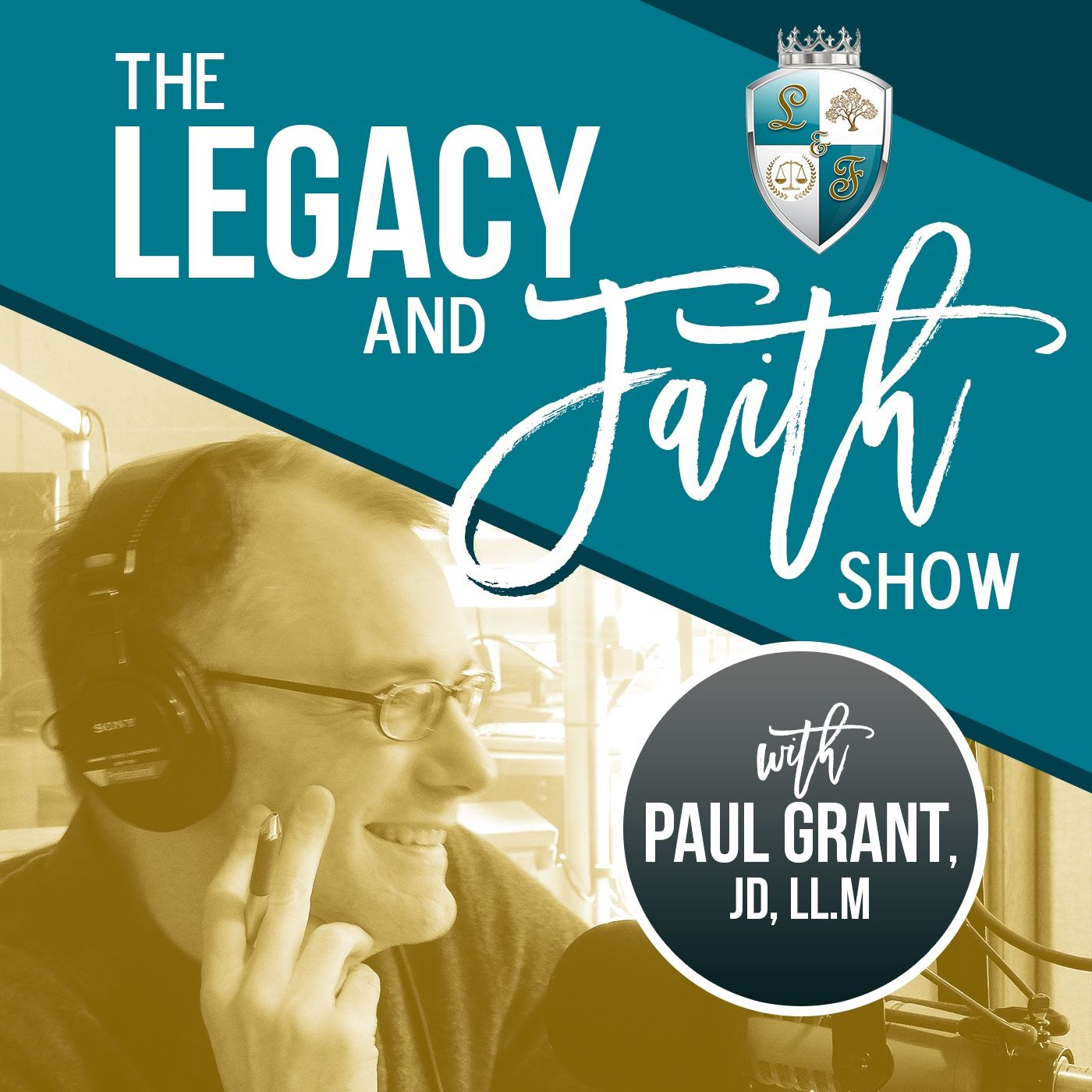
The Legacy and Faith Show turns estate planning into plain household questions: who is protected, who inherits, and what happens when health or death changes the plan. Paul Grant and Mark Holland keep the pace conversational while moving through trusts, taxes, probate, beneficiary designations, and stewardship.
PRESS PLAY
The Legacy and Faith Show approaches estate planning as something more concrete than a stack of documents. It asks what happens when a spouse dies, when health fails, when a beneficiary receives cash outright, or when a family member is named too loosely to avoid a fight. Paul Grant carries most of the explanation, working from legal mechanisms into ordinary family scenarios. Mark Holland functions as the steady conversational partner, teeing up the next question and giving the listener a place to breathe. The pace is measured. The subject matter is not light, but the tone stays accessible, with dry jokes about taxes, Northwest days, and the strange things people imagine hiding under the bed. Recent episodes focus heavily on the foundations of estate planning, including revocable living trusts, wills, powers of attorney, trust naming, retitling assets, surviving spouse planning, estate tax, income tax, and beneficiary designations. The show repeatedly returns to purpose. A plan is not treated as a tax trick first; it is a way to protect people, clarify intent, and keep money working for the creator's vision. That distinction matters when the conversation turns to special needs beneficiaries or trusts designed for protection rather than maximum tax efficiency. The show is also willing to say that generic language can create real problems. Family is not always a precise legal category. Cash may move cleanly, but relationships rarely do. Faith enters naturally through the language of stewardship, legacy, family values, and God's kingdom, without turning the episodes into sermons. Listeners get a sense of what questions might come up in an estate planning office and why those questions are being asked. The show is useful for married couples and anyone reviewing an existing plan. It is not personal legal advice. It is a careful orientation to the decisions people often postpone until the consequences are already in motion.
Made for: The show is for adults thinking seriously about wills, trusts, beneficiaries, surviving spouses, taxes, incapacity, and family stewardship. It especially fits listeners who want patient explanations before meeting with an attorney or reviewing an existing plan.
What sets it apart: Its strength is the blend of legal mechanics, tax cautions, and faith-shaped purpose, delivered as a grounded back-and-forth rather than a scripted lecture. It keeps returning to how a plan actually affects spouses, beneficiaries, and families after life changes.
Paul Grant hosts this weekly, practical discussion from legal and financial perspectives about leaving your legacy for generations to come, and what impact applying Biblical principles will have on the Kingdom of God.
Based on 5 episodes we listened to · September 2026
Paul Grant makes estate planning legible by tracing how trusts, beneficiary choices and family circumstances shape what happens to assets.
Paul Grant and co-host Mark Holland turn estate planning into a practical conversation about what happens when documents, assets and family intentions fail to line up.
A timeshare becomes a family-memory problem, and suddenly your estate plan needs more than a template.
Press play if you want
Short reviews from the PlayNext desk, based on the episodes we processed.
A steady tax-and-trust discussion that keeps purpose ahead of taxes.
This discussion keeps beneficiary planning grounded in a simple tension: tax efficiency matters, but it cannot outrank the trust's purpose or the family it is meant to protect.
Beneficiary planning gets concrete fast, and the probate details are where it lands.
The discussion keeps its focus on beneficiaries and the mess that can come from naming them badly. Paul Grant and Mark Holland lay out the split between a will and a beneficiary designation, then keep circling back to the same useful point: vague wording makes distribution…
A living estate plan still has to match the paperwork.
The Legacy and Faith Show keeps the focus practical: estate planning only works if a will, account titles, insurance policies, and workplace benefits still point the same way.
Estate planning gets more complicated once blended families, business ownership, and farmland enter the picture.
Paul Grant and Mark Holland keep the focus on estate planning that has to fit real lives, not templates. The strongest thread is simple: families do not all look the same, and the plan should not pretend they do.
When unique assets need a plan, family intent matters most.
Paul Grant and Mark Holland spend the hour on unique assets in a trust and the planning problems that come with property that does not divide neatly.


Paul Haavardsrud unpacks Canadian money stories, from ski-hill VIP pricing to French butter tariffs.


Real-estate freedom, taught in plain numbers.

Estate and tax attorney Paul Grant and co-host Mark Holland discuss the tax implications of holding an inherited trust versus receiving assets outright, focusing on beneficiaries in Washington state.
Estate and tax attorney Paul Grant and co-host Mark Holland open a multi-part series on the beneficiary's perspective in estate planning, covering beneficiary designations, wills, and the case for revocable living trusts.
This episode continues a series on estate planning foundations, focusing on issues that arise after both spouses have died and explaining how trusts provide better protection than wills and financial powers of attorney.
This episode continues a long-running series on estate planning foundations, focusing on what happens for married couples when one spouse passes away and the other remains.
This episode continues a series on estate planning, focusing on how trusts can help avoid estate taxes by reviewing valuation methods and exemption thresholds.
This episode continues a series on estate planning foundations, focusing on tax considerations and how to care for a spouse in trust and will creation.
This episode continues a series on estate planning, focusing on using trusts like AB or Q-tip trusts to ensure the financial security of a surviving spouse and family.
Paul Grant discusses foundational estate planning questions from a Christian perspective, emphasizing protecting wealth and family values for generations.
Paul Grant discusses foundational estate planning issues, focusing on how IRAs and beneficiaries are handled within a revocable living trust from a Christian perspective.
Paul Grant discusses foundational estate planning questions, focusing on how IRAs are handled within trusts versus beneficiary designations, from a Christian perspective.
Paul Grant discusses foundational questions for setting up a trust from a Christian perspective, emphasizing deeper planning beyond templated documents.
Paul Grant discusses foundational questions for creating trusts, focusing on successor trustees and protecting clients through proper documents from a Biblical perspective.
Paul Grant discusses the importance of up-to-date estate planning as an act of Christian stewardship, preparing for death and leaving a legacy aligned with biblical principles.
Estate and tax attorney Paul Grant and co-host Mark Holland open a new series on what actually happens to an estate when someone dies, examining how wills, trusts, beneficiary designations, and business documents interact — and where they fail.
Templates will not carry this work.
Unique assets need slower planning.
Paul Grant discusses the need for flexible estate plans that account for unknown future circumstances, grounded in Biblical principles.
Paul Grant discusses the basics of estate planning, emphasizing the use of revocable living trusts for flexibility and aligning plans with Biblical values.
Paul Grant discusses estate planning for singles without children, emphasizing the importance of choosing trustworthy agents and applying Biblical principles.
Paul Grant discusses estate planning considerations for single individuals without children, emphasizing biblical principles and purpose-driven planning.
Paul Grant discusses the three-pronged approach to legacy—monetary, spiritual, and personal—focusing on applying Biblical principles to estate planning for a smooth generational transition.
Paul Grant discusses the monetary aspect of legacy from a Biblical perspective, emphasizing seeking God's will for estate distribution.
Paul Grant discusses the three aspects of legacy—monetary, spiritual, and personal—and how to integrate biblical principles into estate planning.
Paul Grant discusses the importance of estate planning from a Christian perspective, covering how to protect wealth and family values for future generations.
Paul Grant discusses estate planning from a Christian perspective, emphasizing the importance of wills and trusts to protect wealth and family values.
This episode discusses the benefits of using a trust versus a will, focusing on recent updates to Washington State's estate tax law and how they impact beneficiaries.
This episode discusses the advantages of using a trust over a will for tax planning, focusing on revocable living trusts and recent changes to Washington state tax law.
This episode continues discussing the benefits of using a trust over a will for estate planning, emphasizing flexibility and avoiding conflicts with beneficiary designations.
Estate attorney Paul Grant discusses the benefits of using trusts versus wills in estate planning, focusing on client goals and practical applications.
Paul Grant dispels the myth that trusts are only for the rich, discussing the history and biblical perspective on estate planning.
Paul Grant debunks common myths about estate planning from a Christian perspective.
Paul Grant and Mark Holland discuss how to choose the right executor and compare probate laws across states, framed by Biblical principles.
Paul Grant and Mark Holland discuss myths and realities of the probate process from a Christian perspective.
Paul Grant and Mark Holland discuss the necessity of probate as a legal system to transfer assets after death, framed within a Christian perspective on legacy and stewardship.