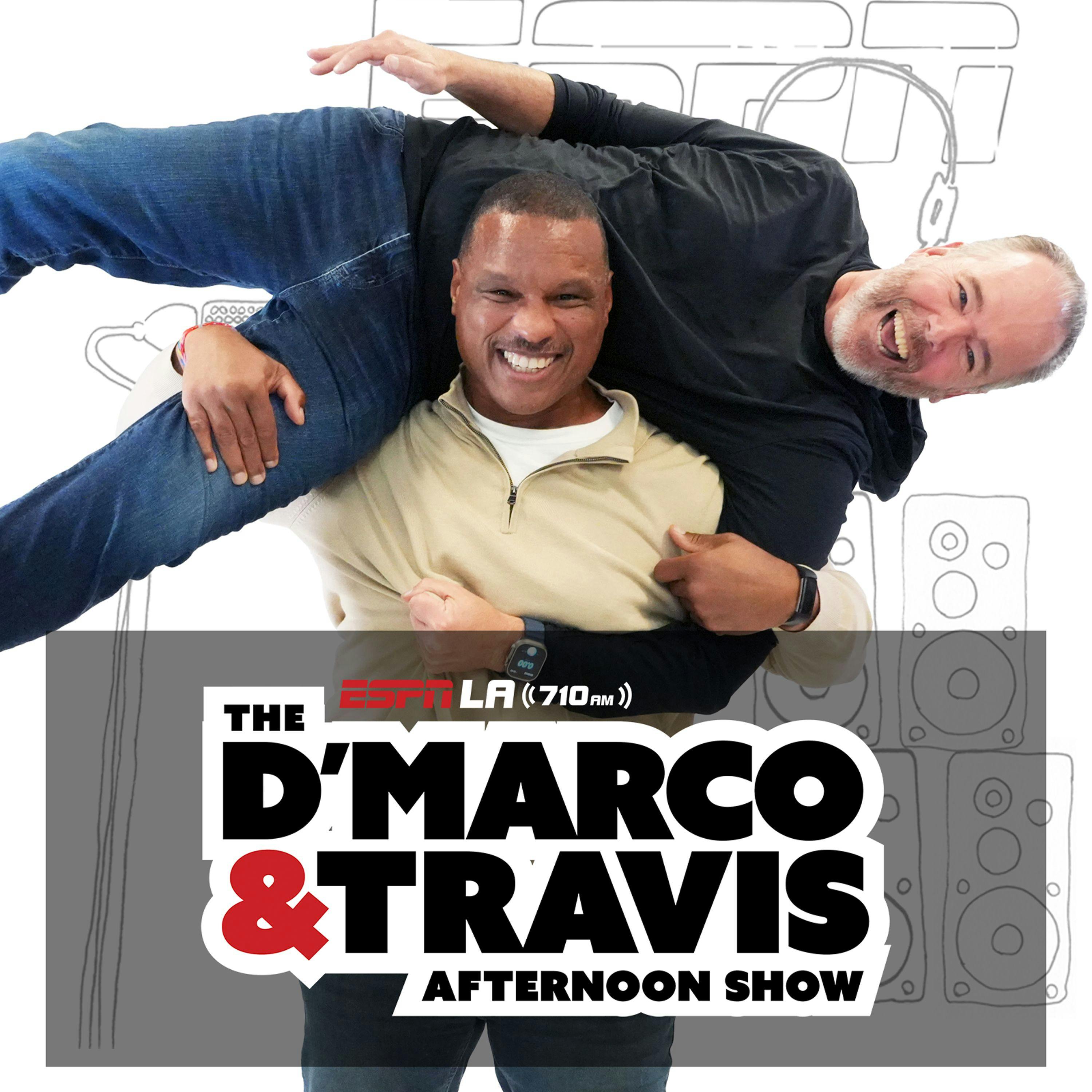
The D’Marco & Travis Afternoon Show is built for L.A. sports fans who like the argument as much as the answer. It is quick on its feet. One segment can start with a ridiculous golf or baseball challenge, roll into padded NFL practices, then land on what separates a winning culture from empty grind. The football talk carries a player’s feel for bodies, reps, coaches, and locker-room credibility. Rams conversations are not just scoreboard talk; they become debates about planning, practice rhythm, and why players buy into hard work when the structure makes sense. The Lakers material has the same real-time energy. Recent episodes weigh Houston’s spacing, Kevin Durant pressure, Alperen Sengun problems, DeAndre Ayton expectations, and the thin path from a hopeful game to a longer series. The show is comfortable saying the uncomfortable part of a fandom conversation. Its LeBron James discussion turns on the difference between being a great player in Los Angeles and being felt as a Laker in the Kobe Bryant, Magic Johnson, and Jerry West sense. Baseball is never far away. Shohei Ohtani’s pitching and hitting schedule, Dalton Rushing’s at-bats, Will Smith’s workload, Tanner Scott’s value, holds in fantasy baseball, and Dodgers history all become fuel. The room likes a side street. A draft of favorite TV shows can bring up The Sopranos, Martin, The Jamie Foxx Show, The Steve Harvey Show, and The Bernie Mac Show with the same speed as a playoff matchup. Remote shows add their own looseness, especially from golf events and fan-facing setups where technical trouble, crowd noise, and on-site guests become part of the texture. Kenya Barris appears in its episodes around the Jerry West documentary, and Eddie Elizade brings in Legends Attic talk with names like Daryl Strawberry, Eric Davis, Oral Hershizer, and Kevin Mitchell. The show’s strength is not a tidy format. It is the trust in the room. Points get interrupted, sharpened, laughed at, and revised as they go. That makes the sports analysis feel casual without being careless. It suits listeners who want L.A. teams filtered through memory, opinion, and constant banter. It also suits anyone who likes sports radio that can talk ball, then spend three minutes arguing about old television and still find its way back.