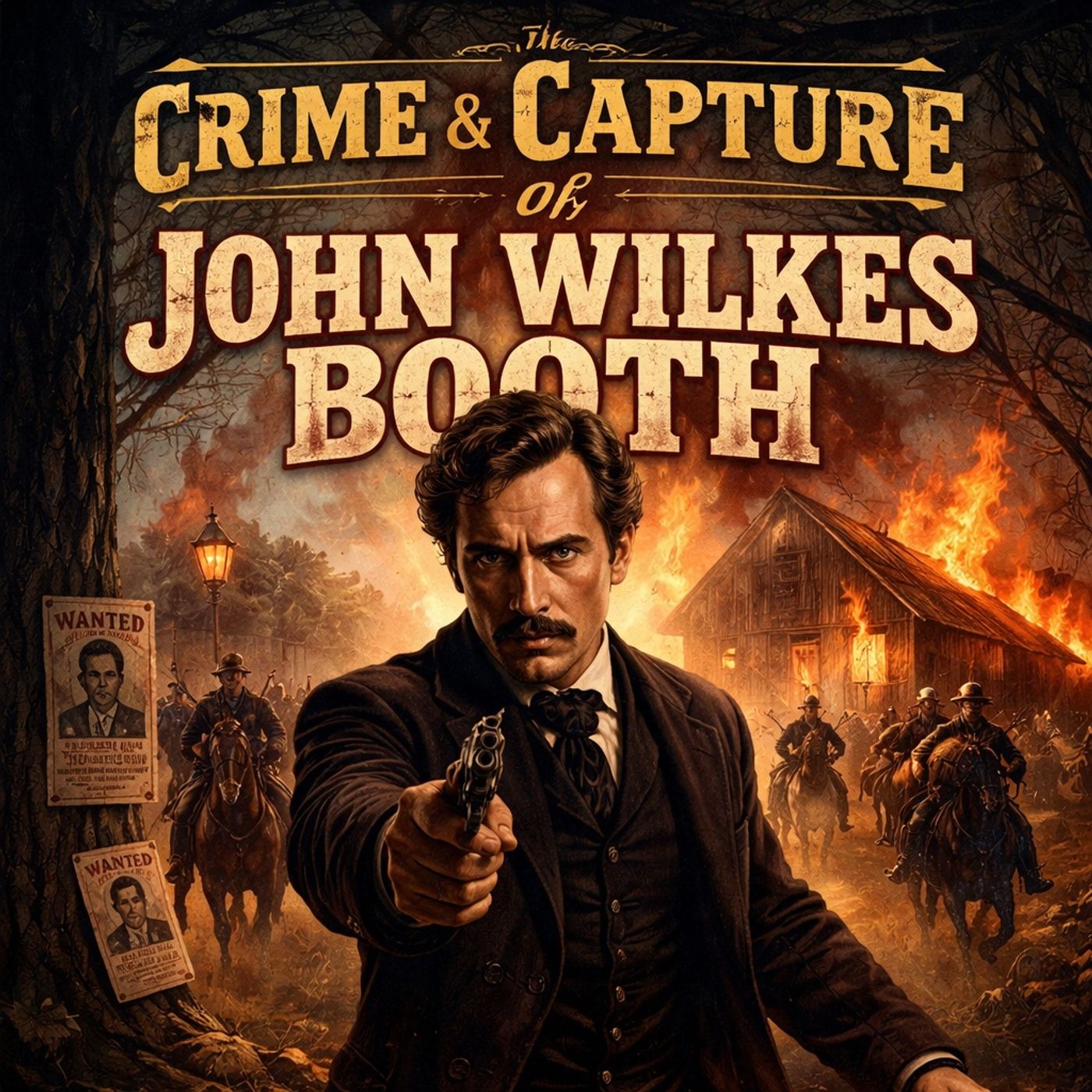
The Crime & Capture of John Wilkes Booth is a historical audio drama about Abraham Lincoln’s assassination and the pursuit, mourning, and reckoning that followed. Its episodes are framed as numbered letters, with titles including "Obsquies in Washington," "The Murderer 1," "The Assassins Death," "The Detectives Stories," "The Martyr," and "The Trial." The language is dense and theatrical. It favors trial heat, funeral spectacle, physical description, and moral indictment over plain documentary pacing. Washington is not just a backdrop here; it appears as a city packed with mourners, officials, clergy, soldiers, and rooms still marked by Lincoln’s absence. Booth is treated through a grim biographical lens, with attention to his theatrical life, personal character, escape, and death. The chase material gives the show much of its motion. Ferries, roads, swamps, hotels, telegraph lines, detectives, officers, and suspected helpers form the machinery of pursuit. The excerpts also return to conspiracy, especially through references to Confederate agents, Canada, correspondence, and the question of implication. The trial episodes shift the energy again. They place Harold, Payne, soldiers, lawyers, and the Military Commission inside a scene of judgment that is anything but calm. Lincoln’s presence remains central even when Booth is the object of attention. "The Martyr" dwells on the President’s office, Little Tad, Major Hay, Colonel Nicolet, and the afterlife of Lincoln’s memory. The show’s appeal is not speed or tidy explanation. It is the heavy texture of a historical crime retold in an antique, accusatory register. Short passages can feel abrupt. Longer ones gather force through imagery, names, and condemnation. Suits a listener who wants assassination history as dramatic archival-feeling narration, with grief and pursuit sitting beside politics and punishment. Its distinction is voice: a severe, period-styled account that makes the manhunt and trial feel like scenes from a national wound rather than a case file.