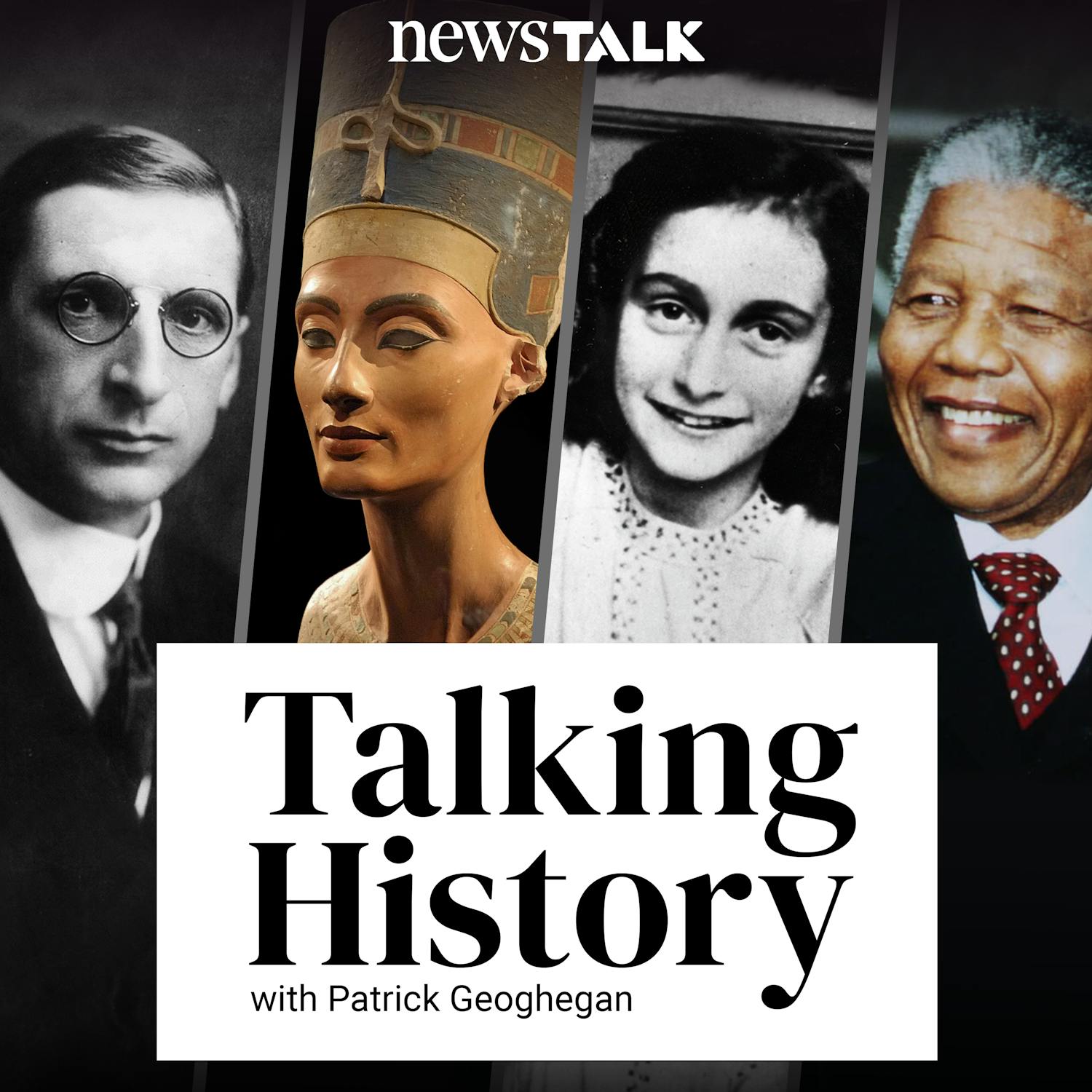
Talking History is a history programme from Newstalk, presented by Patrick Geoghegan. It keeps the shape of evening radio. A set welcome opens each edition, then comes a preview of the evening's subjects, and the close brings thanks to the guests, a credit for the producer and a goodnight. The space in between goes to conversation. Geoghegan asks the questions, and the guests get room to build their answers. The guests are writers and researchers, among them the historian Helen Rappaport on Rasputin, a scholar of the Brontës and a Swansea University academic on Proust. Some editions are set up as an argument rather than a story. One asks whether Rasputin was a healer, a charlatan, a political force or a myth made flesh. Another asks whether Wuthering Heights is a love story or a study in violence and obsession. The subject range is wide, with episode titles including 'Samurai: the legendary Japanese warriors', 'Rasputin', 'Mary, Queen of Scots' and 'Emily Brontë and Wuthering Heights'. On the samurai, the talk reaches Tokugawa Ieyasu, third of the three unifiers, and a four-class order in which the samurai held power without always holding money. On Rasputin, a guest argues that historians have underestimated rumour, because official history rests on documents that never account for it. On Mary, the story runs from suspicion over the murder of her husband Darnley and her marriage to Bothwell to her flight into England. She expected help from Elizabeth I there, and at first she was treated almost as a guest. Literature gets the same treatment as political history. 'Proust & His Irish Connections' contrasts the salons and aristocrats of Proust's Belle Époque with the respectable middle-class world Joyce wrote about. It also looks at Proust as a model for cultural revival built on literary transformation rather than linguistic nationalism. The Brontë conversation spends time on the hostile reviews that greeted Wuthering Heights, which used words like coarse and disagreeable. Other editions are built from several segments. 'What Did Anne Boleyn Look Like?', an International Women's Day edition, combined a history of France told through 21 women, the novel Belinda and images of Anne Boleyn across the centuries. The edition titled 'Mary, Queen of Scots' also made room for everyday death in Tudor England, drawn from coroners' reports, and for a Huguenot refugee in Ireland and what became of his large library. So Ireland turns up in unexpected corners. A listener who wants specialists pressed on specifics, across many countries and centuries, will find that here.