A church conversation that treats death as a pastoral task.
The conversation begins in prayer and then settles into death as a pastoral concern, especially through end-of-life doulas, death cafes, and the first steps of pre-planning.
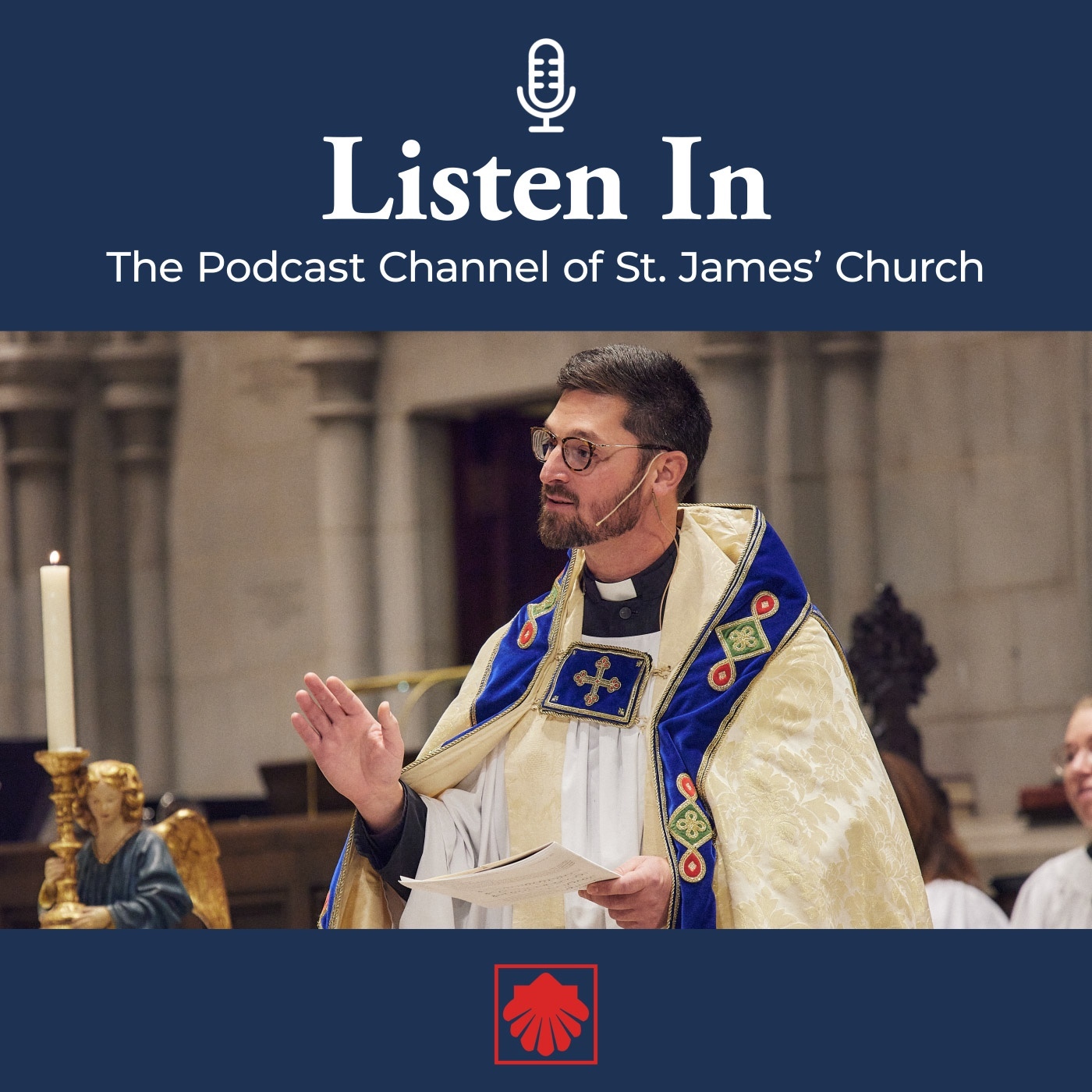
Anglican teaching with pastoral gravity.
St. James' Church carries the sound of a parish thinking aloud through faith. Its sermons and Coburn Forum conversations move from Easter joy, Lent, Sabbath, death, and Haiti into practical questions of care, obedience, grief, and hope.
PRESS PLAY
St. James' Church is a parish teaching feed centered on Anglican sermons, seasonal reflection, and Coburn Forum conversations. Its center of gravity is scripture, but its real interest is what scripture asks of a life under pressure. The tone is warm and deliberate. A sermon may begin with Easter flowers, a gospel reading, or a memory of monastic prayer, then press toward questions of joy, grief, obedience, service, and resurrection in the present tense. The show is not abstract for long. Death appears as pastoral reality, not a distant idea, especially in the Everlasting Life conversation about end-of-life doulas, family support, pre-planning, active dying, and legacy work. Lent appears as a season of honest interrogation. Sabbath appears as a practice of stopping, resting, and letting joy become possible again. The New York Haiti Project brings another register, connecting parish life with relationship, ministry, children, art, and conditions in Haiti. The sermons often turn on a contrast: contemplating Jesus versus copying Jesus, analyzing suffering from a distance versus walking toward it, knowing doctrine versus meeting resurrection in the body and at the table. That gives the show moral weight. It also keeps it accessible. Speakers use stories, rhetorical questions, repetition, and plain images, from mud and dust to bread and wine, rocky paths, silent meals, and rest. The pace is measured, and the assumptions are Christian, but the emotional range is wider than a simple sermon archive. There is room for humor. There is also room for hard subjects, including illness, dying, social indifference, state violence, and grief that has not resolved itself. The feed works best for listeners who want theology with pastoral texture: teaching that explains the gospel while asking what love looks like in bodies, families, communities, and habits. It is especially suited to those drawn to the Episcopal tradition, liturgical seasons, and sermons that connect doctrine to care. Its distinguishing feature is the way parish teaching, forum education, and spiritual formation sit together in one stream. The result feels less like religious commentary and more like sustained Christian formation over time.
Made for: For listeners drawn to Anglican preaching, Episcopal parish life, and Christian teaching that connects scripture to grief, service, rest, and hope. It especially suits those who want sermons and forums with a warm, reflective pace.
What sets it apart: The feed blends pulpit sermons with practical parish forums, so doctrine sits beside end-of-life care, Sabbath practice, and ministry. Its strength is making resurrection, Lent, and love feel lived rather than merely explained.
Listen in to lectures, sermons, conversations, and more from St. James‘ Church, an Episcopal parish founded on Manhattan’s Upper East Side in 1810.
Based on 5 episodes we listened to · September 2026
St. James' Church turns Christian teaching into practical guidance for rest, end-of-life care, and communal response to immigration crises.
St. James' Church moves between Christian formation and parish response to public life. Its Coburn Forum sessions begin in prayer and proceed through sustained teaching or conversation.
A Sabbath hour meets an immigration detention, and your faith has to leave the abstract.
Press play if you want
Short reviews from the PlayNext desk, based on the episodes we processed.
A church conversation that treats death as a pastoral task.
The conversation begins in prayer and then settles into death as a pastoral concern, especially through end-of-life doulas, death cafes, and the first steps of pre-planning.
A grounded Sabbath teaching that links rest, joy, and Lent.
The piece ties Lent and Sabbath together as practices of stopping, resting, delighting, worshiping, sleeping, and beginning again in small ways. It treats the season as a path toward healing, rejoicing, and fresh grace, not just a time for gloom.
A Sabbath sermon that turns one quiet hour into a challenge to restless abundance.
Rest is treated here as the episode's clearest act of resistance. The teaching returns to Sabbath as something practiced, opening with a prayer for stillness before focusing on a modest invitation: one hour set aside for being instead of doing.
A church forum follows sanctuary from principle into organized care for detained parishioners.
Immigration is framed here as a lived test of congregational responsibility, as Mary Rothwell Davis describes how sanctuary moves beyond statements of principle into accompaniment.
A clear Genesis-centered opening session presents Sabbath as a weekly rhythm for resisting exhaustion.
The opening session frames Sabbath as a disciplined act of stopping, rooted in the Judeo-Christian blessing of time itself. It begins in Genesis 2, where the repeated emphasis is that God sabbathed, then carries that pattern into a weekly shape of six days of work and one day of…
A reflective sermon that turns the Transfiguration toward belonging, justice, and the obligations of mission partnership.
A sermon on the Transfiguration opens into a considered reflection on belonging, identity, and the risk of confusing power with revelation. Moving from Peter's impulse to preserve Moses and Elijah on the mountain, the preacher turns toward empire, exclusion, and the ways…

Two Bible translators unpack Scripture's hardest passages, from Revelation's 666 to the Witch of Endor.

Live sermons with Easter-shaped urgency.




Bishop James Tengatenga delivers a sermon for the Last Sunday after the Epiphany at St.
Rev.
This episode explores the meaning of belief in Christian creeds, focusing on the Nicene Creed's response to Arianism and the concept of one God as creator of all seen and unseen.
A sermon reflecting on the challenge of maintaining Easter joy in a world that often feels stuck in Lent, calling Christians to live out God's love daily.
The episode opens with a prayer for a person near death.
A sermon for Easter Sunday reflecting on the resurrection through personal experiences at a Trappist monastery and the repetitive rhythms of monastic life.
This Palm Sunday sermon explores how the reading from Colossians challenges listeners to move beyond merely contemplating Jesus' passion to actively copying his self-giving attitude as a servant.
This episode features Reverend Canon Sam Owen discussing the New York Haiti Project, a partnership between the Diocese of New York and the community in Martel, Haiti, focusing on ministry, life on the ground, and opportunities for involvement.
The sermon marks the fourth Sunday of Lent and treats it as a day to breathe a little.
The host opens with a prayer for stillness and strength.
The program opens with a prayer and introduces Mary Rothwell Davis, Vice Chancellor for the Episcopal Diocese of New York for Immigration and Refugees.
This episode features an interview with Bishop James Tengatenga discussing global mission in the Anglican communion, focusing on bonds of affection and partnerships, particularly with Southern Malawi.
A sermon for the Last Sunday after the Epiphany discussing how the season reveals deeper truths about belonging and identity through a spiritual transfusion rather than simple alteration.
This is the first session in a four-part Coburn Forum series at St.
This episode features a conversation with Archbishop Justin Welby, the 105th Archbishop of Canterbury, discussing his leadership in the Anglican Communion and the importance of faith and discipleship.
A church service introduction where Michael, a former parishioner now involved in a nonprofit clearing bombs in Laos, is invited to preach about his restoration project.