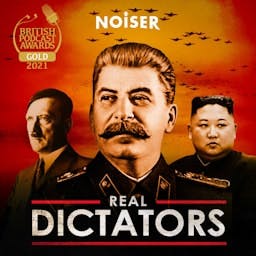
Real Dictators is a polished narrative history series about rulers who made themselves larger than the states they controlled. It favors momentum. Episodes often begin with a tightly framed scene, such as Jean-Bédel Bokassa returning to Bangui under watchful eyes, Fidel Castro struggling through public appearances, or Havana crowds gathering as pressure builds in the streets. From there, the story pulls back. Military careers, colonial legacies, coups, foreign backing, prisons, propaganda, family scandals, and economic crisis become part of one continuous portrait of power. The show is strongest when it follows the gap between performance and reality. Bokassa appears as a decorated soldier, self-proclaimed modernizer, extravagant emperor, and brutal ruler whose punishments and prison violence leave lasting scars. Castro appears as an almost tireless revolutionary figure whose control reaches into speeches, uniforms, agriculture, show trials, and eventually the stage-managed problem of his own aging body. These are not simple rise-and-fall sketches. They are studies in control. The episodes return to the ordinary consequences of authoritarian politics: students rounded up, opponents condemned, families separated, crowds intimidated, and national myths maintained through fear. At the same time, the series makes room for uncomfortable memory, including the possibility that some citizens remember a ruler’s grandeur or development projects alongside the violence. That tension gives the show weight. Its style is cinematic, but the emphasis remains historical rather than sensational. Commentary and witness-style accounts help connect individual decisions to broader systems, from post-colonial state-building in the Central African Republic to Soviet support, exile networks, and unrest around Cuba. Real Dictators also has an appetite for strange details, including imperial pageantry, public marriage competitions, political imposters, famous imagery, and the symbolic power of titles. The effect is unsettling because the absurdity never cancels the brutality. Short scenes carry the listener forward, while longer context explains why the scene matters. It is best for history listeners drawn to biography, geopolitics, twentieth-century conflict, and the psychology of rule. It does not glamorize dictatorship. It shows how authority is staged, defended, feared, remembered, and eventually tested by age, resistance, or collapse.