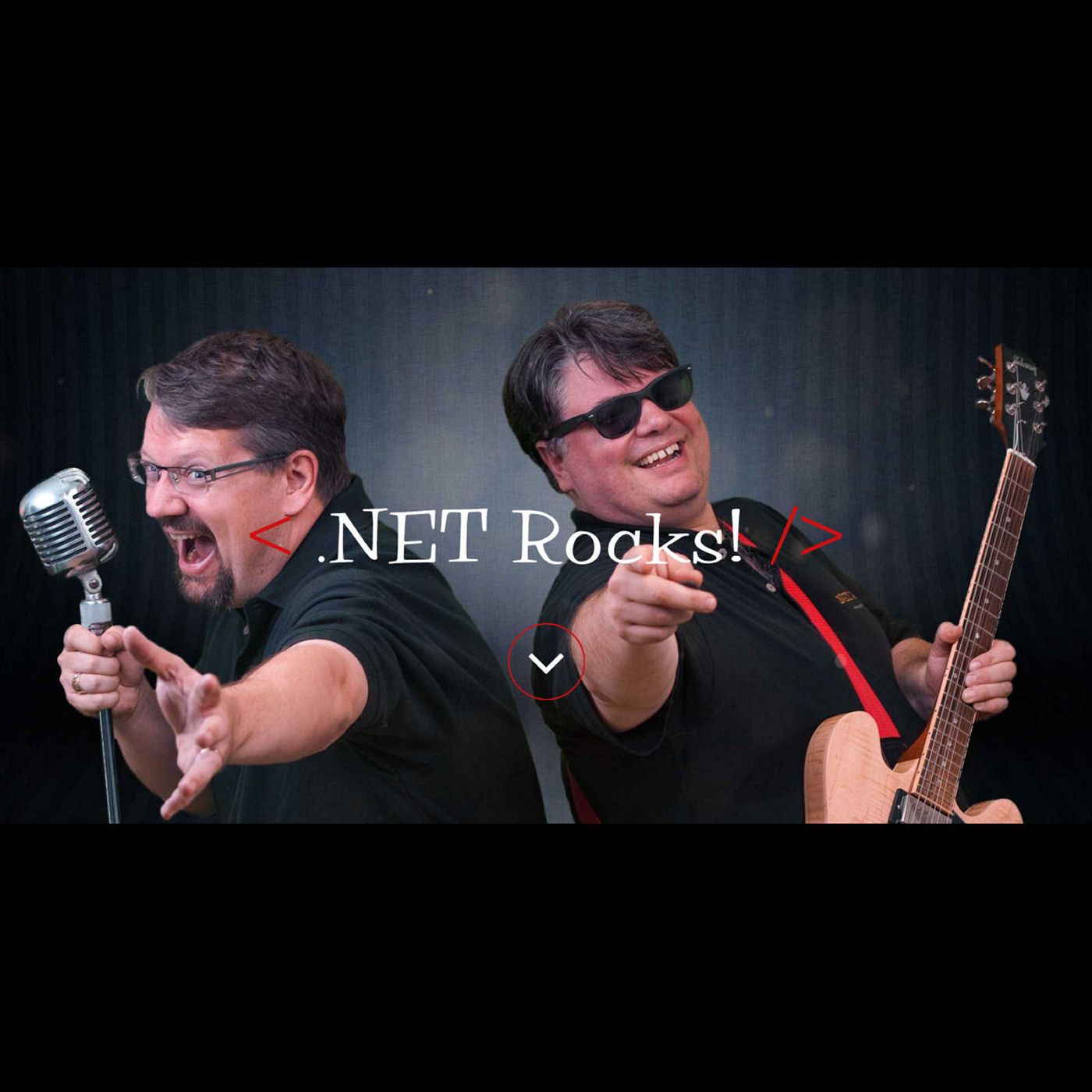
.NET Rocks! is a veteran developer show built around the daily concerns of people working in and around the Microsoft stack. Carl Franklin and Richard Campbell keep the room informal, but the conversations regularly get specific fast. Recent episodes spend a lot of time on AI as it actually lands in software teams. Rob Conery talks through AI-assisted development in terms of team adoption, technical debt, ETL work, and the human resistance that appears before people see a useful win. Ed Charbeneau frames agentic RAG around the need to notice the technology that could change a career before complacency takes over. Joe Finney pushes past the idea that AI only means large language models, pointing toward OCR, image segmentation, object detection, Hugging Face, ONNX, and local model tooling. James Montemagno compares coding models as different working partners, with distinct strengths for tickets, context gathering, bug fixing, and codebase exploration. The show also keeps one foot firmly in classic .NET platform work. Daniel Roth gets into ASP.NET Core, Blazor, WebAssembly runtime consolidation, CoreCLR, Minimal APIs, source generation, Razor compilation, and cross-stack collaboration. David Wengier’s Razor tooling discussion digs into LSP, Roslyn, project systems, duplicated file monitoring, and the co-hosting approach. That is the show’s real texture: relaxed surface, dense technical middle. It does not treat developers like beginners, but it also does not turn every episode into a lecture. There are quick asides, conference updates, sponsor blocks, old-show milestones, and bits of long-running rapport. The pacing is brisk. The assumptions are technical. The best episodes feel like sitting near experienced developers who can remember the old architecture, explain the new one, and still laugh at the awkward parts. For .NET engineers tracking AI tooling, Visual Studio, ASP.NET, Blazor, DevOps, and security conversations, it is a familiar but still current signal.