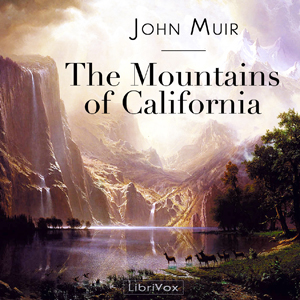
Mountains of California, The by John Muir (1838 - 1914)
34 episodes listed below
PRESS PLAY
Find your next episode
In their own words
John Muir (1838–1914) was one of the first modern preservationists. His letters, essays, and books telling of his adventures in nature, and wildlife, especially in the Sierra Nevada Mountains of California, were read by millions and are still popular today. His direct activism helped to save the Yosemite Valley and other wilderness areas. The Sierra Club, which he founded, is now one of the most important conservation organizations in the United States. His writings and philosophy strongly influenced the formation of the modern environmental movement. (Summary from Wikipedia)
Talks about
Podcasts like Mountains of California, The by John Muir (1838 - 1914)
 The Skeptics' Guide to the UniverseDr. Steven Novella
Steven Novella and a rotating panel dissect weekly science news and debunk pseudoscience claims.
 Quirks and QuarksCBC
Bob McDonald anchors weekly multi-segment interviews on new research, from cricket courtship to moon missions.
 UnexplainableVox
Vox reporters trace how Botox, brain-speech implants, and scientific disputes actually happened.



Episodes
- 1
The Wild Sheep
Hidden gemJohn Muir’s “The Wild Sheep” describes Ovis Montana across the Sierra, Rocky Mountains, and ranges extending from the Upper Missouri to Mexico.
·43m·2 clips - 2
The Glacier Lakes
Hidden gemJohn Muir’s “The Glacier Lakes” surveys the Sierra Nevada’s hidden alpine lakes, including forty-two visible from Red Mountain and an estimated total of fifteen hundred.
·43m·3 clips - 3
The Bee-Pastures - Part 1
Hidden gemJohn Muir's The Bee-Pastures - Part 1 describes California as a former statewide honey garden spanning the Sierra, coast, rivers, plains, and mountains.
·40m·3 clips - 4
The Bee-Pastures - Part 1
Hidden gemJohn Muir describes California as a former statewide bee garden, with the central plain covered in flowers during March, April, and May.
·43m·3 clips - 5
The Water-Ouzel
Hidden gemJohn Muir describes the water-ouzel, or water-thrush, as a bluish-gray bird found beside nearly every Sierra waterfall he encountered during ten years of exploration.
·27m·1 clip - 6
The Sierra Nevada
Hidden gemJohn Muir describes California’s two mountain chains, the 400-mile Central Valley, and the Sierra Nevada as a 500-mile range reaching nearly 15,000 feet.
·32m·2 clips - 7
The Forests - Part 1
Hidden gemJohn Muir’s “The Forests” describes Sierra Nevada conifer forests through their elevation belts, seasonal forms, soil patterns, and relation to ancient glaciers.
·50m·3 clips - 8
In the Sierra Foot-Hills
Hidden gemJohn Muir’s “In the Sierra Foot-Hills” moves from Murphy’s Camp in Calaveras County to the buried gold-bearing channels called the Dead Rivers of California and the Blue Lead.
·32m·2 clips - 9
The River Floods
Hidden gemJohn Muir’s “The River Floods” compares Sierra spring floods with the Old Nile and explains why staggered snowmelt usually prevents destructive surges.
·27m·2 clips - 10
The Forests - Part 3
Hidden gemJohn Muir’s “The Forests - Part 3” describes alpine conifers and eastern Sierra trees, including pines growing from 8,000 to 12,000 feet and a nut pine that supplied the Mono, Carson, and Walker River Indians with nutritious seeds.
·38m·2 clips - 11
The Water-Ouzel
John Muir describes the water oozle, a bird that frequents Sierra Nevada waterfalls, detailing its appearance and behavior.
·32m - 12
In the Sierra Foot-Hills
John Muir describes the ancient dead rivers and geological formations of the Sierra Nevada foothills.
·24m - 13
The Bee Pastures - Part 2
·40m - 14
A Near View of the High Sierra
·45m - 15
The Passes
·35m - 16
The Douglas Squirrel
·26m - 17
Sierra Thunder-Storms
·7m - 18
The Snow
·22m - 19
The River Floods
·26m - 20
The Snow
·22m - 21
A Near View of the High Sierra
·45m - 22
The Passes
·35m - 23
The Glacier Lakes
·43m - 24
The Glacier Meadows
·26m - 25
The Sierra Nevada
·32m - 26
Sierra Thunder-Storms
·26m - 27
The Wild Sheep
·7m - 28
The Forests - Part 2
·36m - 29
A Wind-Storm in the Forests
·38m - 30
The Glaciers
Hidden gemJohn Muir says he found 65 residual glaciers in the Sierra between latitudes 36°30' and 39°, and more than two-thirds lie between 37° and 38° where they feed the San Joaquin, Merced, Tuolumne, and Owens rivers.
·28m·1 clip - 31
The Forests - Part 1
Hidden gem["John Muir's Chapter 8, \"The Forests,\" treats the Sierra as an open staircase of conifer belts from the Sacramento and San Joaquin foothills to about 10,000-12,000 feet.", "He argues that the long curving bands of trees, the lace-like patterns, and the abrupt shifts between species record ancient glaciers, moraines, soil, and climate.", "The chapter profiles nut pine, sugar pine, yellow or silver pine, incense cedar, white silver fir, and David Douglas's discoveries, using measurements like 220 feet, 245 feet, and cones 15 to 18 inches long.", "Muir also records Douglas's 1826 encounter with armed Indians, notes that shingle-makers and lumbermen take sugar pine first, and treats the Sierra forest as a landscape shaped by fire, altitude, and selective cutting."]
·50m·3 clips - 32
The Glacier Meadows
Hidden gemJohn Muir's "The Glacier Meadows" describes high Sierra meadow lawns at 8,000 to 9,500 feet and estimates 2,500 to 3,000 of them between 36 degrees, 30 seconds, and 39 degrees.
·26m·1 clip - 33
The Glaciers
Hidden gem["John Muir says he found 65 residual glaciers in the Sierra between 36 degrees 30 minutes and 39 degrees, and more than two-thirds lie between 37 and 38 degrees.", "He compares Sierra ice with the Alps, Mount Rainier, Greenland, and Alaska, using counts, melt lines, and sea-level descent to show how glacier size changes by latitude.", "The chapter shifts to Muir's 1871 discovery of the Black Mountain Glacier near Yosemite Valley, where moraines, polished pavements, and a bergschrund reveal how ice lingers in shaded amphitheaters.", "He ends with field measurements, including the McClure Glacier moving little more than an inch a day and the Muir Glacier in Alaska flowing 5 to 10 feet in 24 hours near the front."]
·28m·2 clips - 34
A Wind-Storm in the Forests
Hidden gemJohn Muir’s “A Wind-Storm in the Forests” examines how snow, lightning, avalanches, and especially wind shape Sierra forests.
·26m·1 clip