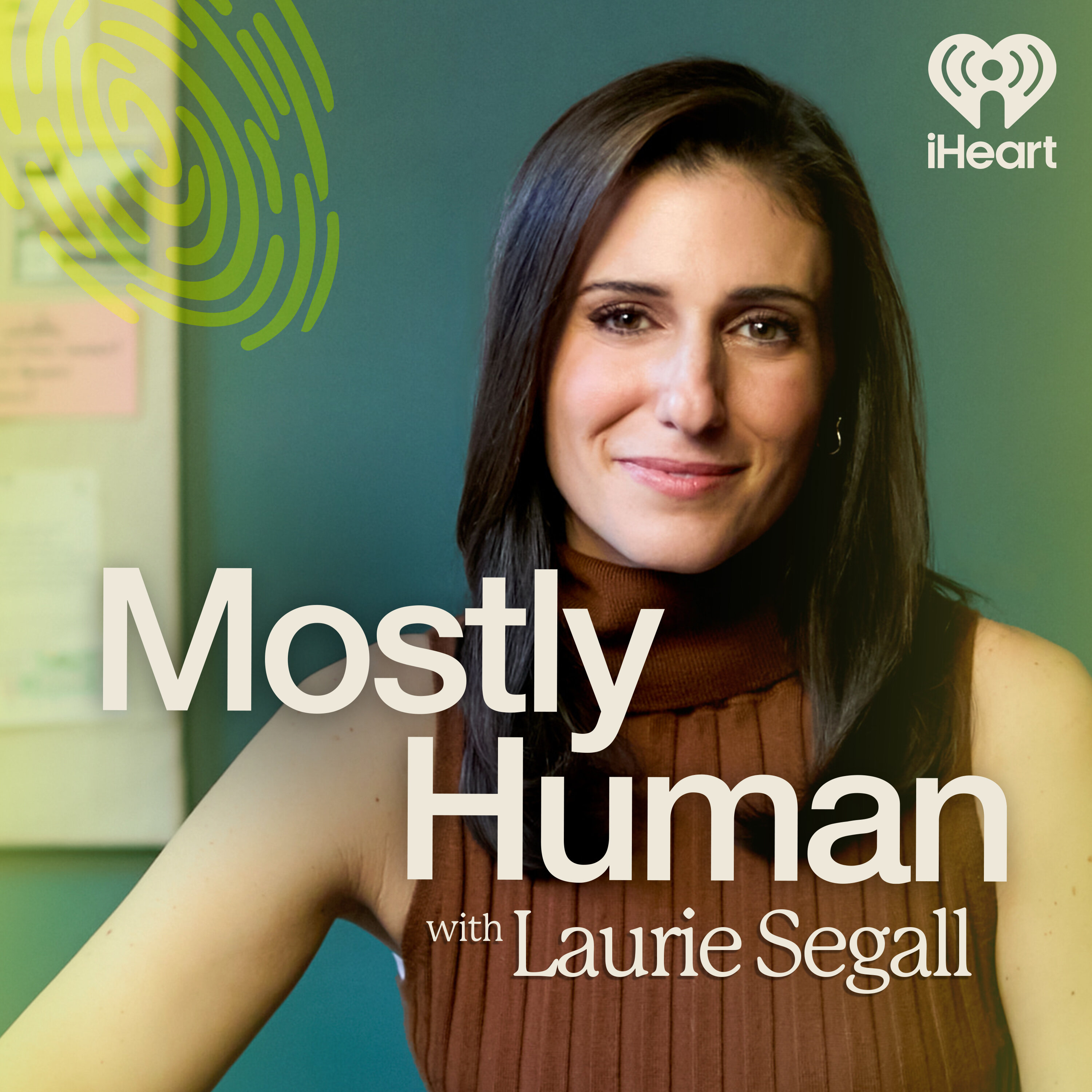
Mostly Human with Laurie Segall is an interview show about what technology does once it reaches ordinary life: a therapist's chair, a child's homework, meeting notes. Its 2026 interviews circle artificial intelligence, and they split between power and intimacy. Power first. In 'The Power and Responsibility of Sam Altman', Segall asks the OpenAI CEO what exactly his red lines are. She also asks whether he could enforce them if governments nationalized the AI labs, and he calls that unlikely but will not rule it out. He explains shutting down Sora rather than compete in short-form video feeds. He also concedes that society has not made many of the decisions he hoped for. Even here the talk bends toward family, through a clip of Dr. Becky on teens growing up with a shortcut for every academic and emotional problem. Her own episode, 'Parenting at the Speed of AI, with Dr. Becky', supplies language worth borrowing. A parent who barely understands AI, she argues, can turn that gap into real questions instead of judgment with a question mark at the end. For a kid who used ChatGPT on a paper, she models a middle path between a ban and a celebration, built on one line: 'Did I get that right?' For a daughter calling home after something hard at school, the script is shorter still. Go get her, say you are glad she called, then stop talking and be a container. Intimacy gets its sharpest test in 'The AI Therapist Will See You Now'. A chatbot therapist named Ash speaks on the episode and misreads a time in a way no person would. Segall and Neil Parikh, co-founder of Slingshot AI, then review how it did. The comparison with human therapy is specific: a chatbot carries less authority and less accountability than a person. Nobody performs for it the way people perform for a therapist they want to impress. The episode lingers on a design choice, nudging a lonely user toward calling someone who matters instead of pulling them in. Segall calls it a decision made behind closed doors. That may be the show's real subject: product choices treated as human ones. Not everything is heavy. 'How to Hack Your Productivity Like a Silicon Valley CEO' brings Andrew Yeung and tools to try, from Granola for meeting notes to vibe coding with prompts that barely need attention. Yeung describes a check-in app called 4pm that he coded himself, and a spoken prompt starts building an app to track a child's meals and sleep. Segall stays candid throughout, recalling a companion chatbot she tested for a story. The feed also carries 2020 interviews. Among them are Alex Stamos on discovering Facebook had been compromised by Russia, Camille Francois on disinformation, the ACLU on biased surveillance tech, and 'Sam Altman: Growing Up Silicon Valley'. Start with Altman for the stakes, Dr. Becky for words to use at home, or Yeung for something to try.