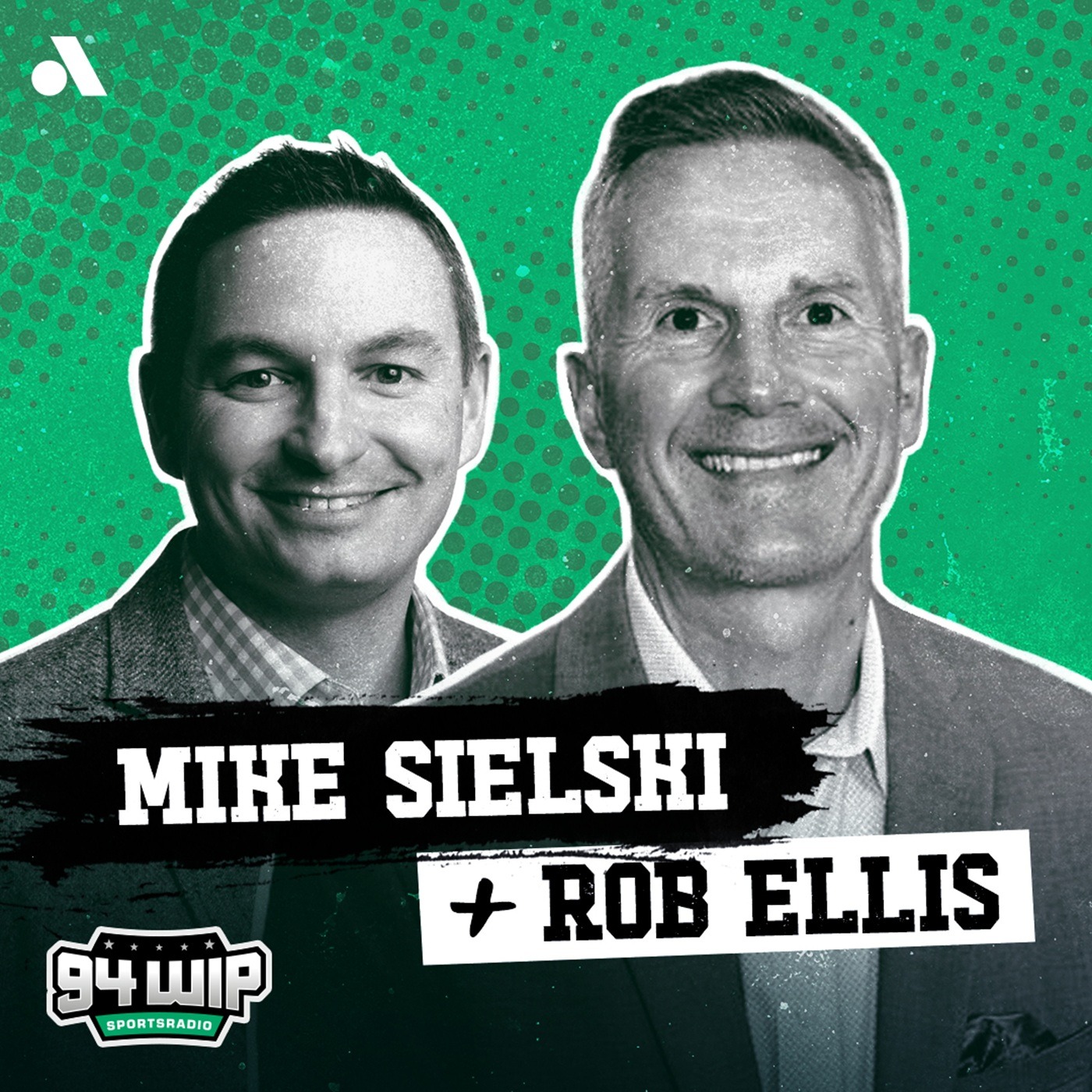
Saturday morning in the Delaware Valley, two and a half hours, and a lot of ground to cover. Rob Ellis and Mike Sielski open with a call — a Harper blast into the second deck, a Schwarber laser to right-center — and by the end of the segment that highlight has become a position on how the front office is managing its roster. The rhythm is conversational and quick. Points get stated, tested, rephrased, then pushed a little harder. Neither host lets a take sit unexamined for long, and the back-and-forth carries a familiarity that only comes from repetition. Summer belongs to the Phillies. Trade deadline questions run through the show: whether the club needs a bat or an arm, what a hot July from a player rediscovering his timing actually means, what happens if the season goes well enough that nobody wants to trade anyone. Spring turns to the NFL draft and whether the Eagles move up or down. Hockey shows up too, with the Flyers controlling their own destiny and overtime goals worth breaking down line by line. Guests are treated as participants rather than segments. Kevin Kurz and Scott Lauber come on with specifics. Olivia Reiner arrives after weeks inside Eagles draft coverage. Phil Martelli Sr. tells a long, detailed story about a coaching career built the hard way through Division III jobs and a decision to follow family. Kenny Albert talks about two overtime winners and how a broadcaster keeps composure when a moment turns into something bigger than a game, including one that hit hard around South Jersey. The show also thinks about its own industry. A segment on insider journalism becomes a real disagreement about whether fans care how a scoop was obtained or only that the reporting held up on draft night. Both hosts admit the lines have blurred. Neither pretends to have a clean answer, which is more interesting than if they did. Technical hiccups get acknowledged on air. Producers get thanked by name. The humor is dry and offhand — a studio left cranked to eleven, a running joke about how each home run adds to a contract demand. Underneath the looseness is real reporting and a willingness to explain not just what happened but why anyone around the team would care. It suits a listener who follows Philadelphia sports closely enough to skip the setup and wants the next layer instead.